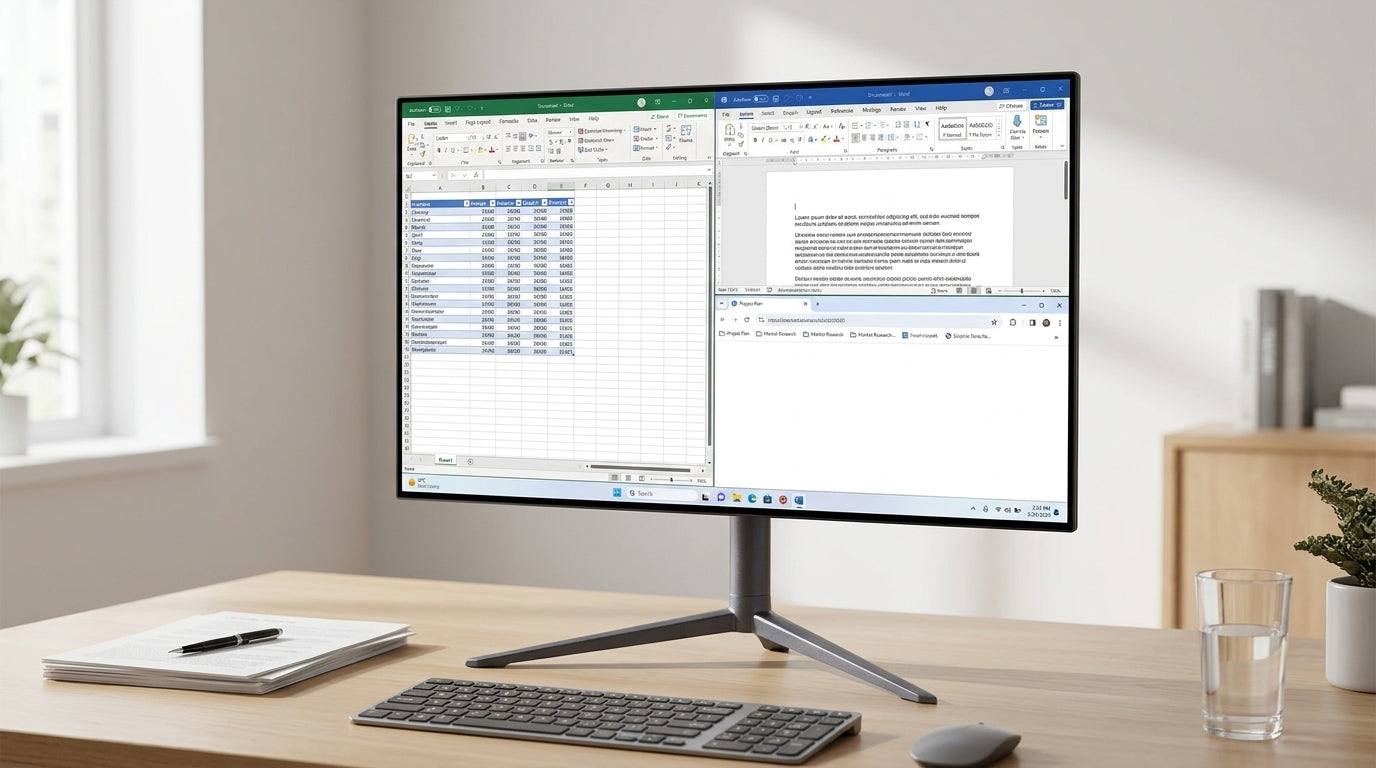
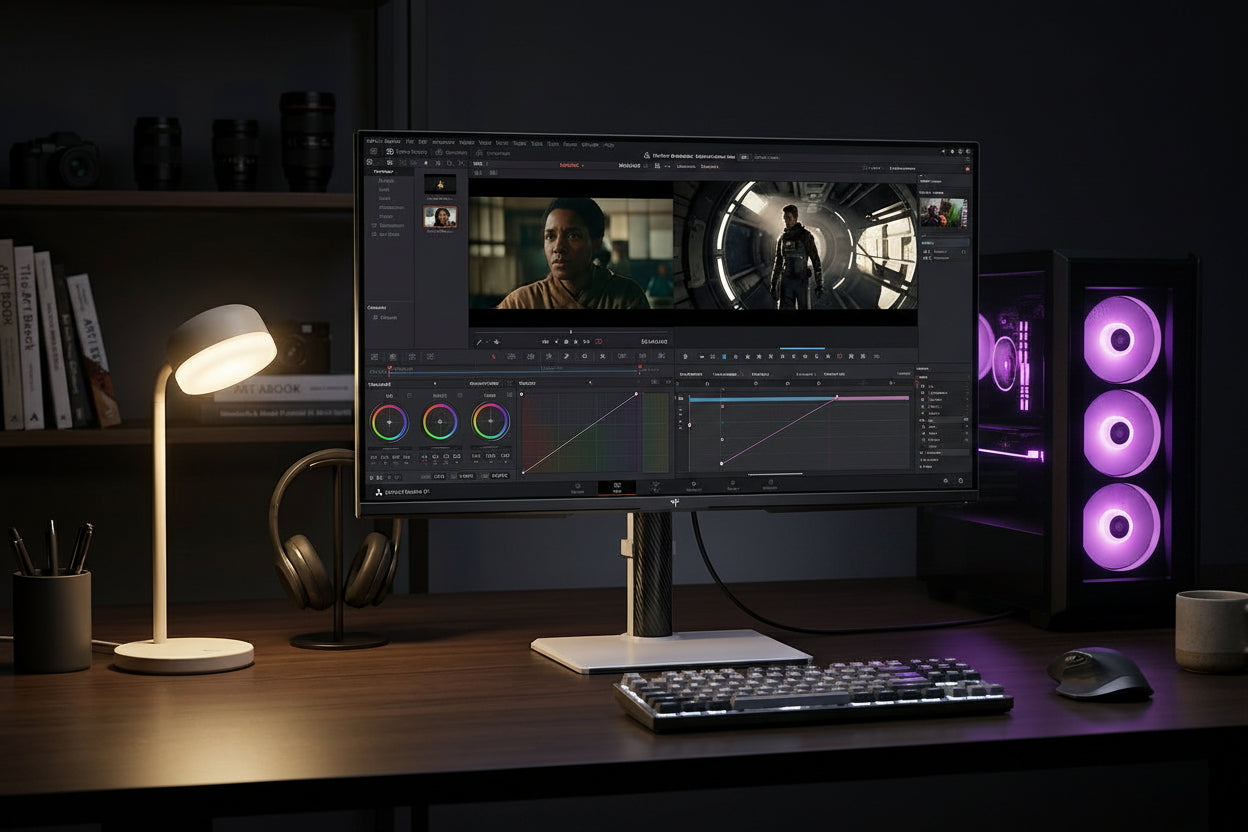
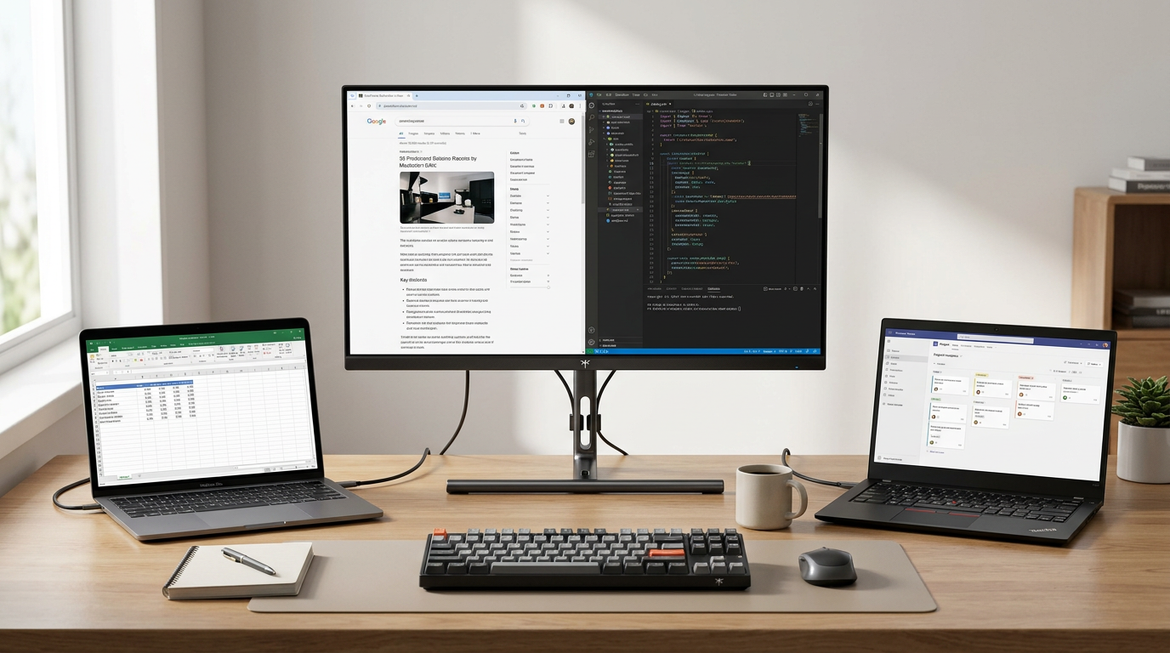
If you are asking when to pay more for a monitor, the short answer is: only when a real bottleneck affects how you work or play. If your current screen already feels clear enough, smooth enough, and comfortable enough, a pricier model may add little day to day. The value monitor argument still holds for many buyers, especially when the main tasks are browsing, office work, and casual gaming. The same logic applies to ktc monitor value: pay more only when the newer screen changes something you notice every week.
When a Value Monitor Is Enough
A value monitor is enough when it already fits your main use without forcing workarounds. That means you are not fighting blur in fast motion, squinting at text, or constantly rearranging windows because the screen feels cramped. If the display already meets the job, paying more often improves the spec sheet more than the experience.
A good first check is whether the monitor is failing in a way you can feel every week, not just in product photos. The OEM monitor value framework is a useful reminder that stand quality, firmware, and support can matter as much as panel headlines. For desk comfort, Mayo Clinic's office ergonomics guidance is clear that screen position and height are part of the comfort equation, not just panel price.
One practical decision rule: if your monitor already looks sharp enough at normal desk distance and does not cause strain, stay in the value tier. If you keep noticing one specific limitation, that is when paying more starts to make sense. If the problem is mostly posture or height, fix the setup first before assuming the panel is the issue.
Signs Your Monitor Is Holding You Back
Here is the easiest way to separate a real upgrade trigger from simple buyer anxiety:
- Fast games look smeared when you flick the camera, which usually means motion clarity is the real complaint.
- Text feels too small or soft when you work for long stretches, which points to resolution or pixel density.
- You keep opening more windows than the screen can handle comfortably, which means workspace, not color, may be the limit.
- Bright highlights wash out or dark scenes feel flat in the room where you actually use the monitor, which can point to backlight behavior rather than the label on the box.
- Your neck or upper back feels worse after long sessions, which may mean the stand or desk height needs attention.
- You edit photos or video and keep wondering whether colors look the same across devices, which is a stronger sign that creator-focused features matter.
- You use one desk for both console and PC and keep switching settings, which can justify paying for a more flexible model.
- You are annoyed by the idea of upgrading, but cannot name a daily-use problem, which usually means you are still in value-monitor territory.
The key is to treat discomfort as a signal, not proof. If the issue is posture, a better stand or better positioning may solve more than a new panel. If the issue is motion blur, workspace, or repeatable color inconsistency, then the upgrade case gets stronger.
Feature Thresholds That Justify More Spend
Refresh Rate and Motion Clarity
For everyday browsing, office work, and casual gaming, 100Hz to 144Hz already feels smooth enough for many people. The pay-more moment arrives when you play fast shooters, racing games, or other motion-heavy titles and start caring about cleaner tracking rather than just a nice-looking desktop. In the gaming-monitor buyer guide from Newegg Insider, 144Hz or 165Hz is treated as a common smooth-motion baseline, while 240Hz and above are the more serious competitive step-up.
That does not mean everyone should chase the highest refresh rate. The higher tier only matters if your PC or console can actually drive it at the resolution you choose. If your system cannot keep pace, the extra spend may buy flexibility on paper more than visible motion gains in real use.
Resolution and Text Sharpness
This is where the value vs premium monitor decision often flips. RTINGS' 1440p vs 4K comparison makes the practical case that 1440p is the better value step-up for many mixed-use buyers because it improves sharpness without the bigger hardware and price jump of 4K. For a lot of desks, that is the first upgrade that actually feels different.
Pay more for 4K when sharper text, more usable workspace, or a bigger desktop canvas will change how you work every day. A 5K panel can make even more sense for text-heavy creator work, but only if your apps, scaling, and device support line up. If you mainly browse, stream, and play casual games, 4K is often a preference upgrade, not a necessity.
HDR, Brightness, and Contrast
HDR labels alone do not prove a worthwhile upgrade. Real backlight behavior and contrast matter more than marketing terms, which is why full-array backlighting and black level performance are better signals than peak brightness alone. In practice, HDR tends to matter most when bright highlights and dark shadows are both part of what you watch, and when the room lighting does not overwhelm the screen.
A brighter screen can help in sunny rooms or shared workspaces, but brightness by itself is not the whole story. If the panel cannot keep dark scenes deep enough, the HDR upgrade may feel modest. That is why a premium monitor is worth more here only when the backlight system and your room work together.
Color Gamut and Creator Work
Creator-oriented spending is justified when your output depends on consistency, not just visual appeal. If you edit photos, video, or design work that other people will see, better calibration, wider gamut, and more even output matter more than a generic premium label. For casual browsing or gaming, those gains may be visible but not decisive.
The aging-monitor color work guide is useful because it frames the real test: does the display still hold up for the work you actually do, or is it drifting enough to cause rework? That is the right way to think about when to pay more for monitor upgrades in creator setups.

Which Upgrade Tier Fits Your Use Case
The table below turns the decision into a quick filter. It does not mean every buyer should pick the same tier. It shows which kind of spend usually makes sense when the current screen stops meeting the job.
| Use case | Usually enough | Pay more when | Store example |
|---|---|---|---|
| Budget gaming | 1080p or 1440p with moderate refresh is enough for casual play | Motion blur or input feel becomes the complaint, or you play faster competitive titles | Browse gaming monitor options |
| Competitive gaming | A high-refresh 1440p model is already strong for many players | You want 240Hz-class speed and your PC can keep up | [KTC 27" 4K 160Hz/320Hz 90W Gaming Monitor |
| Mixed work and play | 1440p is often the practical value step-up | You want more desktop space, sharper text, or a better multi-window layout | [KTC 27" 5K@60Hz 2K@120Hz Home&Office Monitor |
| HDR-focused gaming | Standard HDR or bright SDR may be fine in many setups | Contrast, shadow depth, and highlight handling are the main reason to upgrade | [KTC Mini LED 27" 180Hz 2K HDR1400 Gaming Monitor |
| Creator work | A dependable value display can still be enough for light editing | Calibration, gamut, and consistency affect deliverables | Compare office monitor choices |
A neutral way to read the table is this: if your main complaint is speed, pay more for motion. If your main complaint is text and workspace, pay more for resolution. If your main complaint is visual depth in games, pay more only when the backlight and contrast are real improvements. If your work is casual, the cheaper option often remains the better value.

One useful example is the KTC Mini LED 27-inch 180Hz QHD monitor. It sits in the "pay more for visible contrast and smoother motion" tier, which makes it a relevant upgrade point for players who actually want HDR impact and faster motion. Another is the KTC 27-inch 5K home and office monitor, which fits the "pay more for sharp text and desk workspace" logic better than a gaming-first model.
A Simple Pay-More Checklist
- Name the one limitation you notice most often. If you cannot name one, you may not need to upgrade yet.
- Match the limitation to the right axis: motion, sharpness, image quality, or ergonomics.
- Check whether your device can support the higher spec before you pay for it.
- Decide whether a stand or desk change would fix the problem more cheaply.
- Buy up only if the new monitor changes something you will use every week, not just something you will admire on the spec sheet.
If your answer is still "it works fine," stay value-focused. If your answer is "one clear bottleneck keeps bothering me," then paying more is probably justified. That is the real monitor upgrade threshold, and it is usually more specific than the marketing makes it sound.
FAQs
How Do I Know If My Current Monitor Is Good Enough?
It is good enough when it already handles your main tasks without visible lag, cramped workspace, or comfort problems. If the screen does its job and a pricier model would only add features you would rarely notice, you are probably still in the value tier.
What Monitor Upgrade Matters Most for Gaming?
For most gamers, motion is the first upgrade that changes daily feel. A higher refresh rate matters most in fast games, while sharper resolution matters more when your device can sustain it and you also want a better desktop for work or console play.
When Is 4K Worth Paying More For?
4K is most worth it when sharper text, more workspace, or better detail will change how you use the monitor every day. If your desk distance, scaling, or device support does not make use of those extra pixels, 1440p is often the better value choice.
Can a Premium Monitor Still Be Bad Value?
Yes. A premium monitor can be poor value if you cannot notice the feature, cannot drive it properly, or do not need the extra capability for your work. Paying more only helps when the added feature changes real use, not just product comparisons.
Why Do Some Buyers Stay With Value Monitors?
Because value monitors already cover browsing, office work, casual gaming, and general use well enough in many setups. If there is no clear bottleneck, the cheaper screen often leaves more budget for a better chair, desk, or other upgrades that can matter just as much.
Final Takeaway
Pay more for a monitor only when the upgrade changes a daily bottleneck, not when it merely looks better on paper. For many shoppers, 1440p is the smartest first step up, while 240Hz-class speed, 4K sharpness, Mini-LED contrast, or creator calibration become worth it only in the right use case. If you want a quick next step, compare your current screen against the checklist above before you spend. The right ktc monitor value choice is the one that solves a real limitation, not the one with the longest spec sheet.