A USB-C KVM monitor for MacBook and Windows can work well, but only if the port supports video, the power delivery matches your laptop's real needs, and switching stays stable after sleep. The brand name matters less than the exact port behavior, cable quality, and how the monitor routes video, USB, and charging.

Why Single-Cable KVM Setups Break Down
The main trap is assuming that one USB-C cable means one consistent experience. In practice, MacBooks and Windows machines can negotiate video, charging, and USB data differently, so a setup that looks fine on paper may only charge, only show video, or only route peripherals the way you want on one of the two computers.
Apple's USB-C and Thunderbolt display guidance is a good reminder that the port has to support the right mode, not just the right connector. MacBook models also carry specific external display limits that affect KVM routing. That is why the first decision is not which monitor looks best, but whether your laptop ports and the monitor's USB-C port actually speak the same language.
A KVM monitor can also fail after sleep or input changes. If the keyboard and mouse stop following the active source, the problem is often the whole chain, not just the display. That is the point where a support article like why a USB-C cable may charge but not carry video becomes more useful than spec hunting.
A good rule of thumb is simple: if you need the setup to work every day without extra adapters, test the direct path first and treat any dock, hub, or extension cable as a later layer, not the starting point.
What to Verify Before You Buy
Before you compare monitor sizes or refresh rates, check the parts that make the setup usable.
- Confirm the monitor's USB-C port supports video input, not just charging or hub functions.
- Confirm your MacBook or Windows device supports display output on the exact USB-C, Thunderbolt, or USB4 port you plan to use.
- Check the monitor's USB-C power delivery rating against your laptop's real workday needs, not just its idle charging behavior.
- Verify that the monitor can keep USB peripherals available after switching inputs.
- Make sure the port layout lets you connect both computers without constantly unplugging the same cable.
If you are diagnosing a charging-only or video-only result, how to tell whether the bottleneck is the cable, port, or monitor is the most useful next check. It helps you isolate the failure point before you blame the monitor itself.

One decision sentence worth keeping in mind: if your laptop does not support video over USB-C, this is not a USB-C KVM problem, it is a port-compatibility problem. If your laptop does support video but the monitor still only charges, then the cable or monitor port mode is the more likely limit.
How USB-C KVM Monitors Handle Mac and Windows
Video, Data, and Charging on One Cable
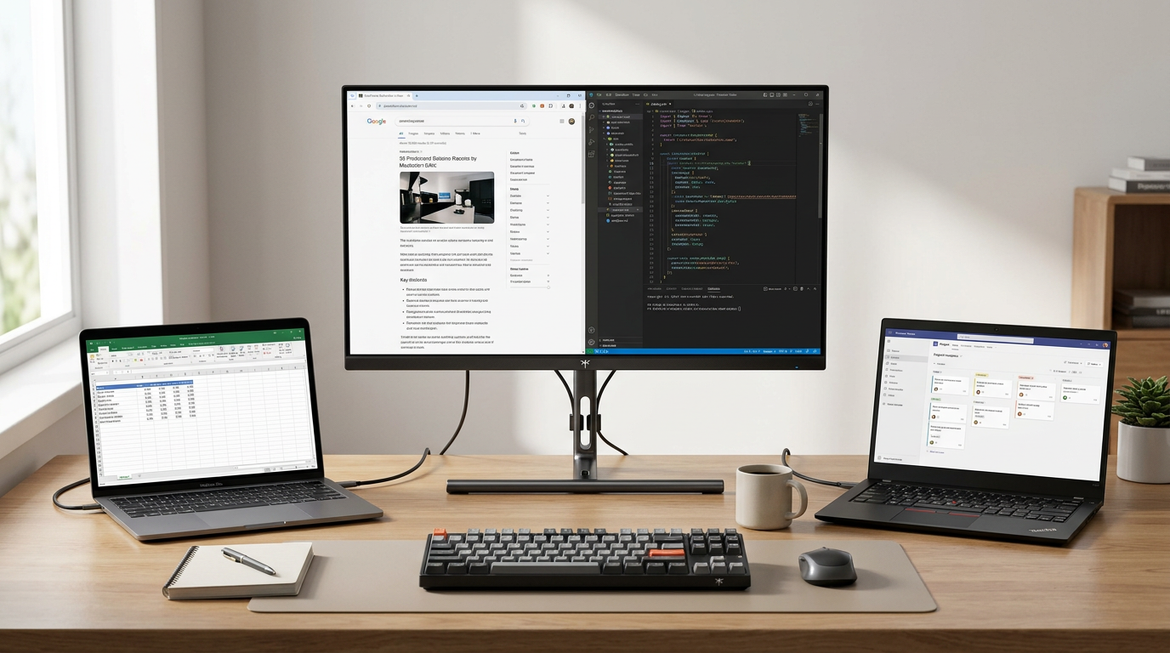
A true single-cable desk setup depends on three paths working together: display, USB peripherals, and charging. The cable can carry all three, but the monitor and source device still have to agree on each function separately.
That matters because a MacBook may expose its port differently from a Windows laptop or desktop. A MacBook that is happy on one monitor may still need a different cable, a different input, or a different port setting on another. That is why the first connection test should be direct, with no dock in the middle.
Why Input Switching Can Feel Inconsistent
Input switching is usually where expectations break down. A monitor may switch the picture correctly but fail to hand USB control to the active computer, or it may do both and then forget the state after sleep.
That is why a KVM monitor setup should be judged by behavior, not just by the presence of a KVM label. If your workflow depends on one keyboard and mouse following the active machine every time, a "works on first plug-in" result is not enough. You want it to survive repeat switching.
Sleep and Wake Behavior to Test First
Sleep and wake are the most common regret trigger in this category. A setup may appear stable during the first hour, then lose USB routing or need a manual input reselect after the laptop wakes.
The practical test is easy: connect the MacBook directly, sleep it, wake it, then repeat the same test with the Windows machine. If either side fails, adding more adapters usually makes the failure harder to understand, not easier to fix. KVM monitors and switches may fail to maintain USB peripheral routing or stable switching after sleep/wake cycles on Mac hardware.
For most buyers, the winning setup is the one that recovers cleanly after sleep. If that part is shaky, the desk will never feel truly single-cable, even if the hardware technically connects.
Which Monitor Features Matter Most
| Decision Factor | What It Affects | What To Look For | Common Trade-Off | Who Should Prioritize It |
|---|---|---|---|---|
| USB-C video support | Whether the monitor can accept display input from your laptop | Explicit USB-C video input or DP Alt Mode support | Some USB-C ports only charge or act as a hub | Anyone aiming for true one-cable use |
| Power delivery | Whether the laptop can stay charged during normal work | PD rating that matches real workload, not just idle charging | Higher PD often comes with bigger monitors or higher price tiers | MacBook and laptop users who dock all day |
| KVM control | Whether keyboard and mouse follow the active source | Upstream USB routing and input switching controls | KVM can work for peripherals but still feel clunky if menus are buried | Anyone sharing one keyboard and mouse |
| Cable quality | Whether video, data, and charging stay stable | Full-function USB-C cable rated for display | Cheap cables often create the most confusing failures | Anyone troubleshooting black screens or flicker |
| Sleep and wake reliability | Whether the desk recovers after breaks | Stable reconnect behavior after sleep, restart, or input change | A monitor that is fine when awake can still be annoying in daily use | Hybrid workers and developers |
| Port convenience | How easy the setup is to live with | Easy-to-reach USB-C, HDMI, and upstream ports | Technically compatible can still be awkward to use | People who switch often |
One more decision sentence: higher wattage only helps if it covers your laptop under real use. A monitor that can charge at the desk but still drains the battery under load is not a clean single-cable solution, it is just a partial one.
Best Fit for a MacBook and Windows Desk
For Creative and Text-Heavy Work
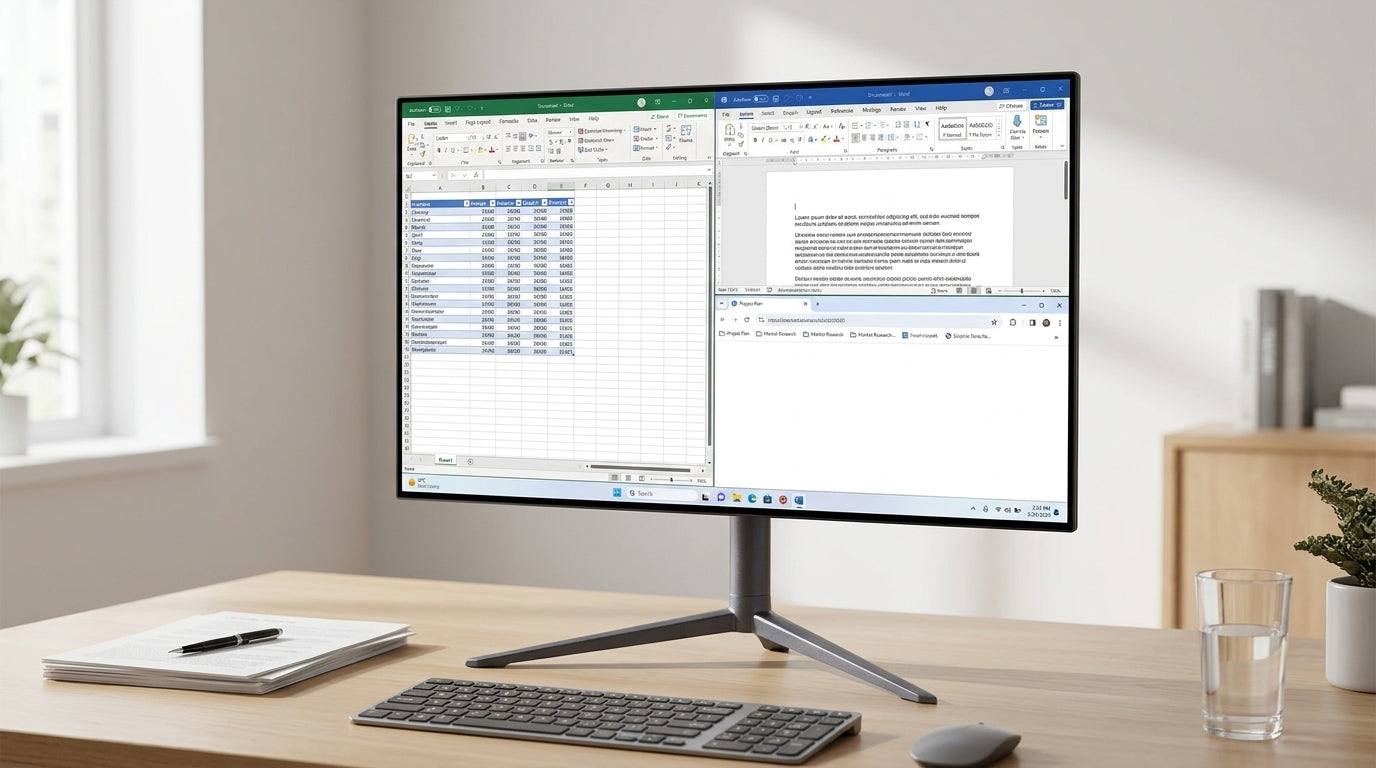
If your desk is mostly for design, writing, coding, or spreadsheet work, the best fit is usually the monitor that gives you reliable USB-C video, stable wake behavior, and enough charging headroom to keep the laptop out of your lap. In that case, sharper text and fewer adapter layers matter more than chasing very high refresh rates.
For that kind of workflow, the KTC Mini LED 27" 4K 160Hz HDR1400 Gaming Monitor | M27P6 is a reasonable featured option to check because its product facts show USB-C PD at 65W, plus HDMI 2.1, DP 1.4, and a USB-C path that supports video when the source device supports DP Alt Mode. That makes it more relevant for buyers who want a sharper desk without losing the one-cable idea.
For Mixed Work and Light Gaming
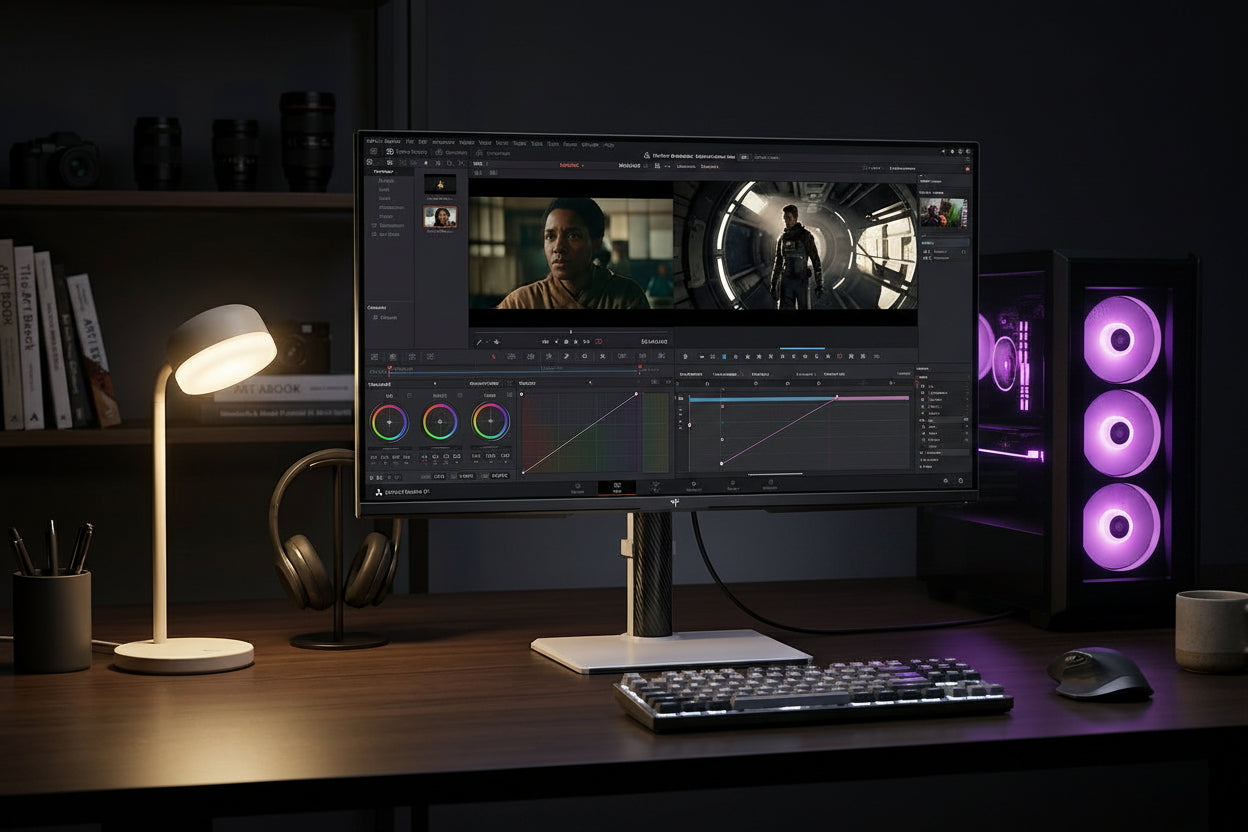
If you split time between Mac work, Windows testing, and occasional gaming, the balance changes. You still need USB-C video and dependable switching, but the daily regret point is often not image quality. It is whether the monitor makes changing computers feel effortless or annoying.
A higher-refresh monitor can make sense here, but only if you are willing to check the switching behavior yourself. The KTC 49" DQHD 180Hz 1000R Curved Gaming monitor丨H49S66 is a stronger fit for people who want a very wide desk and 90W USB-C PD plus KVM, based on its product facts. It is not a universal answer for every MacBook user, but it is a serious option when multitasking and desk footprint matter.
For the Cleanest Single-Cable Desk
If the goal is the fewest adapters possible, keep the laptop path direct and use the monitor as the switching hub. Do not add a dock just because the desk feels busy on day one. Add it only if you need more ports than the monitor can reasonably provide.
A practical browsing step is to compare options in the Gaming Monitor collection once you know your required port behavior, size, and power target. That collection is most useful after you have ruled out monitors that cannot meet the basic USB-C and KVM conditions.
Final Setup Checks Before You Order
- Confirm the exact USB-C video behavior on your MacBook and your Windows machine.
- Confirm that the monitor's USB-C power delivery matches your laptop under normal work conditions.
- Confirm that USB peripherals stay attached when you switch inputs or wake from sleep.
- Confirm that your cable is rated for video, not just charging.
- Confirm the return window and warranty in case the real-world behavior does not match your workflow.
If you want a wider comparison path after that, the Office Monitor collection and the All Monitors collection are better for broad browsing than for narrowing a KVM-specific setup. The right monitor here is the one that reduces friction, not the one with the most features on paper.
FAQs
Q1. How Do I Know If My MacBook Will Output Video Over USB-C?
Check whether your MacBook's USB-C, Thunderbolt, or USB4 port supports display output, and then use a full-function cable that carries video. If the laptop charges but never shows a picture, the port or cable is likely missing the video path rather than the power path.
Q2. Why Does My Laptop Charge but Show No Picture?
Charging and video are separate functions. A monitor or cable can support power delivery without supporting DisplayPort Alt Mode or another video mode. If that happens, the laptop may charge normally while the display stays blank.
Q3. Can One USB-C Cable Also Handle My Keyboard and Mouse?
Yes, but only if the monitor supports upstream USB routing and you connect the peripherals through the monitor's USB path. If the keyboard and mouse are plugged into the wrong side of the chain, the cable may carry video and charging while still ignoring your peripherals.
Q4. What Causes a KVM Monitor to Stop Working After Sleep?
Sleep can interrupt the handshake between the laptop, the monitor, and the USB path. If switching breaks after wake, reselecting the input or reconnecting the cable sometimes restores the chain, but repeated failures usually mean the setup needs a simpler direct path.
Q5. Do I Still Need a Dock With a USB-C KVM Monitor?
Not always. Many users can skip the dock if the monitor already handles video, charging, and peripheral routing well enough. A dock still helps when you need more ports, when cable management matters more than simplicity, or when the laptop does not support the required USB-C behavior directly.
The Cleanest Setup Is the One That Survives Everyday Use
A USB-C KVM monitor for MacBook and Windows reduces daily friction when video output, real-world charging, and post-sleep switching all remain reliable. Test the direct USB-C path on both machines first, verify PD wattage under load, and confirm peripherals follow input changes without extra adapters. When those three checks pass, the desk stays simple and the monitor earns its place.