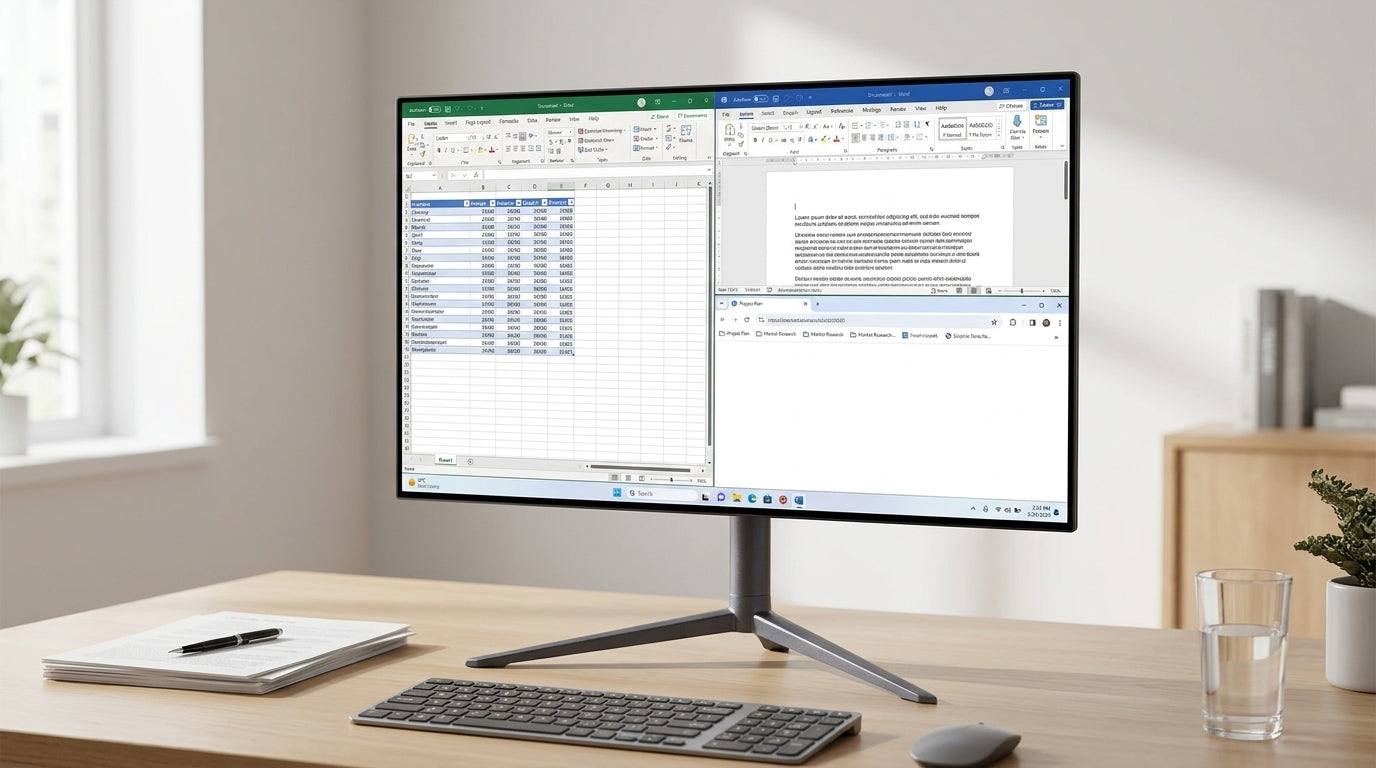
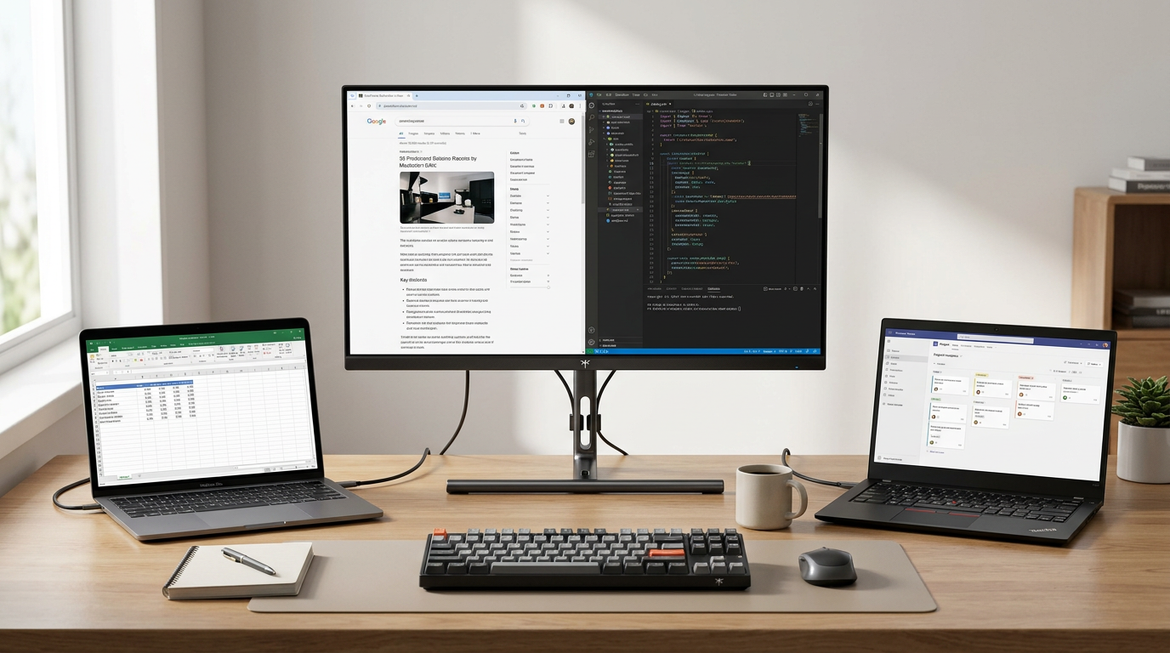
Smart display monitors combine a high-resolution screen with a built-in operating system, processor, and app store so you can stream, browse, run productivity tools, and play cloud games without connecting a separate PC. For minimalist users tired of multiple devices or remote workers seeking a simple all-in-one hub, these displays can replace a traditional monitor-plus-computer setup in many everyday scenarios—provided your needs stay within streaming, light productivity, or cloud services rather than heavy desktop software.

The category sits between a conventional monitor (which needs a PC or laptop) and a smart TV (optimized for living-room viewing from a distance). Smart display monitors typically offer sharper pixel density for close-up text work, ergonomic stands or portable designs, and desktop-style connectivity while running Android or Google TV independently.
What is a Smart Display Monitor? Defining the PC-Less Experience
A smart display monitor is essentially a large tablet or thin client with its own OS that lets you launch apps, log into accounts, and handle daily digital tasks directly on the screen. Unlike a regular monitor that serves only as a display output for another device, it includes built-in processing, storage, Wi-Fi, Bluetooth, and often touch capability.
Compared with smart TVs, smart displays prioritize higher pixel density suitable for reading documents or editing spreadsheets from 2–3 feet away, along with adjustable stands rather than wall-mount-only designs. They differ from tablets by offering larger 24- to 32-inch screens, better audio systems, and traditional ports like HDMI that still allow use as a conventional monitor when needed.
This PC-less approach appeals to users who want fewer cables and devices on their desk or in shared spaces. However, the experience works best when your workflow relies on cloud services or lightweight apps rather than demanding local software.
The Power of the App Ecosystem: What EDLA Certification Means
Not all smart operating systems deliver the same capabilities. Google TV-based models, such as the KTC 32" 4K 60Hz Smart Monitor with Google TV, excel at streaming Netflix, YouTube, and casual entertainment but typically limit access to full productivity suites. Their app store is TV-centric, so native support for tools like Google Docs or Sheets is often missing or awkward on the large screen.
EDLA (Enterprise Device License Agreement) certification changes this. As explained in Google's official documentation, EDLA certification ensures official Google Play Store access and seamless integration with Google Workspace apps, including enterprise-grade security features like remote management and encryption. EDLA models function more like oversized Android tablets, giving you legitimate access to thousands of productivity, education, and creative apps that run properly at monitor resolutions.
The practical difference is clear in daily use. A Google TV monitor is ideal for lean-back entertainment in a bedroom or living room. An EDLA-certified display, such as those in the MegPad series, supports lean-forward work where you interact with documents, video calls, or collaboration tools directly on the screen.

This chart helps visualize the split:
The tiers above (High = 3, Medium = 2, Low = 1) reflect typical real-world performance across the two platforms based on their certified capabilities and user-reported strengths.
Cloud Gaming: High-End Play Without the Tower
Cloud gaming services such as Xbox Cloud Gaming and NVIDIA GeForce NOW let you stream console-quality titles directly to the smart display. According to official Xbox guidance, a stable connection of at least 20-25 Mbps is typically needed for HD-quality cloud gaming. Newer smart displays with Wi-Fi 6 further reduce latency and buffering compared with older Wi-Fi 5 models.
In practice, you pair the display with a Bluetooth controller and launch the app—no graphics card or gaming PC required. This setup works especially well for casual and mid-tier gaming in living rooms or student dorms where a full tower would be overkill.
A quick self-check before relying on cloud gaming includes confirming your internet delivers consistent speeds above 25 Mbps with low jitter, having a low-latency controller, and accepting that competitive multiplayer may still favor a local high-end PC. For many users, however, the convenience of jumping into high-end titles from a slim, app-running screen outweighs these constraints.
Smart Displays in the Professional World: The New Thin Client
Businesses increasingly adopt smart displays as modern thin clients for virtual desktop infrastructure (VDI) and cloud-based workflows. EDLA-certified models stand out here because they support enterprise management tools, remote wiping, and encryption through the Google Admin Console. These features make them suitable for shared offices, hot-desking, educational kiosks, or any environment where IT staff need centralized control and data security.
In a typical shared workspace, employees can log in with their Google account, access Workspace apps, join video calls, and log out—leaving a clean, managed device for the next user. The Smart Monitor collection includes several models designed with exactly these scenarios in mind.
Reality Check: When to Stick with a PC
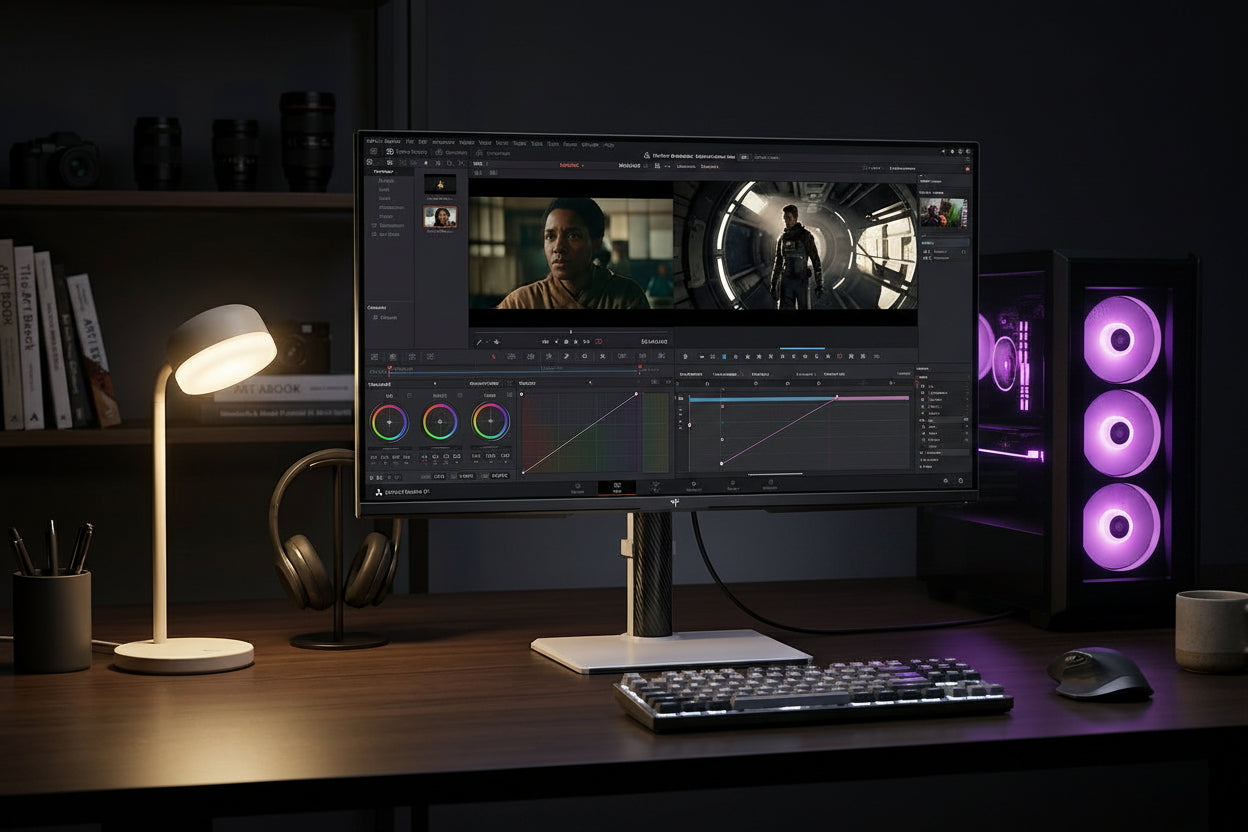
Smart displays have clear limits. Their mobile-optimized processors and typical 8 GB RAM handle everyday apps and cloud tasks well, but they cannot match the multitasking depth or raw power of a desktop PC for heavy video editing, 3D rendering, or running many local applications simultaneously. As the evidence shows, performance is governed by mobile hardware that prioritizes efficiency over workstation-level workloads.
Common points of friction include occasional lag when too many background apps run, dependence on a strong internet connection for cloud features, and the fact that some niche mobile apps may not scale perfectly to a large monitor. For these reasons, many users adopt a hybrid approach: using the smart display as a standalone hub for daily tasks and switching to a connected PC when intensive work is required.
Don't buy a smart display as a full PC replacement if your workflow involves professional-grade creative software, heavy local file processing, or consistent offline use of demanding applications. In those cases, a traditional monitor paired with a capable computer remains the better long-term choice.
How to Choose Your Smart Display Monitor: KTC Buyer's Guide
Matching the right model to your primary scenario prevents disappointment. For bedroom entertainment, casual streaming, and budget-friendly 4K, the KTC 32" 4K 60Hz Smart Monitor with Google TV delivers strong media performance without unnecessary productivity features.
Users focused on home office, touch-based productivity, Google Workspace, and enterprise security should consider EDLA-certified MegPad models. The KTC MEGAPAD 32" 4K Android 13 Google EDLA Smart Touch Monitor with 9500mAh Battery offers a large canvas, multi-touch support, and rolling stand convenience, while the KTC MEGAPAD 27" FHD Android 14 Google EDLA Smart Touch Monitor with 9500mAh Battery provides a more compact, highly portable option with excellent battery life.
For truly on-the-go needs such as camping, travel presentations, or kitchen use, the smaller KTC MEGAPAD 25" FHD Google EDLA Portable Touch Monitor built in Camera balances size, battery runtime, and full EDLA functionality.
Check your internet stability and primary use case first. If your needs lean heavily toward one side of the entertainment-versus-productivity divide, the decision simplifies quickly. Many buyers also explore the broader Mobile Touch Screen collection to compare current options.
FAQs
Can a smart display monitor fully replace a laptop or desktop PC?
In many daily scenarios—streaming, web browsing, light document work, and cloud gaming—yes. However, for intensive local software, heavy multitasking, or professional creative suites that require significant RAM and processing power, a dedicated PC paired with a conventional monitor is usually more reliable. Treat the smart display as a capable supplement rather than a one-to-one desktop replacement.
Do all smart monitors support the same apps?
No. Google TV models focus on entertainment streaming and have a more limited productivity app selection. EDLA-certified Android models grant full access to the Google Play Store and native Workspace integration, making them far better suited for work and education. Always verify the operating system and certification before purchase if office apps matter to you.
How much internet speed do I need for smooth cloud gaming on a smart display?
Official recommendations suggest a stable 20–25 Mbps for HD streaming, with higher speeds and lower latency preferred for 4K or competitive play. Wi-Fi 6 displays help minimize jitter, but consistent real-world performance still depends on your router placement, network congestion, and service quality.
Are smart displays secure enough for business or shared office use?
EDLA-certified models include enterprise features such as remote wipe, encryption, and Google Admin Console management, making them appropriate for many professional and shared environments. Standard Google TV models offer less granular IT controls and are generally better reserved for personal use.
What should I consider before buying a smart display for a small apartment or dorm?
Prioritize models with good built-in speakers, compact or portable designs, and flexible mounting options. Battery-powered EDLA units like the MegPad series are especially convenient when space is tight and you want to move the screen between rooms. Confirm that your internet connection can support the cloud-dependent features you plan to use most.
How does touch capability change the experience compared with non-touch smart monitors?
Touch support turns the display into an interactive tablet-like surface, which is valuable for annotation, creative apps, presentations, and shared workspaces. Non-touch models are sufficient for pure streaming or controller-based gaming but feel less natural for direct manipulation of on-screen elements.
Is it worth choosing an EDLA model over a cheaper Google TV smart monitor?
If your main activities include productivity, collaboration, or any Google Workspace tools, the EDLA certification and broader app compatibility usually justify the higher price. For pure entertainment and occasional use, a Google TV model can be the more cost-effective choice. Match the certification to your dominant workflow to avoid regret later.