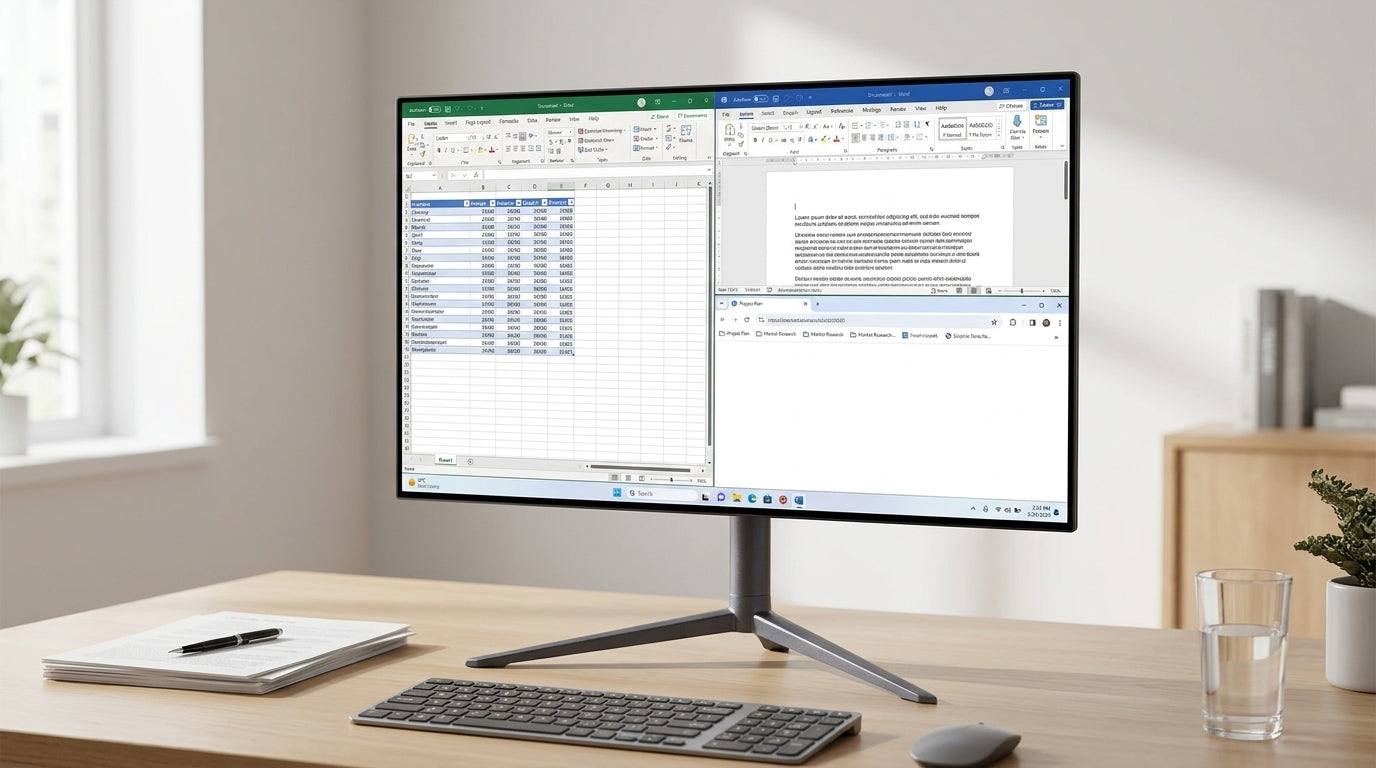
A rolling smart display for bedroom use can be a practical TV alternative when you want flexibility more than permanence. It fits best in rentals, small apartments, guest rooms, or bedrooms that also need to serve another purpose. The catch is simple: room layout, bed height, glare, and app setup still decide whether it feels easy or awkward. If you are comparing categories, mobile touch screens is a useful starting point.
Is a Rolling Smart Display a Good Bedroom TV Alternative?
For the right room, yes. A rolling display is useful when you do not want to mount a TV, when you may rearrange the room later, or when the same screen needs to move between spaces. That kind of flexibility is the main reason these screens have started showing up in bedroom and multi-use setups, not because they replace every fixed TV use case. Ars Technica's look at rolling screens frames that shift clearly: the appeal is mobility and low-installation convenience.
If your bedroom already has a permanent viewing spot and you never expect to move the screen, a wall-mounted TV or fixed monitor can still be the cleaner choice. A rolling smart display for bedroom use makes the most sense when you want fewer installation decisions up front and more flexibility later.
One useful way to judge the fit is to ask whether the room can support a mobile screen without creating extra friction. If the answer is yes, the setup can feel refreshingly simple. If the answer is no, the mobility advantage can disappear fast.
How to Plan Placement in a Bedroom
For bedroom placement, start with the bed, not the wall. The screen should feel comfortable from the position you actually watch from, whether that is lying back, propped up on pillows, or sitting partly upright. For 24- to 32-inch displays, a 4 to 6 foot viewing range is a reasonable starting point, but it is only a starting point. Screen size, text readability, and how sensitive you are to eye fatigue can all change the right distance.

Height matters just as much as distance. For bed-based viewing, the screen often needs to sit a little higher than a living-room TV, especially if your feet, pillows, or mattress height change the line of sight. Bedroom mounting guidance commonly places the center of the screen higher than a standard living-room setup when the viewer is reclined. That does not give you one perfect number, but it does give you the right direction.
A slight downward tilt can also help when the panel sits above eye level. Mount-It's height guide recommends a modest downward angle for screens that are viewed from below. In bedroom terms, that usually means aiming the screen so you are not lifting your chin the whole time.

Glare is the other big placement issue. OSHA's monitor guidance recommends keeping the screen perpendicular to windows and controlling nearby light sources. In a bedroom, that often means not placing the display directly across from a bright window or a lamp that reflects off the panel at night. If the room has mixed lighting, move the screen before you start adjusting settings.
A rolling setup also needs clear floor paths. It should roll without bumping nightstands, catching on rugs, or blocking closet doors. If the screen only fits when it is parked in one exact spot, the room is doing less work for you than it should.
Measure Bed-To-Screen Distance
Use your bed as the reference point first. If the screen feels too close, text can look busy and motion can feel more intense than expected. If it feels too far, small subtitles and menus may become annoying to read. The goal is not a perfect measurement, but a distance that lets you watch comfortably without leaning forward or squinting.
Check Height, Angle, and Clearance
A bedroom screen should line up with a relaxed head position. If you have to crane your neck upward, the height is probably too low or the angle is off. If the screen is too high, a modest tilt usually helps more than moving the whole unit lower. Leave enough clearance for the display, the base, and the path it needs to roll.
Reduce Glare and Light Conflicts
Glare often shows up only after the room lights are off and the screen is on. That is why bedroom placement should be tested with the lights you actually use at night. If reflections are obvious, shift the display angle, change the lamp direction, or move the unit to another wall. Side lighting is usually easier to live with than a direct reflection path.
Fit the Setup to Rentals and Small Rooms
Rolling displays are most attractive in rentals and small rooms because they avoid wall anchors and permanent installs. They can also work well in shared bedrooms or guest rooms, where the screen may need to move out of the way when it is not being used. The trade-off is that a mobile setup still needs storage space and a clear route for rolling.
MegPad Setup for Streaming and Casting
The featured example here is the KTC MegPad. It is a neutral example of how a mobile smart screen can work in a bedroom, not a universal recommendation. The product details list Android 14, Google EDLA, a 25-inch FHD IPS panel, 400 nits brightness, hardware blue light reduction, PWM dimming, and a built-in camera. That combination is relevant if you want a screen that handles streaming and casual app use without acting like a full desktop monitor.
For setup, the practical path is straightforward: connect Wi-Fi, sign in to the apps you actually use, and confirm whether your streaming service works the way you expect on the device. The product page says Google Play access and Google account sync are supported, which matters more in a bedroom than raw spec counts do. If your usual bedtime routine depends on a specific app, verify that app before you buy rather than assuming every smart screen behaves the same.
Wired and wireless source options matter too. The A25Q5 help guidance says Wi-Fi supports apps and wireless casting, and it also notes a supported Type-C screen-mirroring cable for wired mirroring, plus an HDMI-to-Type-C signal converter for HDMI-only sources. That gives you a fallback if casting is slow or inconsistent. In real use, that backup path is often what keeps a setup from turning into a troubleshooting project.
Battery and speakers are convenience features here, not the whole story. The product page states runtime varies with brightness and volume, from about 11 hours at lighter settings to about 4 hours at the brightest, loudest setting. That means bedside use is flexible, but not endless. If you plan to move the screen around the house, battery life matters more. If the screen will stay near an outlet, battery becomes a backup rather than a core buying reason.
Wi-Fi, Apps, and Account Sign-In
A bedroom streaming screen should feel easy to start, not like another tech project. Stable Wi-Fi and simple account sign-in matter more than almost anything else in this stage. If the apps you use are already part of your routine, the setup feels much lighter. If you still need to install, sign in, and test casting, budget time for that first-night friction.
Wired and Wireless Source Connections
Wireless casting is convenient, but it is not always the most dependable first step. If the connection behaves oddly, wired mirroring can be the easier fallback. The important check is compatibility: confirm that your source device supports the connection method you plan to use. A good bedroom setup has at least one backup path.
Sound, Battery, and Daily Use
Built-in speakers matter more in a bedroom than many shoppers expect, especially if you do not want another soundbar or external speaker on the nightstand. Battery life matters when you want to roll the screen away from an outlet or use it in another room. For nightly entertainment, though, convenience usually beats fancy extras. Simple wake-up, easy app access, and predictable casting behavior matter most.
Viewing Comfort Matters More Than Specs
Bedroom comfort is mostly about how the screen feels in your room, not how the spec sheet reads. OSHA's monitor placement guidance is helpful here because it keeps the focus on reflections and light direction instead of abstract display features. If the screen feels easy to watch after the lights go down, you are close. If it feels distracting, move it before you blame the panel.
A built-in camera shutter can be a small plus in a bedroom, but it should stay a light privacy note, not the core reason to buy. HomeAutoCentral's smart display buyer guide notes that privacy-conscious users often prefer a physical shutter or mic-mute control. For bedroom buyers, that is a nice check item, especially if the screen may be used for calls or left in a shared space.
Here is the simplest comfort check:
- If you keep turning down the brightness, the room may be too dark for the current angle.
- If subtitles look tiring to read, the screen may be too far away or too low.
- If you notice reflections, change the display angle before changing the app settings.
- If you need to shift pillows just to see the screen, the height is probably wrong.
- If the display blocks walking space or furniture access, the setup is not really mobile in practice.
- If you prefer quiet bedtime viewing, test speaker volume before relying on it every night.
A rolling smart display for bedroom use should feel like a convenience, not a compromise you keep working around. If comfort depends on constant adjusting, the better fix may be a different position, a different room, or a fixed screen instead.
Rolling Display or Fixed TV: How to Decide
The decision is mostly about whether your bedroom is a flexible zone or a fixed viewing zone. Rolling displays win when movement, low installation effort, or rental-friendly setup matter most. Fixed TVs and monitors win when the room already has a settled viewing position and you want less repositioning over time.
| Option | Best Fit | Setup Effort | Mobility | Room Permanence | Comfort Considerations | Who Should Choose It |
|---|---|---|---|---|---|---|
| Rolling smart display | Rentals, shared rooms, multi-room use, flexible entertainment corners | Low to moderate | High | Low | Needs clear floor paths, glare checks, and a good bed angle | Buyers who want the screen to move with the room |
| Fixed TV | Permanent bedroom layout, single viewing position, wall-mounted plans | Moderate to high | Low | High | Can feel more settled once mounted in the right spot | Buyers who want a one-time placement and leave it there |
| Fixed monitor | Desk-first rooms, close viewing, simple source setup | Low to moderate | Low | Moderate | Best when the viewer sits close and does not need room-to-room movement | Buyers who want a stable screen for one spot |
The key trade-off is that mobility adds convenience, but it also adds layout checks. If your room is easy to roll through and you expect the screen to move, the rolling option earns its keep. If the screen will never leave one wall, a fixed solution usually feels simpler. For a deeper side-by-side read, the rolling display comparison covers the trade-offs in more detail.
Use this table as a room-fit filter, not as a verdict on picture quality. The better choice is the one that fits your bedroom habit without adding daily friction.
Bedroom Setup Checklist
- Measure the bed-to-screen distance and check whether the screen still feels comfortable from your normal viewing position.
- Confirm the screen can sit at a workable height and angle without forcing you to crane your neck.
- Look for reflections from windows, lamps, or ceiling lights before you commit to a final spot.
- Make sure the display can roll without blocking doors, drawers, or the main walking path.
- Check Wi-Fi, app sign-in, and source-device compatibility before buying.
- Decide whether battery life matters for your use or whether you will mostly keep the screen near power.
- Compare the setup against a fixed TV or monitor if the room already has a permanent viewing position.
If you want a flexible, low-installation bedroom screen, a rolling smart display can make sense. If you want a screen that stays in one place and never needs to move, a fixed option may be easier. Use the room first, then the product.