A portable smart display can make sense for on-location creators when a laptop screen feels too small for shared previews, reference playback, or quick approvals, but only if the rest of the shoot setup actually fits it. The value is workflow fit, not automatic faster approvals or better creative results.

Why On-Location Creators Outgrow Laptop Screens
When you are standing on a set, a laptop can be fine for one person and awkward for three. That becomes obvious when a client, director, or collaborator needs to look at framing, timing, or a quick playback cue from a short distance. A larger screen can reduce the crowding that happens around a small lid display, which is why shared viewing matters more than the device itself.
That does not mean every shoot needs a bigger screen. A rolling-screen setup for mobile work only helps when the team actually gathers around the display and the screen can move with the session. Industry coverage of the broader "tablets on wheels" category notes the appeal of flexible placement, but it also makes clear that these displays are a workflow solution, not a universal replacement for a laptop or workstation.
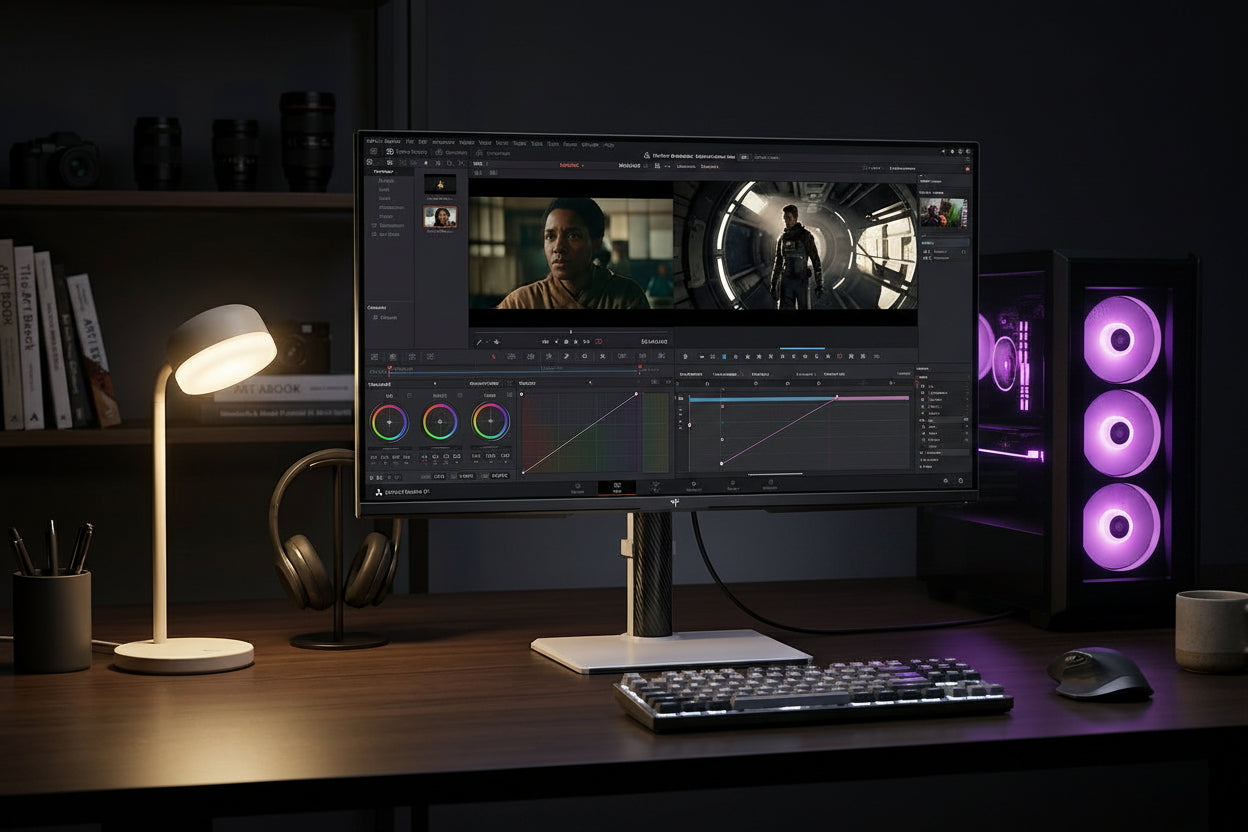
For video teams, the real pressure point is feedback. On-set review can tighten communication and catch issues earlier, as client feedback loops in video production often show, but the display itself does not guarantee better approvals. If your current process is already fragmented, a bigger screen may help only when it becomes a shared checkpoint instead of another isolated device. If you are comparing broader rollout use cases, rolling-display mobility tips show a similar logic, even though the setting is different.
What a Portable Smart Display Must Do on Set
For on-location creators, the feature list matters less than the job it has to do. A portable smart display should make shared preview easier, support touch control when you do not want a full keyboard-and-mouse rig, and stay flexible enough to move between temporary setups.
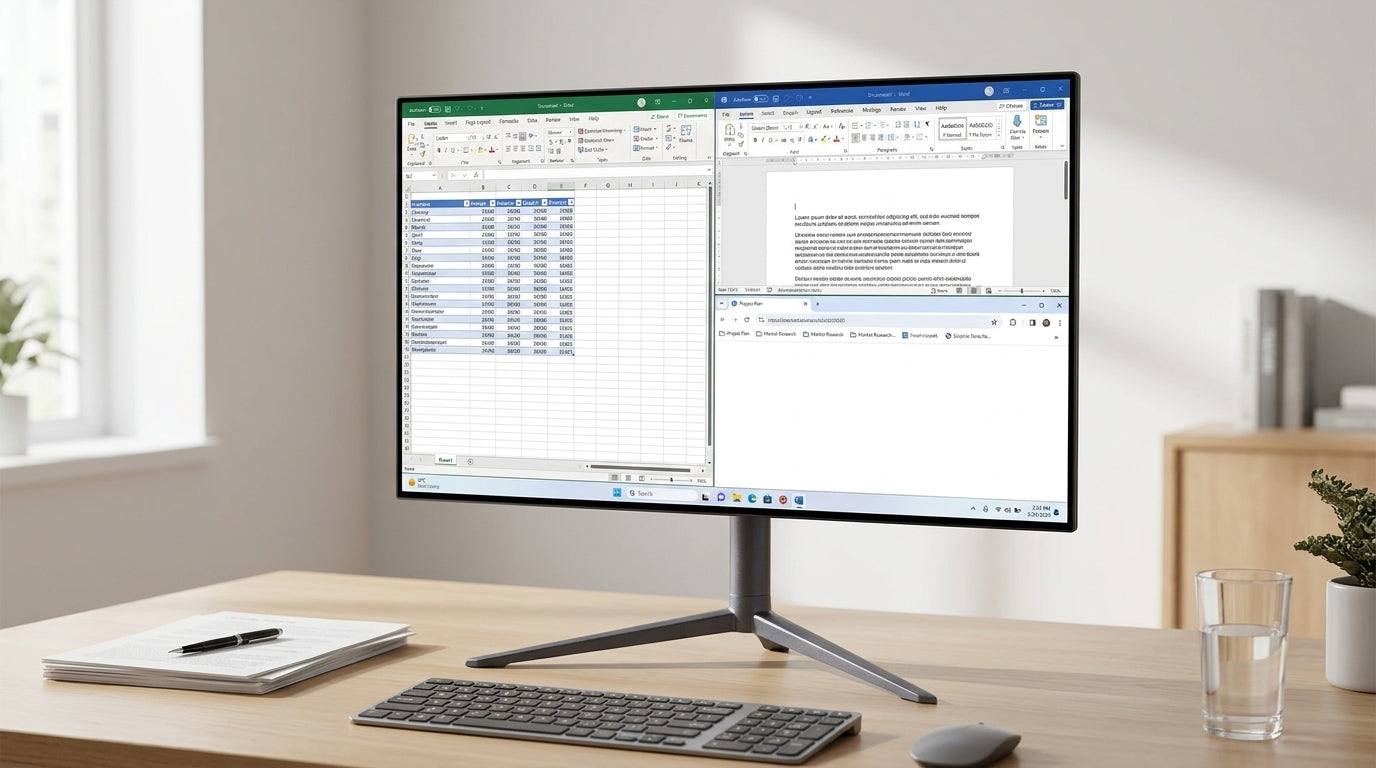
Screen size is about viewing distance, not a magic number. If people stand close to the screen, a 25- to 32-inch class panel may feel more practical than a laptop. If viewers are farther away, the benefit grows. If the crew is tiny and everyone already has a personal device, the need drops fast. That is why the right size changes with the room and the number of people watching.
Touch and app access matter when the display does more than mirror. Google's EDLA program for Android enterprise devices is relevant because it affects official Google services and Android ecosystem access. That helps if you plan to use apps, account sync, or light standalone playback, but it does not guarantee that every creator app will behave the same way on every network or source device.
Professional review tools also matter here. Workflow guides from Fastio on video approval and Krock on client revisions both point to the same practical need: keep comments and versions in one place. A smart display can support that process when it is the screen everybody uses together, but it is not a substitute for the review system itself.
Power and mobility are setup checks, not luxury extras. If the screen needs to move between rooms, stages, or temporary locations, wheels and battery support become useful. If it will live in one spot near wall power, those features matter less. The wrong assumption is to buy portability for its own sake and then leave the screen parked in one place.
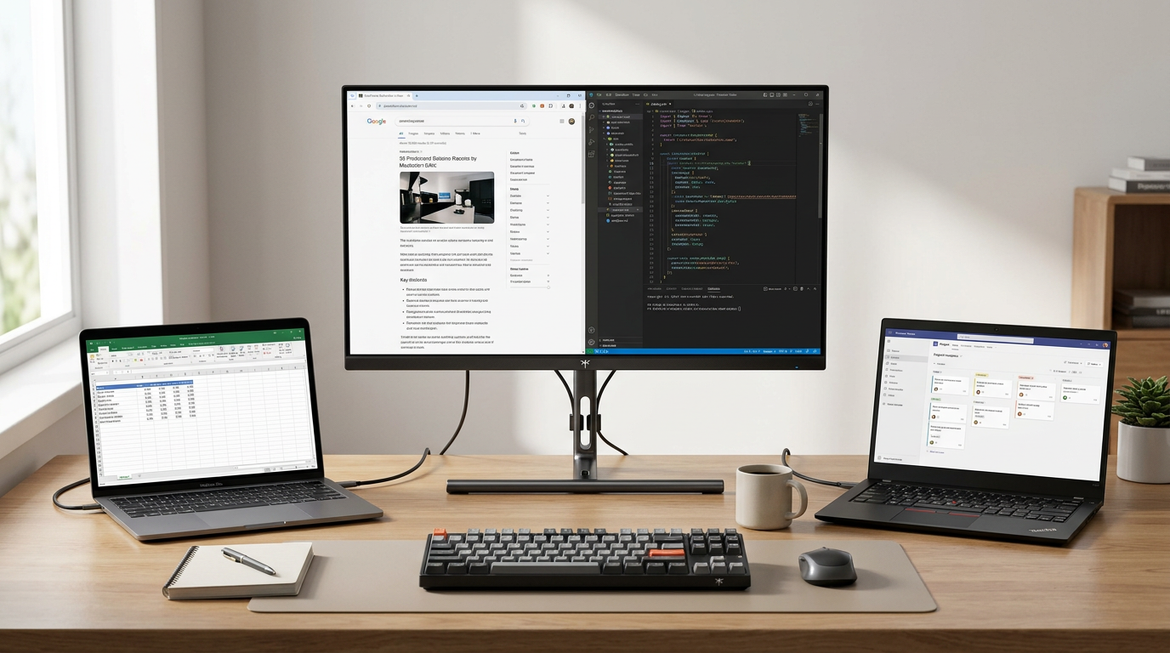
The most common mistake is treating "smart" as a promise of simplicity. In real use, the display still depends on cable types, source-device output, Wi-Fi, app availability, and how many people need to see the screen at once. If those pieces do not line up, the device becomes a nice-looking extra rather than a helpful field tool.

How the MEGAPAD Fits Creator Field Workflows
One workable example is the KTC MEGAPAD 27-inch. It is not a universal answer for every production kit, but its mix of a 27-inch FHD touch display, Android 14, Google EDLA, wheels, battery power, camera, speakers, and Type-C connectivity maps cleanly to the kind of temporary review setup many location teams are trying to simplify.
For set-side client preview, the 27-inch class size can be easier to share than a laptop when a few people need to see framing or timing together. That is especially true when the screen has to move between rooms or between stages during the same day. The practical gain is visibility and repositioning, not a guarantee of faster approvals.
For reference playback without a full desk rig, Android 14 and EDLA are the parts that matter most. They matter because they support the ecosystem side of the workflow, not because they promise any specific creator app will work perfectly. If your playback or review flow depends on a narrow app stack, you still need to check compatibility before you buy.
Battery is another conditional benefit. Product facts list a 9500mAh battery and up to 6 hours of runtime, but field runtime still depends on brightness, volume, source devices, and how long the display stays in use. That is why battery should be treated as setup flexibility, not as an all-day promise.
For readers who want a broader category view, the mobile touch screen collection is the easier place to compare similar models by size and use case. If you are only trying to decide whether this category belongs in your kit, that is usually more useful than chasing one model too early.
Compare Field-Friendly Options by Use Case
The best fit changes with the shoot. A smaller portable screen can be easier to move, a 27-inch model can be a middle ground for shared review, and a 32-inch class display is better when the main goal is a larger viewing surface.
| Workflow Need | 25-Inch MEGAPAD | 27-Inch MEGAPAD | 32-Inch MEGAPAD | Main Trade-Off |
|---|---|---|---|---|
| Quick run-and-gun approval | Stronger fit when the crew is moving fast | Middle-ground fit | Usually too much screen for the lightest setups | More screen size can slow repositioning |
| Longer battery-supported review | Good if portability matters most | Strong fit when battery and shared viewing both balance out | Good only if the larger canvas is worth the extra footprint | Runtime still depends on settings and workload |
| Larger shared viewing | Works when viewers stand close | Balanced fit for small teams | Strongest fit for bigger group visibility | Bigger screen usually means less mobility |
| Travel-first portability | Stronger fit | Balanced fit | Weakest fit | Larger displays are harder to move and store |
The useful takeaway is not that one model wins. It is that the best choice flips when the viewing group gets larger or the setup has to move more often. If the job is a fast approval on the go, the 25-inch option is easier to keep nimble. If the job is a more stable shared review, the 27-inch or 32-inch class can be the better fit.
If you want to browse the broader category, the smart monitor selection is a useful cross-check. If your setup is more traditional and you only need a fixed display, even the wider LCD monitors lineup may be enough.
Fit Test Before You Buy
Use this quick check before you order a portable smart display for field work:
- Define the scene first. Is this for set-side preview, playback, travel, or quick approvals?
- Confirm the source device path. Check whether you will use HDMI, Type-C, wireless casting, or standalone apps.
- Decide whether touch and smart OS features are actually needed, or whether you only want a bigger screen.
- Verify power access. If wall power is unreliable, battery support matters more; if not, it matters less.
- Measure the footprint. If the display has to roll between spaces, look for a setup that matches that movement instead of forcing one spot.
If those answers line up, the MEGAPAD-style category may be a reasonable fit. If they do not, a simpler monitor or a standard laptop-plus-display workflow may be the better call. The right choice is the one that reduces friction during the shoot, not the one with the most features on the page.
Final Takeaway
A portable smart display is worth considering when your on-location workflow keeps asking for a larger shared screen, quick touch interaction, and easier movement between setups. It is less compelling if you only need a normal monitor or if your apps and source devices are not ready for it. Use the checklist above to test fit first, then compare models only after the workflow is clear.
FAQs
How Is a Portable Smart Display Different From a Portable Monitor for Creators?
A portable smart display usually adds its own operating system, touch interaction, and sometimes battery support, while a basic portable monitor mainly extends another device's screen. For creators, that difference matters most when you want light standalone use or easier shared review on location.
What Should I Check Before Using One on a Shoot?
Check the source-device output, the cable type, the power plan, and whether the display will be shared by more than one person. Also confirm that the apps or playback tools you rely on will work in the real setup, not just on paper.
Can a Larger Portable Touch Display Replace a Laptop on Location?
It can reduce how often you reach for a laptop during previews or approvals, but it does not replace every editing, ingest, or file-management task. If your workflow still depends on full desktop software, treat the display as a helper, not a replacement.
Why Does Battery Support Matter During Client Reviews?
Battery support helps when the screen has to move between temporary locations or when wall power is awkward to access. It is useful, but runtime still changes with brightness, volume, and workload, so it should be treated as flexible support rather than a fixed all-day promise.
Can the Same Screen Work for Travel, Reviews, and Playback?
Sometimes, yes. The shared overlap is that all three tasks benefit from easy placement and simple viewing. The catch is that the right size, power setup, and app access can differ, so the best all-around choice depends on how often the screen moves and who is watching.