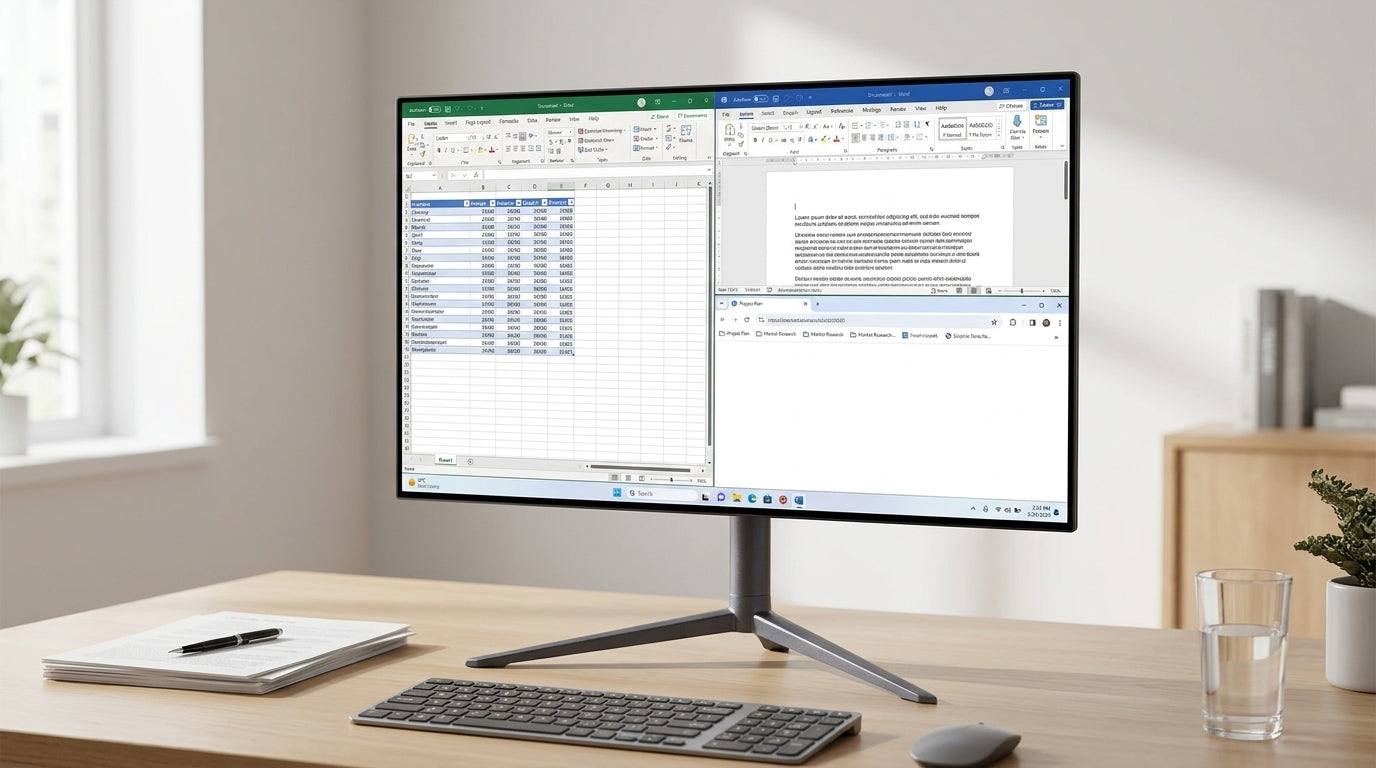
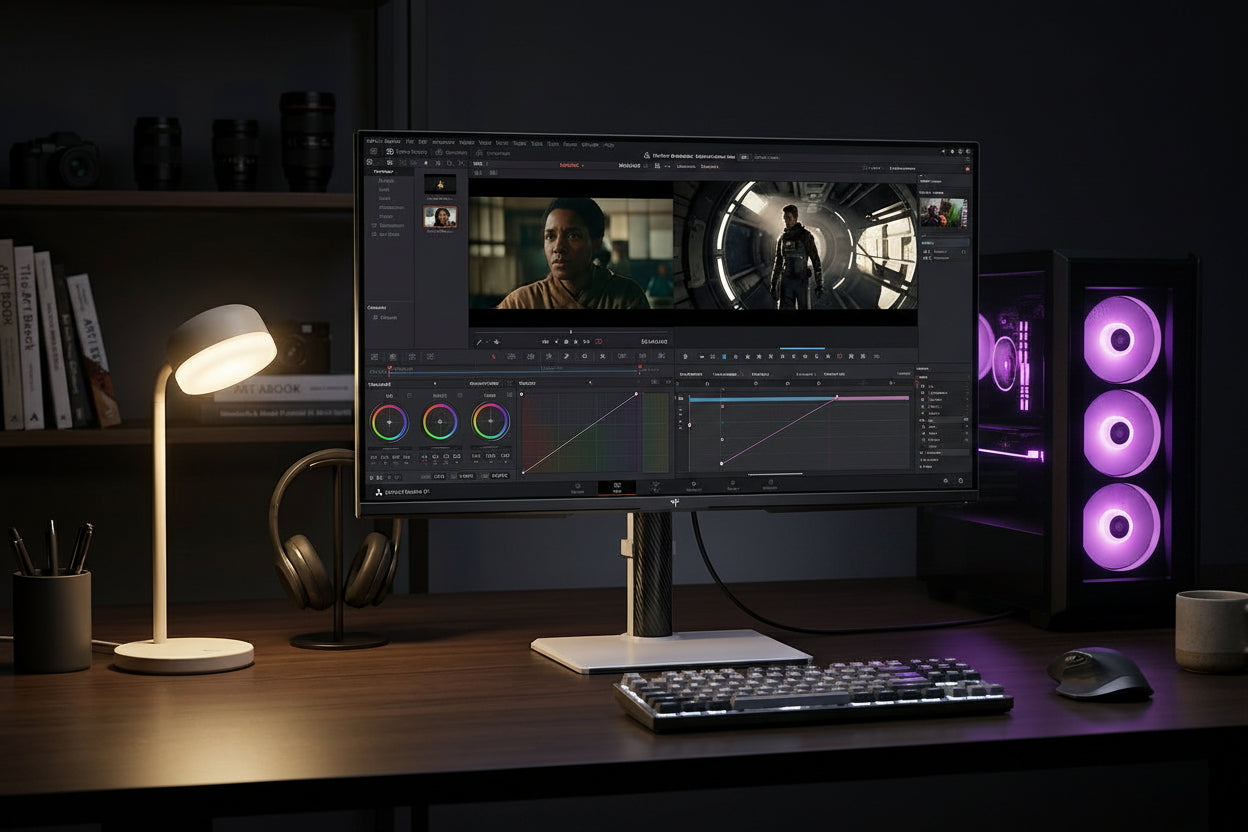
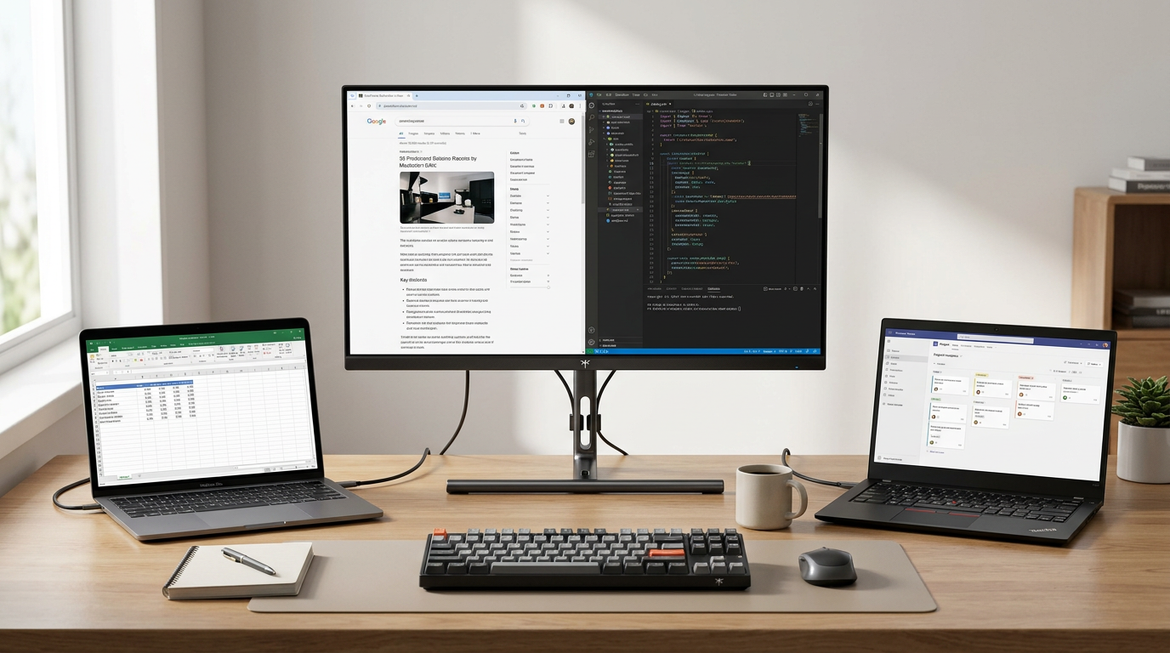
A portable smart display for hybrid work should make room-to-room movement easy without turning every call into a cable hunt. The right choice depends on where you work, how often you move, and whether you need unplugged runtime or just a flexible second screen.

What Hybrid Workers Need From a Portable Smart Display
For most buyers, the first question is not the brand, it is the workflow. If the display will live in one room most days, a simpler setup may be fine. If it needs to move between a desk, sofa, kitchen table, or spare room several times a week, mobility and fast reconnects matter more than extra polish.
A portable smart display for hybrid work should reduce friction, not add it. In practice, that means you should check screen size, battery expectations, and how often you want to roll, rotate, or unplug the screen before you compare extras.
How Much Screen Size Fits a Desk-And-Room Routine
Screen size changes the buying decision more than many shoppers expect. A 25-inch display can feel easier to move and store in apartments or shared rooms, while a 32-inch model feels more like a standing workspace or room centerpiece. If you usually view from a couch or a larger room, the bigger panel can feel more natural. If you are mostly working near a desk edge or carrying the display through tighter spaces, the smaller option is usually less awkward.
The practical rule is simple: size should match distance. If the screen will sit close and move often, choose the size that you can reposition without planning around furniture. If it will anchor a room and serve as a main work screen, the larger format is easier to live with.
Which Mobility Features Actually Reduce Friction
Rolling wheels help most when the display has to cross doorways, rugs, or thresholds. Height adjustment and rotation matter when one screen has to work for video calls, document review, and a sofa viewing angle on the same day. Those features sound minor until the setup becomes part of your routine.
For hybrid workers, mobility only helps if it reduces repeat work. If you have to reconnect cables, drag a chair, and change the angle every time you move the display, the "portable" part stops feeling useful. A good fit is the one that saves steps during the workday.
Battery Runtime and Power Trade-Offs
Battery life is one of the clearest filters for a portable smart display for hybrid work, but it should be treated as scenario-based planning, not a promise. Brightness, volume, wireless use, and app load can all shorten runtime. KTC's 25-inch MEGAPAD provides the clearest published examples: 11 hours at 55% brightness and 30% volume, 7 hours at 80% brightness and 50% volume, and 4 hours at 100% brightness and 100% volume during 2K streaming.
That spread matters because it shows how quickly a day can shrink when the screen is pushed harder. A meeting-heavy schedule at moderate settings can look very different from a bright living-room setup with video calls and wireless casting. For MEGAPAD models in the Mobile Touch Screen collection, the shortlist should start with the battery pattern that matches your real day, not the biggest number on the box.
| Model | Battery | Published Runtime Signal | Best Fit |
|---|---|---|---|
| KTC MEGAPAD 25" FHD Google EDLA Portable Touch Monitor built in Camera | 5000mAh / 73Wh | 11h at moderate settings, 7h at higher settings, 4h at max settings | Buyers who want the clearest runtime reference and a lighter, more compact portable screen |
| KTC MEGAPAD 27" FHD Android 14 Google EDLA Smart Touch Monitor with 9500mAh Battery | 9500mAh | Up to 6 hours | Buyers who want a larger FHD display with rolling mobility and a stronger battery label |
| KTC MEGAPAD 32" 4K Android 14 Google EDLA Smart Touch Monitor with 8550mAh Battery | 8550mAh | Up to 5 hours in the manual, up to 11 hours on the product page | Buyers who want a 32-inch 4K mobile display with adjustable height and room-to-room movement |
| KTC MEGAPAD 32" 4K Android 13 Google EDLA Smart Touch Monitor with 9500mAh Battery | 9500mAh | Up to 11 hours | Buyers who want a 32-inch 4K option with longer stated battery capacity for all-day-style sessions |
Use those figures as a filter, not a guarantee. If your real day includes bright rooms, wireless casting, and long calls, choose the option with more battery headroom than you think you need. If the display will mostly stay near power, a smaller battery can be acceptable when mobility matters more than unplugged time.
Connectivity and App Support Basics
Connectivity is where many shoppers either save themselves trouble or create it. The right display should match the way your laptop, phone, or meeting stack already works. In the MEGAPAD collection, the listed models support Google EDLA Android, Wi-Fi, Bluetooth, and casting, with USB-C on the 25-inch model and HDMI on larger models.
That mix is useful, but only if it matches your daily path. If you rely on a wired laptop feed, confirm the exact port you plan to use most. If you want quick room-to-room streaming, check whether wireless casting is your primary path or just a backup. A wired option is usually the safer fallback when the network is crowded or the meeting matters.
For setup follow-up, How to Pair Bluetooth Keyboard and Mouse With Smart Touch Monitor is a helpful next step if you plan to use the display as a true work surface instead of a passive screen.
Wired Laptop Connections to Confirm
USB-C and HDMI solve different problems. USB-C is often the cleanest path when you want fewer cables and a simple laptop connection. HDMI is useful when you need broader device support or a more traditional input path. Before buying, make sure your most-used device can actually output through the port you expect.
If your workday depends on plugging in fast after every room move, prioritize the connection that takes the fewest extra adapters. That small choice can save more time than a higher resolution spec ever will.
Wireless Streaming and Casting Checks
Wireless casting is convenient, but it is not the same as reliable wired input. In real use, crowded Wi-Fi can create delays, reconnects, or awkward pauses before a meeting starts. If you plan to cast often, treat wireless as a convenience layer and keep a wired backup available.
That approach is especially helpful for hybrid workers who switch rooms during the day. The screen feels much easier to live with when you are not betting the entire setup on one network.
Video Calls, Apps, and Account Sign-In
App support matters when the screen is not just for display, but for work. If you want to run video calls, open productivity apps, or sign into accounts directly on the display, check that the app path is compatible with the Android environment and your company's login rules.
A portable smart display can work well for meetings, documents, and streaming, but it is not a universal replacement for every laptop workflow. If your employer locks down sign-ins or requires desktop-only tools, the display should be treated as a companion device, not your only workstation.
Mobility Features That Change Daily Use
Mobility only matters if it changes how many steps you repeat every day. Wheels are helpful when the display needs to cross a room without lifting. Height adjustment helps when one screen has to work for a standing setup in the morning and a seated call in the afternoon. Rotation is useful when portrait and landscape use both matter.
The KTC MEGAPAD 32" 4K Android 14 Google EDLA Smart Touch Monitor with 8550mAh Battery is the clearest example in the lineup because its listing includes rolling mobility, adjustable height, and 4K smart display features in one package. For buyers who move a screen often, those details matter more than a small spec bump elsewhere.

Rolling Base Stability and Room-To-Room Movement
Rolling wheels sound simple, but stability decides whether they help or annoy you. A base that tracks smoothly across thresholds and rugs is useful. A base that feels twitchy, too wide, or hard to park can make the screen feel heavier than it really is.
If your home has narrow hallways, door lips, or thick rugs, test the movement question first. A display that looks portable on paper can still be a poor fit if the base does not suit your floor plan.
Height, Tilt, and Rotation for Shared Spaces
Height and rotation matter most when the same display has to serve different people or different postures during the day. A screen that adjusts easily can move from desk height to couch viewing without forcing awkward neck angles.
That is a real comfort issue, not just a spec detail. For hybrid work, the best mobility setup is the one that makes a quick transition feel normal instead of like a mini reinstallation.
Weight, Footprint, and Storage Reality
A portable smart display can still be cumbersome if it occupies too much floor space or takes effort to store. Weight affects how often you actually move it. Footprint affects where it can park without becoming a hazard or blocking the room.
This is where the category can disappoint shoppers. If you want something that behaves like a tablet, a large mobile screen will not deliver that experience. It is better thought of as a movable workspace.
How to Choose the Right Model for Your Workday
Start with room movement. If the screen will stay near one power outlet, you can prioritize size or resolution more freely. If you need true room-to-room use, battery and wheels matter first. For shoppers browsing the category broadly, the Mobile Touch Screen collection is the cleanest starting point because it keeps the whole portable class in one place.
Then narrow the shortlist by connection path. If your laptop workflow is mostly wired, make sure the port matches your setup. If you rely on wireless casting, be honest about how often the network is crowded. Finally, choose the screen size that fits the rooms you actually use, not the biggest panel that seems appealing in a product photo.
If your routine is mostly desk-to-sofa or room-to-room presentation work, a larger rolling model can be the better fit. If you want easier storage, simpler carrying, and fewer spatial compromises, a smaller portable screen is usually the safer choice.
A Simple Buyer Decision Path
- Decide whether the display stays in one room or moves often.
- Check whether unplugged use is a daily need or only occasional.
- Confirm the main wired input, then treat wireless as backup or bonus.
- Match screen size to your usual viewing distance.
- Choose the model that removes the most friction from your actual routine.
For many shoppers, that process will point toward the 25-inch model if battery clarity and compact movement matter most, or the 32-inch mobile model if you want a larger screen that behaves more like a room-based workspace.
Final Checklist Before You Buy
Before you check out, confirm five things: the screen fits the room, the battery matches your brightest or longest session, the connection path matches your laptop, the mobility features match your floor plan, and the return policy gives you room to adjust if the fit is off. If those boxes check out, the portable smart display for hybrid work is far more likely to feel useful than experimental.
FAQs
Q1. How Long Does a Portable Smart Display Usually Last on Battery for Hybrid Work?
There is no universal number because brightness, wireless casting, audio level, and app load all change runtime. A useful way to shop is to compare your real workday to the published runtime examples, then add a buffer if you plan on bright rooms or frequent video calls.
Q2. What Connection Should I Prioritize: USB-C or HDMI?
Choose the one that matches your most common device path. USB-C is often cleaner for laptops, while HDMI can be the safer fallback for broader device compatibility. If you move between rooms a lot, keep a backup cable or adapter in the bag so the screen never becomes the bottleneck.
Q3. Can a Portable Smart Display Replace a Tablet for Work Mobility?
Only if you want a larger, more workspace-like setup. A portable smart display is better when you need room-to-room flexibility, a bigger viewing area, and app-based work in a movable form factor. If you want one-handed portability, a tablet still wins.
Q4. Why Do Rolling Wheels Matter More Than They Seem?
Wheels matter because they change the amount of effort required to move a larger screen between spaces. That only helps, though, if the base is stable and the layout has enough clearance. In tight apartments, wheel design can make the difference between convenient and annoying.
Q5. What Should I Check Before Buying for Video Calls?
Confirm the camera, speaker setup, app access, and login path before you buy. Those features are compatibility checks, not universal guarantees, so the real question is whether your meeting apps and account rules work smoothly on the display you are considering.
The Best Fit Starts With Your Room, Not the Spec Sheet
The right portable smart display for hybrid work fits your room layout, unplugged time needs, and main connection path. Choose the 25-inch model for compact mobility or the 32-inch rolling option for a larger workspace. Battery headroom and setup friction decide the shortlist.