Burn-in anxiety is real for buyers comparing OLED monitor burn-in risks, but it is usually a usage question, not a reason to panic. If your desk shows the same taskbar, email pane, or spreadsheet all day, the risk matters more. If your use is mixed and you are willing to manage brightness and static UI, an OLED can still be a sensible buy.

Why Burn-In Anxiety Matters
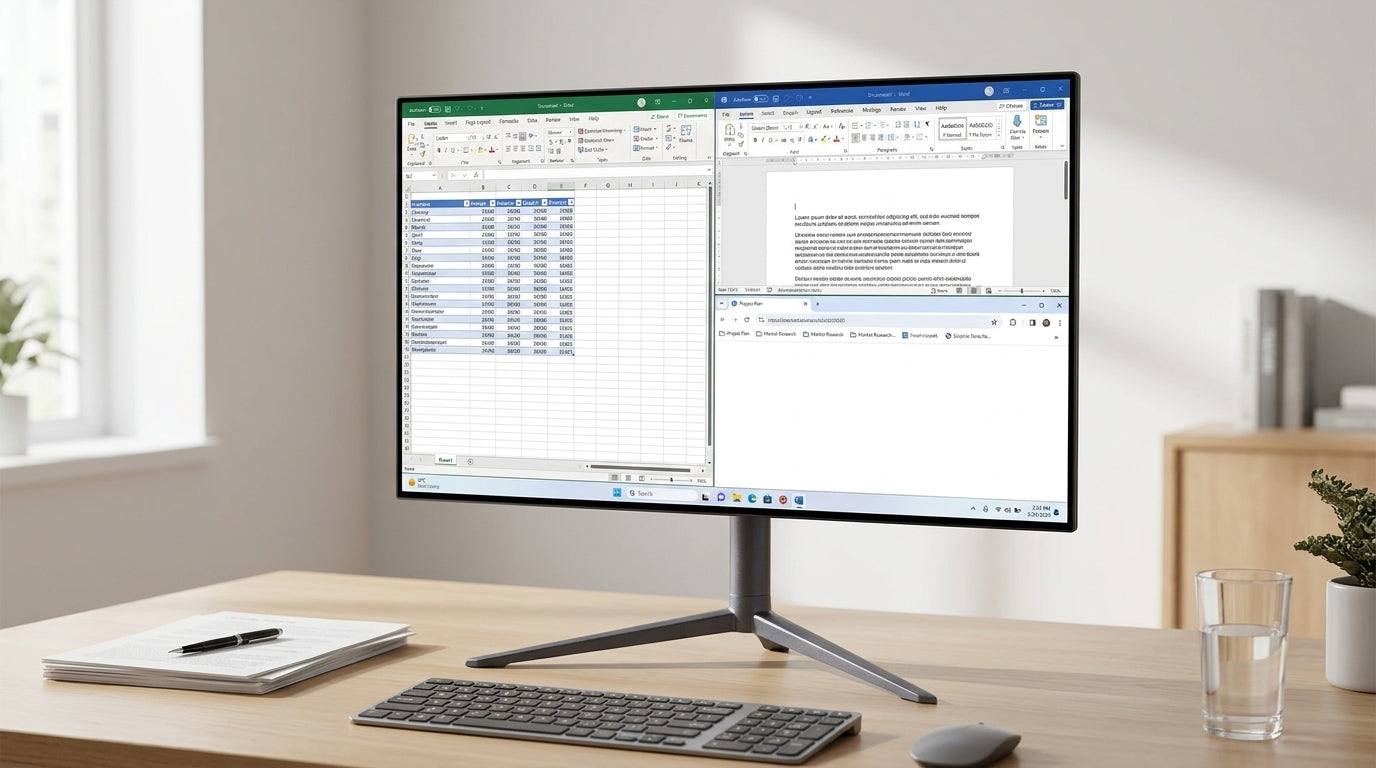
For office buyers, the worry comes from static UI patterns that stay in place for hours. Long-term test data from RTINGS' real-life OLED burn-in testing shows why people treat this as a cumulative wear issue rather than a sudden defect. That matters most on desks that leave the same browser tabs, dashboards, or productivity apps open most of the day.
What this means in practice is simple: the more your work leaves identical content on screen, and the brighter you run it, the more burn-in concern you should carry into the purchase. A mixed desk with gaming, video, and changing windows is a different case than an all-day spreadsheet station.
If you want to browse the category while you compare options, start with all OLED monitors and keep your own desk habits in mind.
What Warranty Language Usually Covers
The first thing to check is the written policy, not the brand name on the box. Warranty language for OLEDs has moved toward 3-year coverage that explicitly mentions burn-in or permanent image retention, according to recent OLED warranty trend coverage. That is a helpful market signal, but it is not a universal promise.
A useful decision sentence is this: if the policy does not name burn-in, or it narrows coverage to certain uses, treat the warranty as weaker than the headline suggests. If it does name burn-in, read the exclusions next, because claim friction often lives there.
Burn-In Coverage Versus Exclusions
Some policies separate panel defects from wear, misuse, or non-residential use. Others add conditions around maintenance features, claim timing, or support steps. Commonly, the fine print matters more than the broad warranty length.
The practical check is to look for three things: whether burn-in is named, whether exclusions are specific, and whether the policy ties coverage to normal use. That last phrase matters because a policy can sound broad while still limiting the situations it actually protects.
Proof, Claim Steps, and Ownership Notes
Keep your order record, serial number, photos, and any support messages. If a claim requires troubleshooting or proof of purchase, having those items ready can save time.
This is also where buyers often overestimate convenience. A long warranty does not automatically mean a frictionless claim. It only tells you that the coverage exists in writing, not how easy the process will feel.
What Value Shoppers Should Verify Before Buying
For value OLED buyers, a 3-year burn-in warranty is more reassuring when the panel warranty, burn-in wording, and claim process are all easy to find in one place. If the policy is vague, a strong headline is not enough.
If you want a broader look at affordable premium displays while comparing coverage and price, check monitors above $400. For sale pricing and bundle timing, deals and offers can be a useful second stop.
How to Lower Burn-In Risk
You cannot remove burn-in risk completely, but you can lower stress on static areas. Manufacturer guidance for OLED care recommends habits like dark mode and auto-hiding the taskbar, which makes sense for office users because those are two of the most persistent UI elements on a desktop.
Use the simplest habits first:
- Turn on dark mode in apps you leave open all day.
- Auto-hide the taskbar when practical.
- Avoid leaving the same dashboard or spreadsheet full-screen for hours without change.
- Lower brightness when the room does not need a bright panel.
- Let the screen show varied content during breaks instead of freezing on one layout.
A good way to think about this is risk reduction, not protection. These habits can help reduce uneven wear, but they do not make OLED burn-in impossible.
For deeper background on long-life OLED behavior and desk-use trade-offs, this longevity guide is a useful follow-up.

When OLED Fits Office Work
| Desk scenario | Fit level | What to check first | Better alternative if needed |
|---|---|---|---|
| Heavy static office use | Weak fit | How long the same UI stays visible, and how tolerant you are of burn-in anxiety | A non-OLED office monitor is usually simpler |
| Mixed productivity and gaming | Good conditional fit | Whether you use dark mode, breaks, and moderate brightness | Mini-LED can be easier if you want less burn-in concern |
| Mostly entertainment or gaming | Stronger fit | Whether the panel warranty explicitly covers burn-in | OLED is easier to justify here |
| Budget-first office work | Often not the best fit | Whether the OLED premium changes the value equation too much | A good IPS office monitor is usually the cleaner buy |
The pattern is straightforward: OLED is more comfortable when static UI exposure is lower and the buyer values contrast, motion, and gaming image quality. It becomes less attractive when the desk is mostly spreadsheets, dashboards, or long static work sessions.
That is why a mix of work and play matters so much. On a mixed desk, OLED can make sense if you are willing to manage the panel. On a purely office desk, a non-OLED often reduces worry and still does the job.
If you are comparing panel types for a work-heavy desk, OLED vs. Mini-LED for creators is a good next read because it frames the choice around workflow friction, not just specs.
Pick the Right Value OLED
If you want a value OLED reference point, the KTC G27P6 is worth checking only if its fit matches your desk. Its US warranty page says the monitor has 3-year warranty protection, and the product fact pack describes burn-in coverage under the policy terms. That is the kind of wording value buyers should look for, because it turns anxiety into something you can verify before checkout.
Best Fit for Mixed Productivity and Gaming
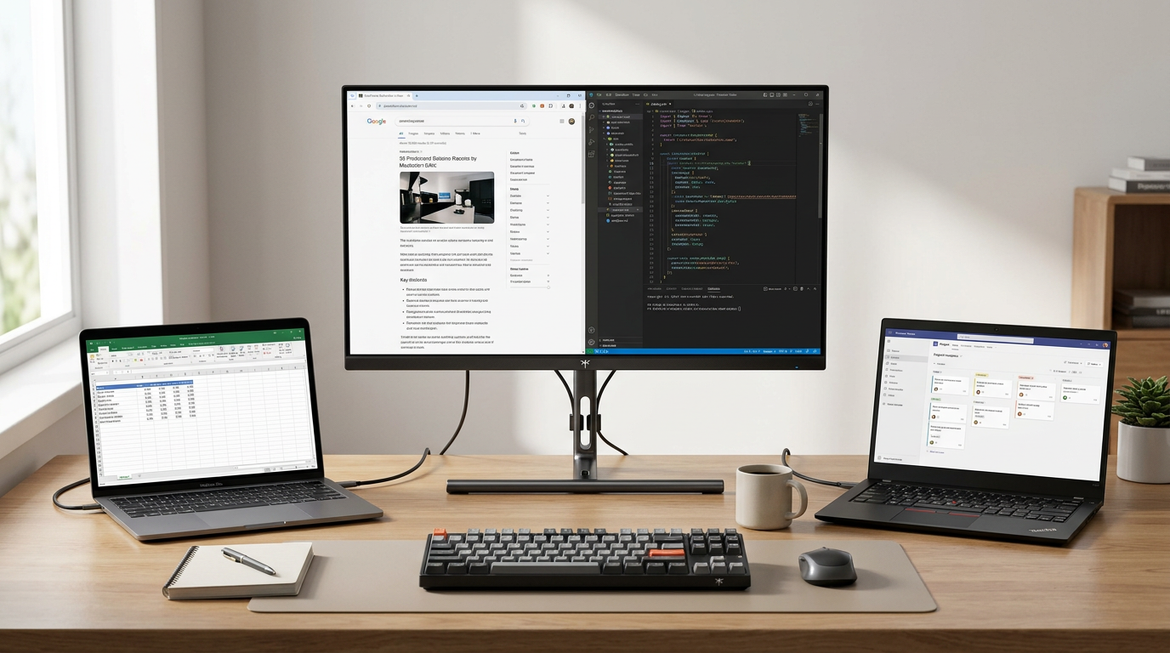
The G27P6 makes the most sense for buyers who want OLED contrast and fast gaming response, but do not leave identical office UI on screen all day. Its listed 27-inch QHD OLED panel, 240Hz refresh, USB-C, and 3-year warranty make it a plausible value option for mixed desks, especially if you are comfortable using the prevention habits above.
A short decision sentence helps here: if your desk is mostly work with occasional gaming, this kind of OLED can still fit, but only if you accept some maintenance discipline and read the warranty wording closely. If you want a simple, low-worry office monitor, an IPS or Mini-LED model is usually easier to live with.
For the product page itself, use the KTC OLED monitor as a check-before-buying reference, not as proof that every office desk is a good OLED desk.
Best Fit for Light Office Use With Occasional Breaks
If your office use is lighter, your windows move around, and you take breaks that change what stays on screen, OLED becomes more reasonable. The risk is still there, but the usage pattern is less punishing than an all-day static UI workload.
In that case, prioritize the warranty wording, the return window, and the daily habits you can actually keep. Light office use can reduce concern, but it does not replace the need to verify coverage and exclusions before buying.
Buyer's Checklist Before Checkout
- Confirm whether burn-in is explicitly named in the warranty.
- Check what the policy excludes, especially misuse, abnormal use, or unsupported conditions.
- Save the return window and claim steps before you click buy.
- Ask yourself how often your desk shows the same static UI for hours.
- Decide whether you are comfortable using dark mode, auto-hide, and brightness discipline.
- If that sounds like too much work, choose a non-OLED office monitor instead.
If the answer is yes to mixed use, yes to warranty clarity, and yes to prevention habits, a value OLED may be a reasonable buy. If not, keep comparing and let a simpler office panel win.
FAQs
Can I Use an OLED Monitor for Office Work With Static UI?
Yes, but only if your use is mixed enough that the same UI is not frozen on screen all day. Static-heavy work, high brightness, and long sessions without breaks make OLED monitor burn-in concerns more relevant.
What Does an OLED Burn-In Warranty Usually Exclude?
Exclusions often involve misuse, unsupported use cases, unauthorized repair, or failure to follow claim steps. The exact wording matters, so read the policy instead of assuming all burn-in claims are treated the same.
How Can I Reduce Burn-In Risk on a Work-From-Home Desk?
Use dark mode where it helps, hide the taskbar, and avoid leaving one full-screen layout open for hours. Varying window placement and giving the panel different content during the day can also help reduce uneven wear.
What Should I Check in the Warranty Before I Buy a Value OLED?
Look for burn-in wording, coverage length, exclusions, claim steps, and whether the return policy gives you a fallback if the panel is not a good fit. A short, clear policy is better than a vague headline.
Can Mixed Productivity and Gaming Make OLED a Better Choice Than an Office LCD?
Often yes, because mixed use lowers static exposure and gives you more of OLED's contrast and motion benefit. The choice still depends on budget, brightness habits, and how much warranty friction you are willing to tolerate.
Final Takeaway
For value shoppers, OLED monitor burn-in makes the most sense when the desk is mixed, the warranty is clear, and the habits are realistic. If your work is mostly static, a simpler panel is usually the safer value call.