OEM monitor value framework means more than finding the lowest sticker price. For procurement teams and value-conscious buyers, the better question is whether the monitor matches the workload, supports the desk setup, and comes with a warranty and return process you can actually verify.

What Counts in a Real Value Check
A low price can still be a poor buy if the panel does not fit the job, the stand creates posture friction, or the support path is hard to confirm. That is why the OEM monitor value framework should weigh price, panel quality, ergonomics, and ownership risk together.
For desk-bound work, OSHA's monitor guidance emphasizes that adjustability matters because height, tilt, swivel, and pivot help reduce awkward neck and back positions. That does not mean every buyer needs a full-motion stand, but it does mean a fixed setup should be a deliberate choice, not an accident.
Factory-direct buying raises the stakes because warranty language and return handling can matter more than they do at a familiar retail shelf. The FTC's business guidance on federal warranty law is a good reminder that full and limited warranties need clear disclosure, so the fine print is part of value, not an afterthought.
Build the Comparison Scorecard
Use a scorecard that forces every quote to answer the same questions. That keeps one vendor from looking cheaper only because shipping, returns, or support friction were left out.
Price and Total Ownership Cost
Start with the invoice price, then add anything the buyer would actually pay to own the monitor, such as shipping, mounting accessories, or a monitor arm if the included stand is too limited. The cheapest option is only the best value when the workload is simple and the support process is easy to verify.
A useful rule of thumb is this: if a bargain monitor needs extra hardware, a return gamble, or repeated setup work, the real savings may shrink fast. In procurement, that hidden cost is often the difference between a good unit price and a good purchase.
Panel Quality and Color Metrics
Panel quality should never be reduced to resolution alone. Resolution tells you how much detail the panel can show, but it does not tell you whether the screen reproduces color well enough for the work.
For color-sensitive buying, the difference between coverage and volume matters. RTINGS' color gamut guide explains that coverage is the share of a reference space a display can reproduce, while gamut volume is the total range and can exceed 100%. TFTCentral's gamut explainer makes the same practical point: do not treat the two as interchangeable.
That distinction changes the decision. If the work is office-first, moderate color performance is often enough. If the work is creator-adjacent, you should care more about consistent color behavior across the screen and less about headline numbers that do not translate into daily use. Panel uniformity directly influences whether that color stays consistent from edge to edge.
Support, Warranty, and Returns
Support deserves its own line item because a bargain that is hard to service can stop being a bargain the moment something arrives wrong. Check who handles inspection, replacement, and return approval before the order is placed.
The FTC says warranty terms should be clear, so buyers should look for plain language on duration, coverage, and remedies. For factory-direct purchases, that means checking how the claim starts, who pays what, and whether the return window is long enough to test the panel properly.
A fast shipping promise helps only if the buyer can inspect the unit while the return path is still open. In practical terms, document the serial number, order number, and initial condition as soon as the box arrives.
Ergonomics and Desk Fit
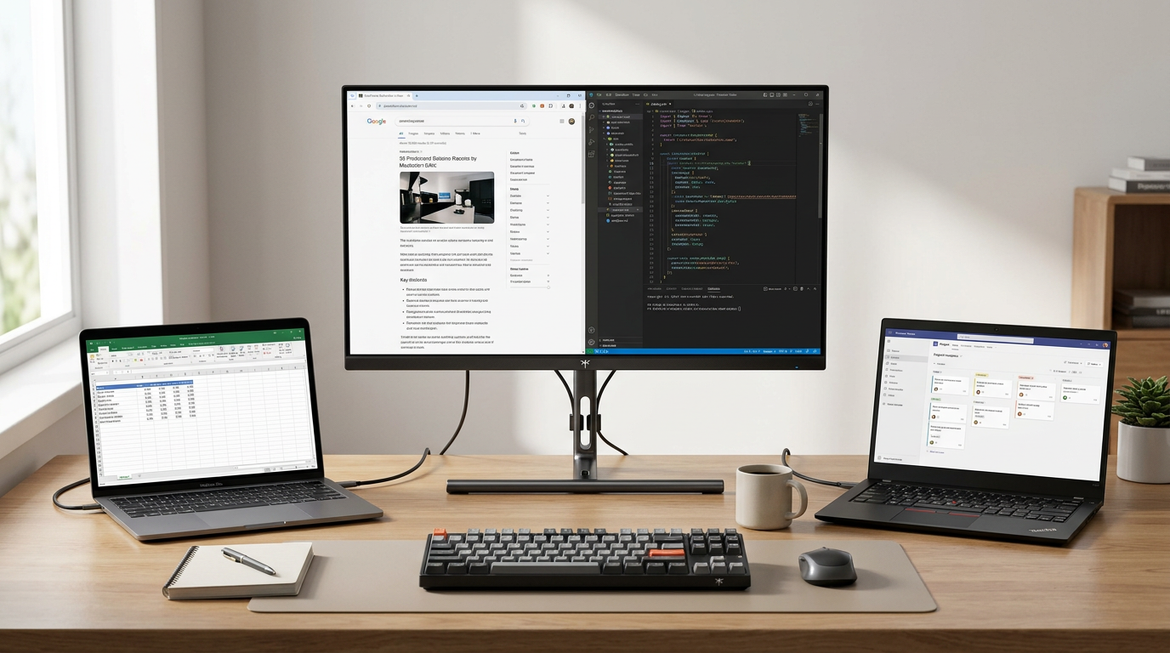
Ergonomics are a productivity feature, not a luxury add-on. If the monitor will live on a desk for hours a day, the included stand should match the posture needs of the user and the depth of the desk.
OSHA's workstation guidance supports the idea that adjustability reduces strain, especially when the monitor needs to move up, down, or slightly side to side to stay comfortable. If the setup is fixed and simple, a basic tilt stand can be fine. If the desk is shared or the user changes posture often, full adjustment becomes more valuable.
This is also where the OEM monitor value framework separates good specs from good fit. A monitor can look attractive on paper and still be awkward if the stand forces the user to compromise on height or viewing angle every day.
Price Versus Performance Trade-Offs
Different buyers get value from different things. The right monitor for a home office is not the same as the right monitor for a competitive gaming desk, even if both sit at the same 27-inch size.
| Buyer Type | What Usually Matters Most | What Often Matters Less | When The Choice Flips |
|---|---|---|---|
| Budget Office | Price, ergonomics, text clarity, support clarity | Extreme refresh rate | Flip toward better ergonomics if the desk is used all day |
| Value Gaming | Refresh rate that the system can actually drive, motion clarity, stable input path | Extra color headroom you will not use | Flip toward 1440p or 4K if the PC or console can support it |
| Premium Mixed-Use | Resolution, color balance, USB-C convenience, stand quality | Very high refresh rates | Flip toward gaming-first specs if play is the real priority |
| Creator-Focused | Color coverage, color consistency, uniformity, workflow comfort | Raw refresh-rate headroom | Flip toward higher refresh if motion work is part of the job |
In other words, the best value depends on where regret would show up first. Office buyers usually regret a bad stand or confusing support process more than they regret modest refresh rates. Gamers usually regret paying for speed they cannot use. Creators usually regret a screen that looks fine in the specs but inconsistent in daily work.
For a quick comparison map, this OEM-direct hardware ROI guide is useful as a background lens because it frames when OEM-direct pricing is buying real savings and when the premium is really support insurance.

Support and Warranty Checks That Matter
Before you buy, run the support audit in the same order every time. That makes the decision easier to defend internally and reduces the chance of missing a weak spot in the listing.
- Confirm the warranty length and whether the terms are described as full or limited.
- Check the process for inspection, replacement, and return approval.
- Verify the return window and whether shipping leaves enough time to test the panel.
- Save the order number, serial number, and photos of the unboxed condition.
- Decide who on the team owns the claim if the panel arrives defective.
That process matters because factory-direct buyers must often do more verification up front than buyers shopping familiar shelf brands. A monitor with a strong specification sheet can still be a poor procurement choice if the support path is vague.
If you want to review a concrete office-first option after the criteria are clear, the KTC 27-inch 4K office monitor is a reasonable navigation point for buyers who already know they want a 27-inch 4K office-style monitor and are checking whether its listed setup matches their needs.
For readers comparing direct-to-consumer QA and post-purchase handling, The 'Panel Lottery' is Dead is a useful follow-up on what factory-direct quality control claims usually try to address.
Shortlist by Workload, Not Hype
The easiest way to use an OEM monitor value framework is to filter by workload first, then shortlist by spec. That avoids paying for features that do not change daily satisfaction.
Home Office and Mixed Productivity
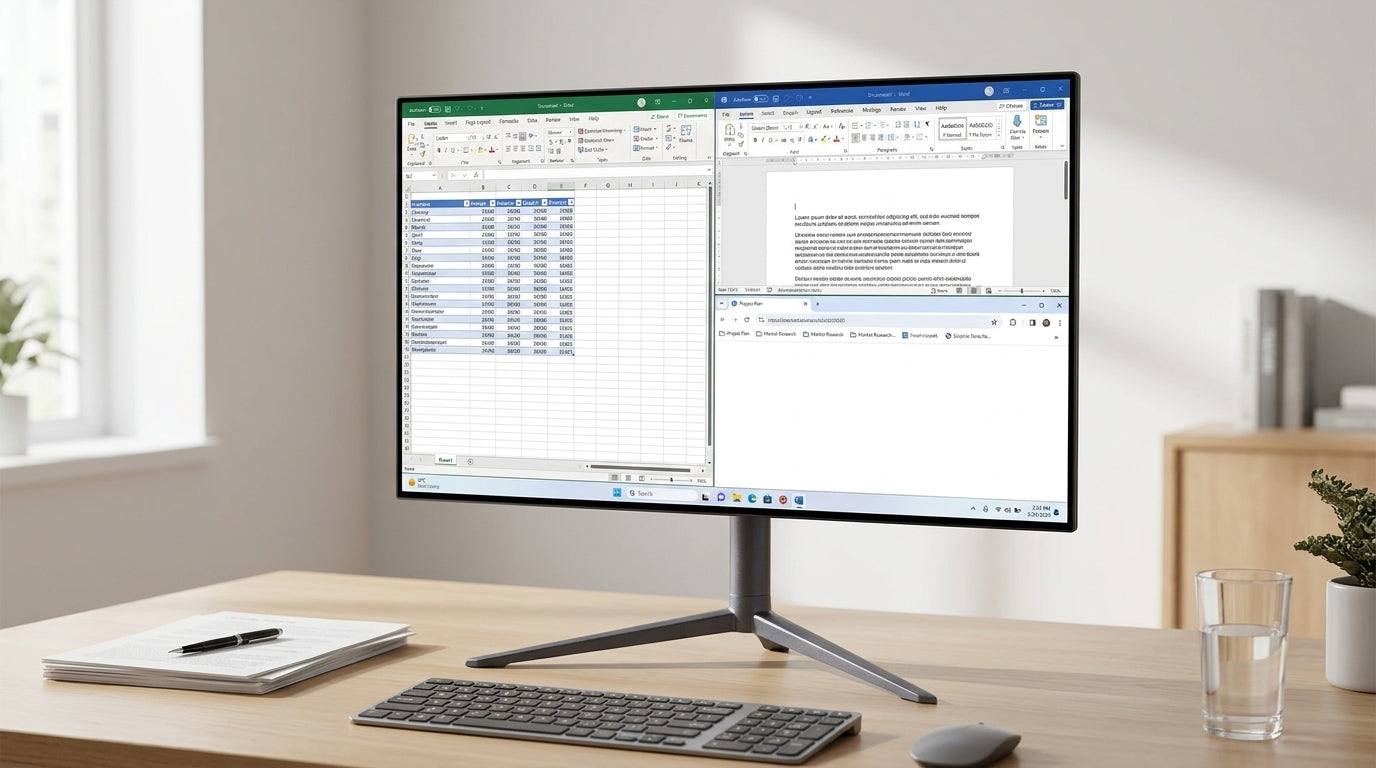
Home office buyers should usually prefer text clarity, comfortable posture, and simple support verification over flashy refresh-rate claims. A 27-inch 4K or QHD monitor can make sense when the desk is used for email, documents, spreadsheets, and video calls, especially if the stand is easy to live with.
For buyers who want a category starting point, the Office Monitor collection is a practical browsing path. It is not proof that every model there fits every desk, but it helps narrow the search to office-oriented configurations.
A monitor becomes a weaker fit when the desk is shared, the stand is too rigid, or the buyer expects more movement than the included base can give. In those cases, the monitor arm or a full-adjustment model matters more than another spec bump.
Creator and Color-Sensitive Work
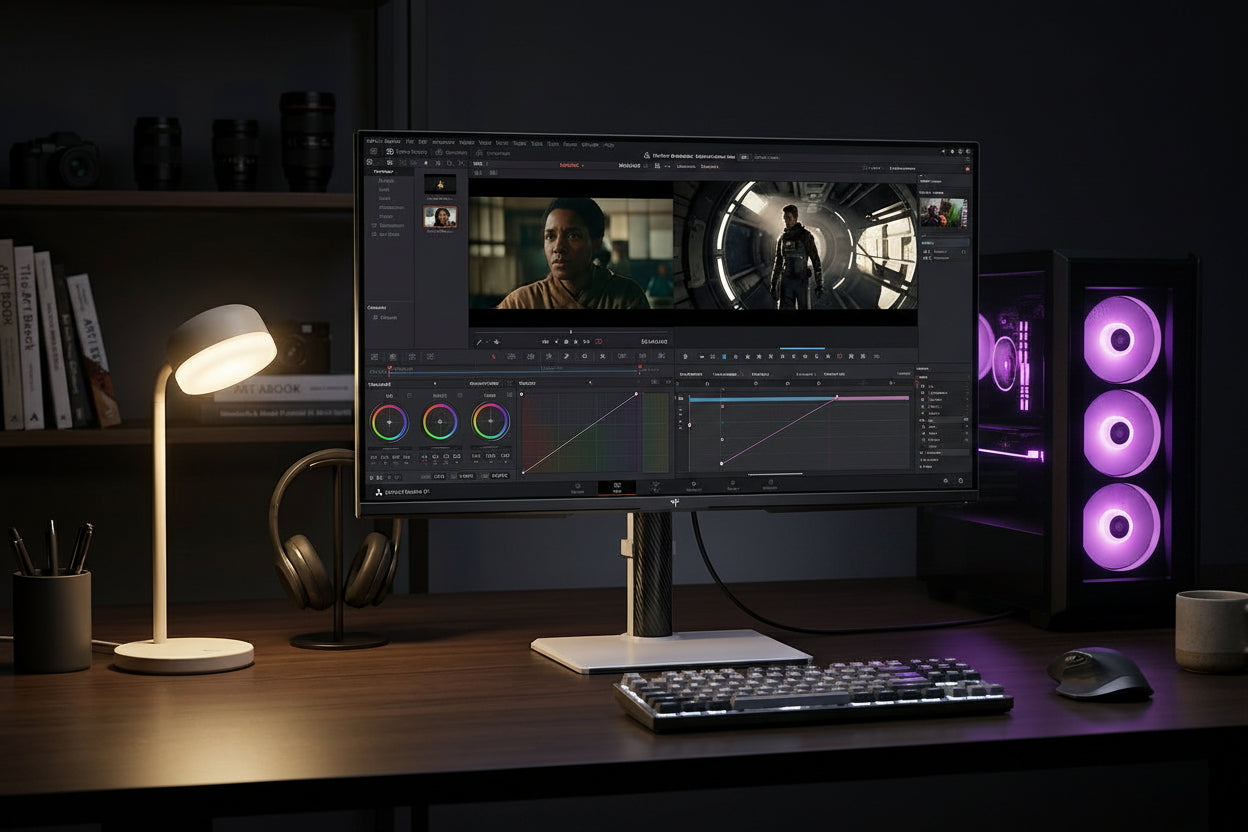
Creators should place more weight on color coverage, color consistency, and screen uniformity than on excess refresh headroom. That does not mean gaming-oriented models are bad; it means the buyer should ask which trait will affect the work every day.
If a monitor is being used for design review, photo work, or content creation, then coverage and uniformity deserve a closer look than they do in office-only use. The OEM panel grades guide is a sensible background read if you want a more detailed way to think about panel tiers before comparing quotes.
The recommendation flips when the workflow is mixed and the buyer cares about one screen doing multiple jobs. In that case, a balanced monitor can be more sensible than a strictly creator-tuned one, especially if the office workload is heavier than the color-critical work.
Competitive Gaming and Motion Clarity
Gamers should pay for the refresh rate they will actually use, not the refresh rate that looks impressive in a headline. If the GPU or console cannot hold the promised mode, the extra spec may not turn into a better experience.
For this buyer group, the Gaming Monitor collection is the most natural category starting point. It helps separate fast, motion-focused models from office-first displays without pretending they are interchangeable.
A gaming monitor becomes a weaker fit when the buyer mostly works, rarely plays fast titles, or needs stand flexibility more than motion speed. In those cases, a mixed-use monitor often gives better day-to-day value.
One concrete example is the KTC 27-inch 4K gaming monitor, which fits buyers who want a mixed 4K and high-refresh path rather than a pure office or pure esports setup. Treat it as a fit check, not a universal recommendation.
For a deeper view of how OEM tuning can close some gaps with bigger brands, OEM firmware tuning is worth a look, especially if you care about overdrive behavior and OSD flexibility.
Final Checks Before You Order
Match the monitor to the main use case, not the most impressive spec on the page. Then confirm the ports, cable, refresh mode, return window, and warranty process before checkout.
Run a quick pre-order scan: verify the listed stand adjustments against your desk depth, confirm the return window covers at least one full workday of testing, and note the exact support contact method. These three checks catch most post-delivery surprises.
The safest OEM monitor value framework is the one that catches problems early. If the panel arrives, inspect it immediately, save the packaging until you are sure it passes, and keep the claim details in one place. That is how a good-looking deal stays a good deal after delivery.
FAQs
Q1. How Do You Compare OEM Monitor Value Without Overweighting Price?
Use a four-part view: price, panel quality, ergonomics, and support. A lower sticker price only wins if it does not create a bigger cost later through a weak stand, poor fit, or a return process that is hard to use.
Q2. What Panel Specs Matter Most for Real-World Monitor Quality?
Resolution, refresh rate, color coverage, color volume, uniformity, and brightness all describe different things. Coverage and volume are especially easy to confuse, so check what a spec actually measures before assuming it applies to your workflow.
Q3. Why Does Warranty Language Matter in Factory-Direct Monitor Buying?
Because the warranty terms shape what happens if the panel arrives defective or fails early. Clear language on full versus limited coverage, plus a simple return path, often matters more than a longer promise that is hard to use.
Q4. Can a Budget OEM Monitor Still Be a Good Value?
Yes, if the monitor fits the workload and does not force daily compromises. A budget model can be strong value for office or casual gaming when it covers the basics well and the support process is easy to verify.
Q5. How Do You Build a Buying Checklist for Procurement Teams?
Turn the framework into pass-fail items for price, panel fit, ergonomics, support, and delivery timing. That keeps the team from arguing over vague preferences and makes vendor comparisons easier to repeat across future purchases.
The Best Value Is the Fit You Can Verify
Value is the monitor that matches the workload, supports the desk setup, and provides a verifiable warranty and return path. Checking panel quality, ergonomics, and support before checkout turns the framework into a repeatable process that reduces post-purchase surprises.