OEM monitor value buying framework means looking at panel quality, firmware behavior, stand fit, and warranty risk together, not just chasing the lowest sticker price. A cheap monitor can still be a good buy, but only when the use case, support terms, and daily ergonomics line up with the spec sheet.
When OEM Value Is Real
OEM value is real when the monitor gives you the right mix of image quality, features, and ownership terms for your use case. That often means you are paying less for brand markup, not less for the panel itself. But the lower price only counts if the monitor also fits your desk, your device connections, and your tolerance for support friction.
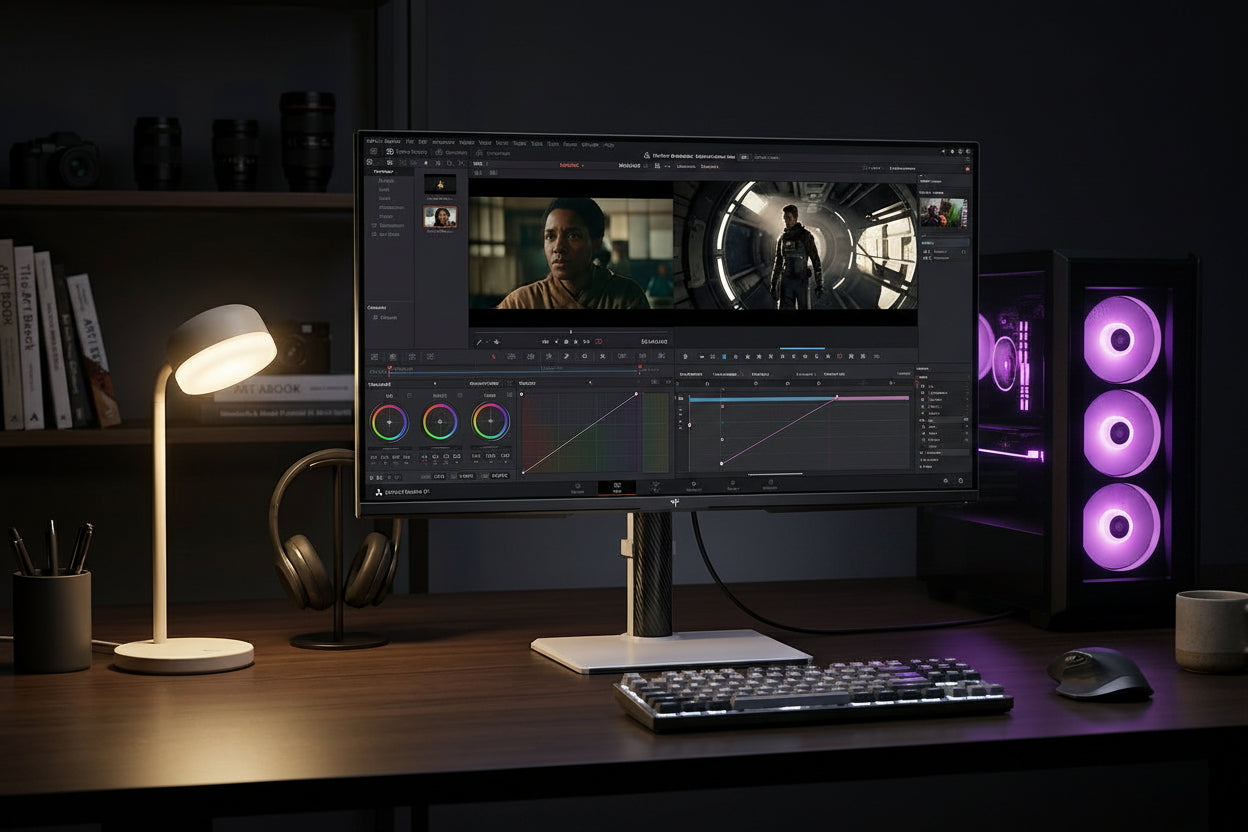
For most buyers, the question is simple: would you rather save money up front, or pay more for a smoother retail experience? The answer changes by scenario. A gamer who mostly wants fast refresh and decent HDR may accept a leaner support package. A creator or office user may care more about calibration, USB-C convenience, and a cleaner return path.
If a listing looks unusually cheap, check whether the savings come from fewer extras, lighter firmware polish, or weaker support terms. That is the core of the OEM monitor value buying framework. It is not a verdict on the brand name; it is a way to separate a true value buy from a bargain with hidden tradeoffs.
A natural next step is to compare the monitor against a broader brand-tax audit or a sourcing guide if you want to understand where the price gap is coming from.
What to Check Before You Trust the Price
Start with panel quality, because that is where a lot of monitor value is won or lost. A common benchmark for color accuracy is Delta E, or ΔE, which describes how close the displayed color is to the intended color. In practical terms, RTINGS treats ΔE below 2 as a strong target for professional-grade color discussion. That does not guarantee perfect performance, but it does give you a useful reference point.

Do not stop at a single gamut number. Coverage tells you how much of a color space the panel can display, while gamut volume tells you the full range of colors it can produce relative to that space. Those are related, but they are not the same. A monitor with strong sRGB coverage can still behave differently from one with broader gamut volume, especially if you use it for photos, video, or color-managed work.
Here is the practical order that usually works best:
- Check the native resolution and refresh rate first, because they shape the whole experience.
- Check panel type and calibration next, because they influence sharpness, color, and consistency.
- Check HDR, Adaptive Sync, and any mode-switching features only after the basics are clear.
- Check the ports, because a monitor is only as useful as its input compatibility.
- Check the stand and warranty last, but do not skip them.
That sequence matters because it keeps you from overpaying for marketing language. A high refresh rate is useful for gaming, but it does not rescue a weak panel. Likewise, wide color numbers are helpful, but they do not automatically mean accurate color. If you want a deeper calibration workflow, the linked factory-panel calibration audit is a good follow-up.
Panel Quality and Calibration
For gaming buyers, panel quality usually means speed, contrast behavior, and whether the image still looks stable when motion gets busy. For mixed-use buyers, it also means text clarity and whether the monitor can stay comfortable in long desktop sessions. A spec sheet can look impressive while still hiding weak calibration or uneven tuning.
Treat ΔE as a decision aid, not a magic promise. If a monitor is factory-calibrated to a strong target, that is a better sign for creator work and general accuracy than a vague "accurate colors" claim. If the vendor also separates coverage from gamut volume, that is another sign the listing is being written carefully rather than loosely. For a closer read on how color metrics are commonly explained, monitor color accuracy basics can help translate the terminology.
Firmware, Inputs, and Feature Behavior
Firmware is where many OEM monitor surprises live. Two monitors can share similar panel specs and still feel very different once you start switching inputs, toggling HDR, or using Adaptive Sync. Tom's Hardware's monitor buying guidance is useful here because it keeps the focus on the parts that change daily use, not just headline specs.
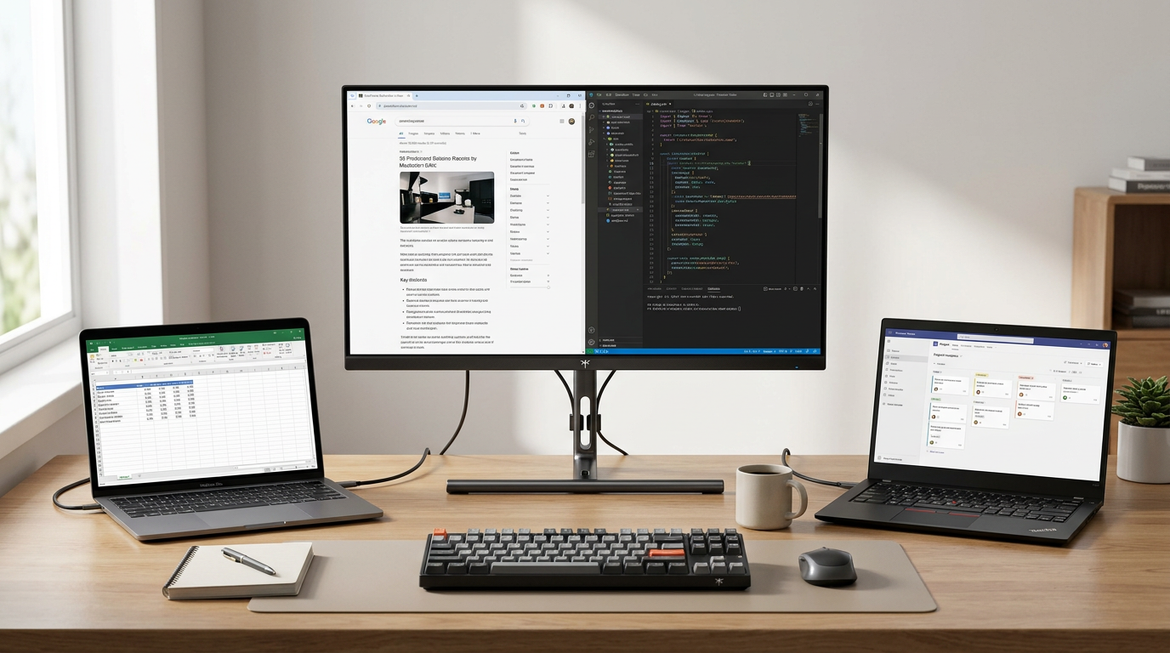
A good rule is to verify what the monitor explicitly supports, then ignore anything that is implied but not stated. Adaptive Sync, HDR, KVM, USB-C charging, and multi-mode refresh all matter only if the listing or manual clearly confirms them. If you plan to use the monitor across PC, console, or laptop setups, firmware behavior may matter more than one extra spec tier.
Build Quality, Stand, and Desk Fit
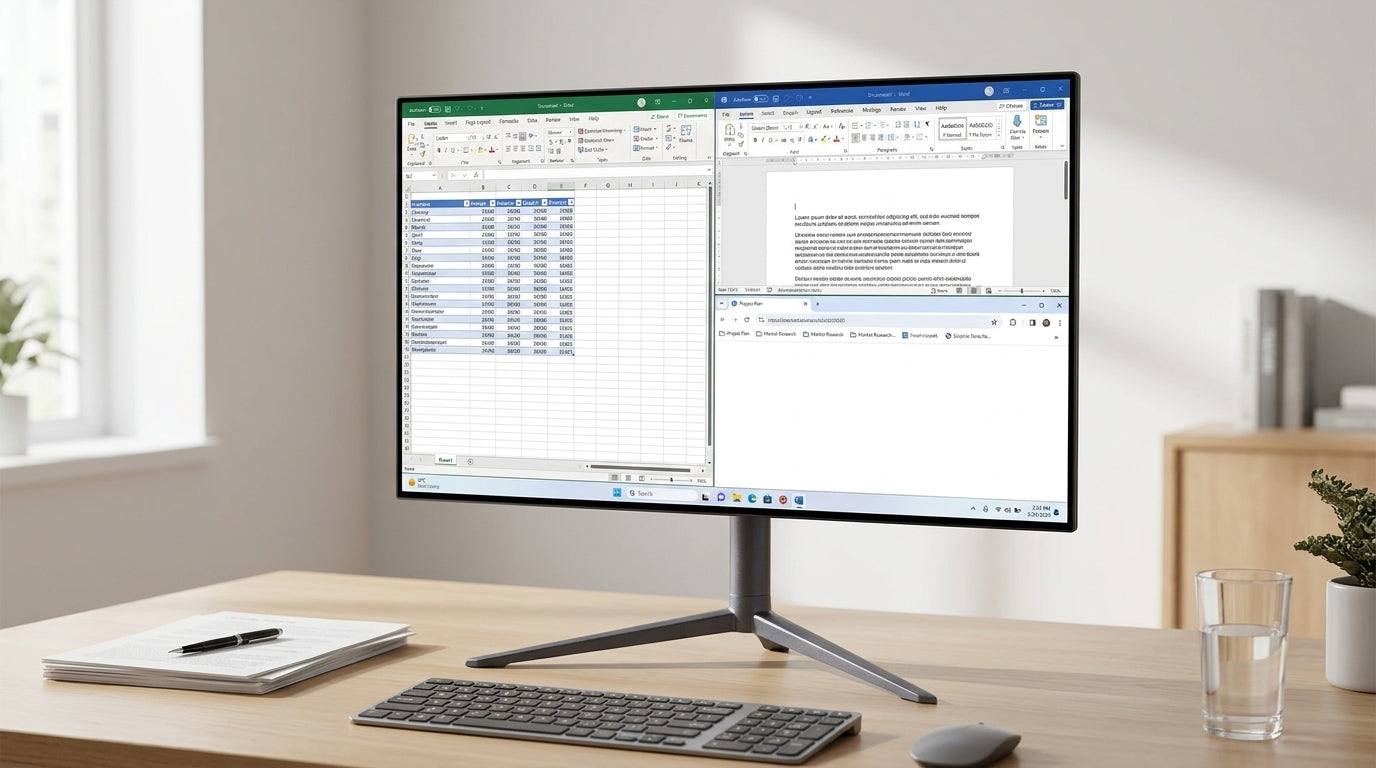
Stand design is one of the easiest ways to misjudge value. A monitor can be technically strong and still be a poor desk fit if it only tilts, sits too low, or takes up too much space. This is where ownership friction shows up. You notice it when you cannot line up the screen with your eyes, when cable routing gets awkward, or when you end up buying an arm later.
Check for height adjustment, swivel, pivot, VESA support, and quick-release convenience. If you know you will use a monitor arm anyway, a fixed stand is less of a problem. If you want one display to handle work, play, and long sessions without extra accessories, ergonomic flexibility becomes part of the value calculation.
Warranty, Shipping, and Support Terms
Warranty and support are part of monitor value because they affect the real cost of owning the display after checkout. Compare warranty length, return window, support contact options, and shipping timing before you assume a bargain is low risk. Fast shipping is nice, but it does not replace a workable return or service path.
For defect language, ISO 9241-307 defines pixel defect classes, which can help you understand why one seller may treat a pixel issue differently from another. Use that as a definition reference, not as a promise of a perfect panel. If the policy matters to you, read the seller terms before you buy.
OEM Monitors Versus Premium Brands
Premium brands are not automatically better, and OEM monitors are not automatically the same as cheaper quality. The real comparison is usually about where the money goes. OEM options may win on spec-per-dollar, while premium brands may justify part of the markup through firmware polish, calibration confidence, and after-sales support.
| Evaluation Dimension | What OEM Buyers Should Verify | Where Premium Brands May Still Add Value | Who Should Lean This Way |
|---|---|---|---|
| Panel quality | Resolution, refresh rate, calibration target, and whether color numbers are coverage or volume | More consistent tuning or easier setup out of the box | Buyers who care most about image specs for the money |
| Firmware and inputs | HDR behavior, Adaptive Sync support, port limits, and switching stability | Smoother OSD behavior and fewer surprises in daily use | Buyers who use multiple devices or care about convenience |
| Build and stand fit | Height, swivel, pivot, VESA support, and quick-release design | Better ergonomics and more polished accessories | Buyers who want a cleaner desk setup |
| Warranty and support | Return window, warranty length, and contact path | Broader retail support and simpler service handling | Risk-averse buyers who value peace of mind |
That comparison is why the OEM monitor value buying framework stays conditional. If you care most about lower upfront cost, OEM can be the smarter path. If you care most about service confidence and a smoother ownership experience, the premium markup may still be worth it.
Where KTC Fits in the Decision
KTC is most relevant when you want the value side of the equation without giving up the spec tier you actually need. For gaming-first buyers, the M27T6S is the more natural fit: 27-inch Fast IPS, 2560×1440, 200Hz, HDR1000, Adaptive Sync, and a 3-year warranty. That makes sense if you want fast QHD play with stronger HDR ambition, not if your main goal is office polish.
The H27P3 fits a different buyer. It is the better match for creators, Mac users, and mixed-use desktop work because it pairs 5K sharpness with factory-calibrated ΔE<2, 100% sRGB, 99% DCI-P3, 99% Adobe RGB, and USB-C 65W PD. In other words, it is a text-first and color-first choice, even though it can still handle lighter gaming use.
The decision flip is easy to state: choose the M27T6S when speed and HDR matter most, and choose the H27P3 when text clarity and color work matter more. If you are shopping by budget tier rather than use case, the broader above-$200 monitor range is a useful place to compare adjacent options.

Buyer Fit Checklist
Use this five-step check before you buy:
- Confirm your main use case. Gaming, creator work, and office use do not reward the same tradeoffs.
- Verify the panel basics. Resolution, refresh rate, and calibration matter before any bonus feature does.
- Check firmware and inputs. Make sure the ports and modes fit your devices.
- Look at the stand and desk fit. If the stand does not work for your posture, the monitor value drops fast.
- Read the warranty and return terms. A good price is only a good deal if the support path is acceptable.
If the monitor passes those checks, OEM value is probably real. If it fails on support, ergonomics, or the one feature your setup depends on, pay more or choose a different class of display.
Final Takeaway
The safest way to use an OEM monitor value buying framework is to treat the price as a starting point, not the answer. If the panel, firmware, stand, and support terms fit your actual setup, OEM can be a strong value. If any of those parts break your workflow, the cheaper sticker price is not really cheaper.
FAQs
How Do I Know If an OEM Monitor Is Actually a Good Value?
A good OEM value buy is one that matches your use case without creating hidden costs later. Check the panel, firmware, stand, warranty, and return terms together. If the lowest price comes with weak ergonomics or a messy support path, it may not be the better deal.
What Specs Matter Most When Evaluating Panel Quality?
Start with resolution, refresh rate, panel type, and color accuracy. Then separate color coverage from gamut volume so you do not overread a spec sheet. A strong ΔE target is useful for creator work, while refresh rate and input behavior matter more for gaming.
Can an OEM Monitor Have Good Warranty Support?
Yes, but you have to verify it model by model. Warranty length, return window, and contact options matter more than the word "OEM" on the listing. A factory-direct monitor can still have solid support if the seller spells out the process clearly.
Why Do Some OEM Monitors Look Cheaper Than Brand-Name Models With Similar Specs?
Often because the price gap is not only about the panel. It can also reflect differences in firmware polish, retail support, calibration work, or brand markup. That is why a direct OEM monitor vs premium brand comparison should look at the full ownership experience.
Who Should Avoid Buying an OEM Monitor?
Buyers who want the simplest retail experience, the broadest support ecosystem, or the least setup friction may be happier paying more. If you are highly risk-averse, or if your work depends on flawless support handling, premium-brand markup may buy real peace of mind.