For monitor fleet procurement in 2026, the right question is not which monitor looks cheapest. It is which setup keeps total cost, support friction, and rollout effort lowest across the full lifecycle. A bad procurement choice can leave you with 15% to 30% higher lifetime cost once spares, handling, and warranty delays are included, so the audit matters.

The 2026 TCO Baseline for Monitor Fleets
Start with landed cost, not sticker price. The U.S. Environmental Protection Agency’s TCO model for electronics treats acquisition, operations and maintenance, and end-of-life handling as one lifecycle decision, which is the right frame for monitor fleet procurement. In practice, that means you should count the monitor, freight, setup time, spare units, support handling, and retirement costs together.
For most startups, the biggest mistake is comparing only unit price across vendors. A cheaper quote can become expensive if it takes longer to deploy, needs more accessory juggling, or creates a harder replacement path later. A good baseline also separates one-time buying cost from recurring costs such as training, desk changes, and downtime.
Decision sentence: If two offers differ by only a small unit price gap, pick the one with lower support and rollout friction; if one offer requires more spares or more manual handling, the cheaper sticker price can be misleading.
A practical way to audit monitor fleet procurement is to score each option on five items: unit cost, delivery cost, setup labor, spare strategy, and replacement path. That keeps OEM-direct, retailer, and contract-heavy buying on the same page.
If you want a broader browse path before narrowing specs, the All Monitors collection is a neutral starting point, while the premium monitors above $200 collection helps when your fleet standard is above entry-level pricing.
Standardization Gains for Developer and Designer Desks
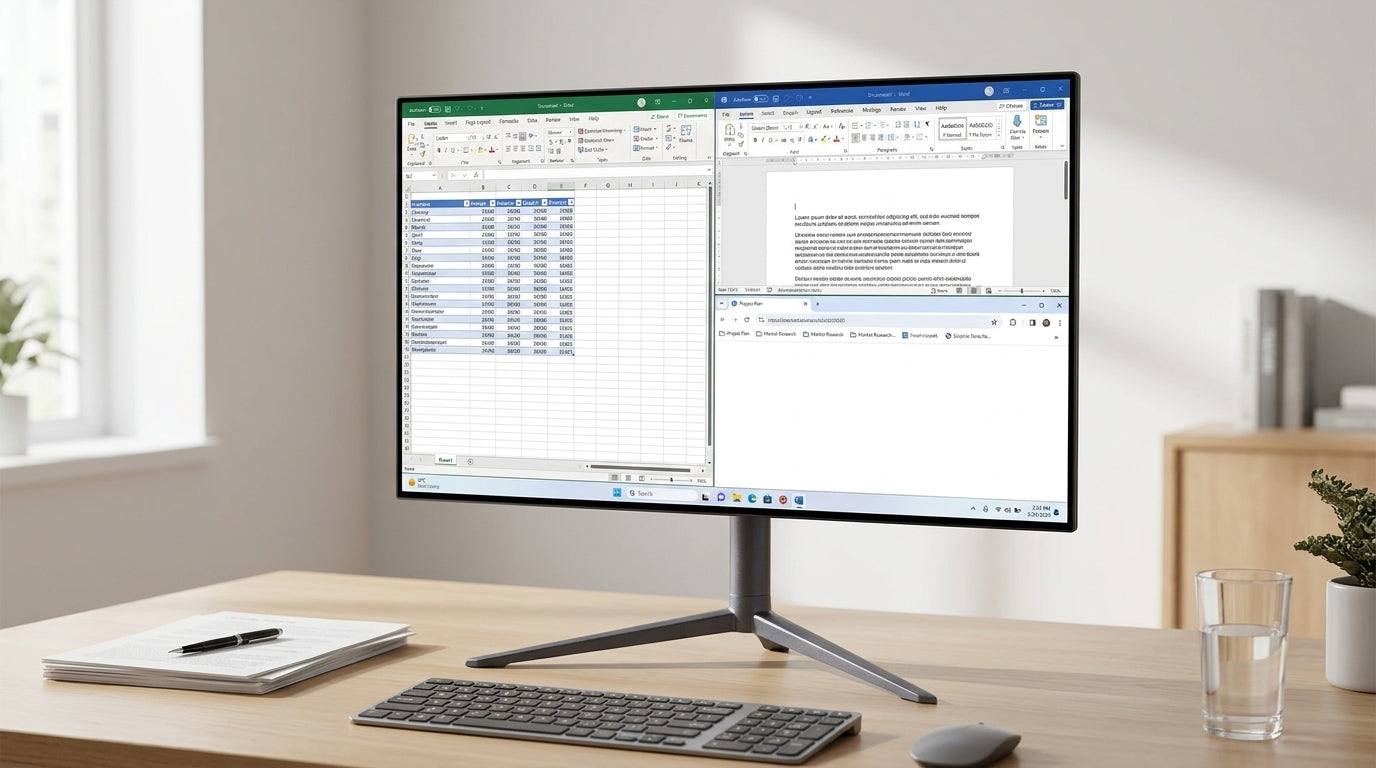
Standardization matters because it cuts avoidable friction, not because every team needs the same exact panel. The Office Monitor collection shows how office-focused displays are already grouped around 2K, 4K, 5K, and 60Hz to 120Hz use cases, which is useful when you want a smaller approved set instead of one-off purchases.

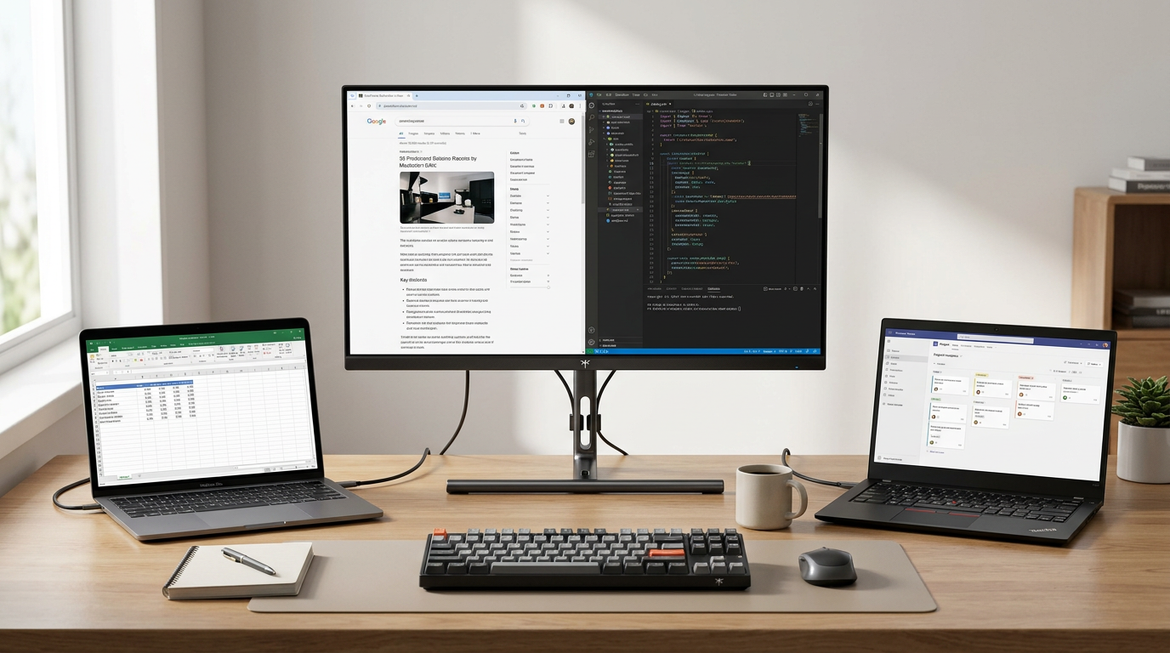
For developers, the main benefit is a predictable text workspace. For designers, the value is more stable color behavior and fewer surprises when a file moves from one desk to another. When those groups share desks or rotate seats, a common monitor standard reduces repeated setup decisions.
Decision sentence: If your office has frequent desk swaps, mixed role seats, or a growing spare pool, standardization is usually worth more than a modest unit discount; if every seat is fixed and specialized, the savings are smaller.
A smaller approved set also simplifies cable, mount, and replacement planning. That matters during hiring waves or office moves, when teams do not want to relearn which port, adapter, or preset belongs to which desk.
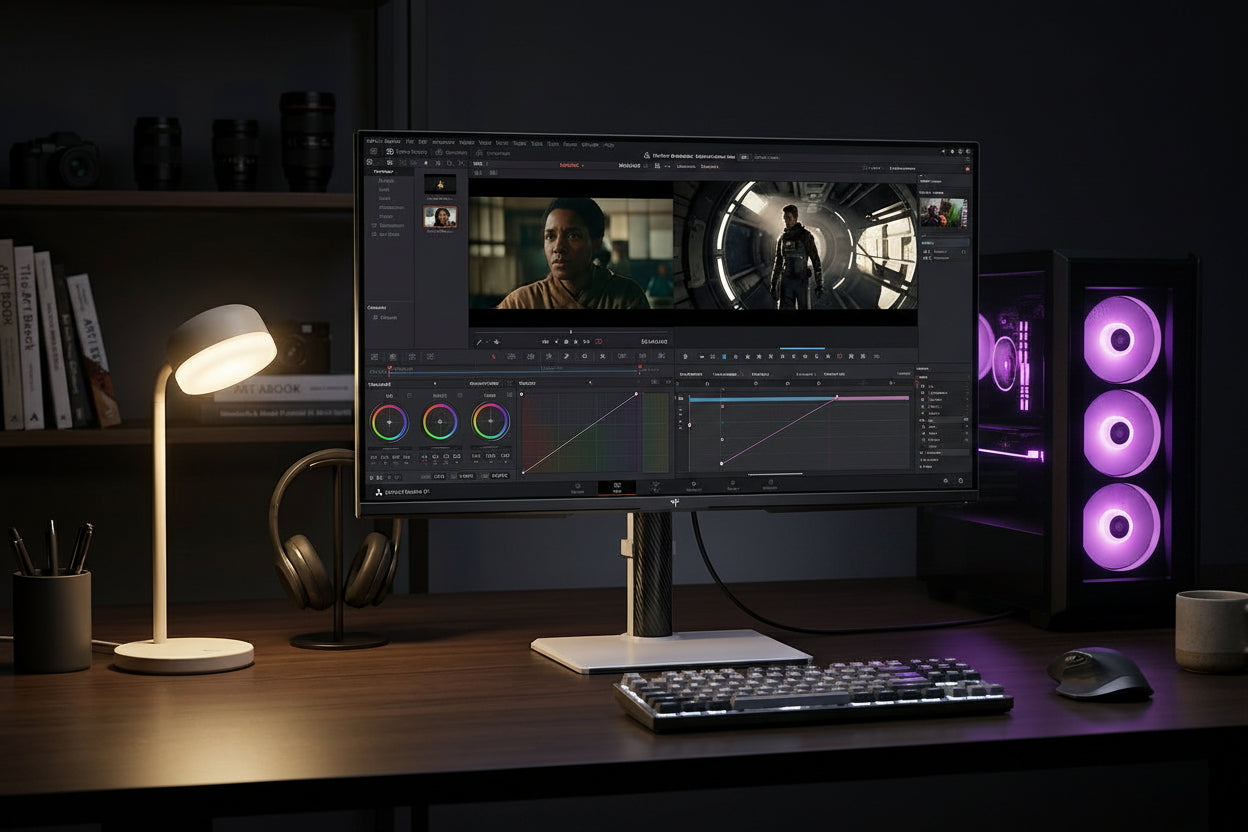
The trade-off is that standardization should follow workflow, not spec chasing. A 27-inch 2K office display may be enough for many engineering desks, while a 5K class screen can make more sense for color-sensitive creators or Mac-heavy workstations. The question is whether the workflow needs sharper text, larger workspace, or both.
For readers who are comparing setup methods rather than specific products, the filter-first strategy is a useful background read because it focuses the decision on panel source, bandwidth, and fit before brand names. For coding-heavy desks, text clarity and eye comfort matter more than spec inflation.
What Warranty Arbitrage Actually Changes
Warranty arbitrage is simply the trade-off between lower purchase price and the operational friction of support. The EPA’s lifecycle model already implies that support and end-of-life handling can matter as much as acquisition. In monitor fleets, the practical questions are who answers first, who pays shipping, and how long a broken unit leaves a desk idle.
Factory-direct support can be attractive when it reduces escalation layers, but only if the path is clear and the response time works for your team. Retailer support may feel simpler to some buyers because it is familiar, but the service route can be slower or less tailored for fleet use. The better choice depends on how much downtime your office can tolerate.
Decision sentence: If you need fast replacement and minimal admin overhead, prioritize the support path with the shortest escalation chain; if your team can tolerate a slower swap and wants easier point-of-sale returns, retailer-style handling may be the safer fit.
Before you assume the cheaper channel wins, check the support details: registration steps, shipping responsibility, service contact, and whether you need buffer units on hand. If the answer to any of those is messy, the price advantage can disappear quickly.
That is why warranty arbitrage should be treated as an operations choice, not a branding choice. The lowest quote is only useful if the support path keeps the fleet moving when something fails.
For a deeper support comparison, factory-direct service is the right background topic, because the core issue is not brand reputation but turnaround and escalation. If you already know you want a standardized office route, the Office Monitor collection is the cleanest category-level browsing path.
Bulk Buy ROI at 50 and 100 Units
Bulk-buy ROI is usually about threshold effects, not magic savings. Once you move from a handful of desks to a repeatable fleet, you can spread freight, simplify spares, and justify a standard model more easily. The shift is typically clearer around 50 units, and often stronger again around 100 units, but the exact break-even depends on support terms and rollout speed.
| Volume Scenario | What Improves | Main Risk | Procurement Signal |
|---|---|---|---|
| Below 50 Units | Simple pilot logistics and easier change control | Per-unit freight and support overhead can stay high | Buy only if the team is still testing role fit |
| Around 50 Units | Better chance to standardize one approved model and consolidate delivery | Mixed models can create spare and cable drift | Bulk sourcing starts to make more sense if support is clear |
| 100+ Units | Stronger leverage on freight, spares, and rollout planning | Contract complexity can hide replacement lag | Standardization becomes easier to defend in a budget review |
The key point is that volume alone does not create ROI. If you buy multiple tiers across departments, you lose part of the standardization benefit and may increase spare complexity. If you buy one approved model and stage delivery in batches, you usually get a cleaner operational result.
Decision sentence: If your rollout is still experimental or your team mix is changing fast, stay below the big-batch threshold and pilot first; if the deployment is stable and repeatable, 50-unit and 100-unit buying windows are easier to defend.
Directional thresholds are safer than exact promises here. The moment hidden logistics, warranty turnaround, or desk-specific accessories start multiplying, the bulk discount may be less important than the consistency of the deployment.
A Repeatable Startup Procurement Audit
A useful audit should be short enough to repeat and strict enough to prevent ad hoc buying. Use the same scorecard for OEM-direct, retailer, and contract quotes so the comparison stays clean.
Seat Count and Role Mix
Confirm the real seat count first, then split it by role. Developers, designers, general office users, and shared desks often do not need the same display mix. If you skip this step, you may overbuy high-spec units for seats that do not benefit from them.
Check whether you are standardizing one model or approving a small tier set. A single model is easier to stock, but a two-tier plan can be valid if it reflects real workflow differences.
Support Terms and Spare Strategy
Write down who handles the first response, who pays shipping, and whether there is a spare pool. This is where monitor fleet procurement often goes wrong, because support convenience is easy to ignore until a desk is down.
If the office cannot tolerate downtime, buffer stock matters more. If replacement times are already slow, a spare unit strategy can protect the rollout better than a small price cut.
Rollout Timing and Approval Path
Map the rollout window before you approve the order. A 12-week move, hiring wave, or headquarters setup can fail if procurement, IT, and facilities are not aligned.
Document cable types, desk mounts, and whether the team needs simple fixed stands or more flexible adjustment. That keeps install week from turning into a scavenger hunt.
For browsing after the audit, the All Monitors collection is the broadest category page, while the premium monitors above $200 collection is a better filter when the standard sits above entry pricing. If your office workflow is already defined, office-focused displays are the cleaner route.
Action Steps for 2026 Fleet Scaling
Lock the approved standard before quotes are refreshed. Pilot one lane, confirm support behavior, and scale only after the first batch is stable. Keep the approved list short for mixed offices and write the spare plan into the purchase request. Once rules are final, compare matching models such as the KTC 32-inch 2K office display or the KTC 27-inch 5K dual-mode option.