Mini-LED monitor for bright room shopping is mostly about desk visibility, not panel bragging rights. If your workspace gets real daylight or strong overhead light, a mini LED monitor can help, but only when brightness headroom, text clarity, and monitor placement all line up. If you want the short version: mini LED monitor choices are worth a closer look for bright desks, but they are not a cure for glare or bad ergonomics.

What Bright Rooms Change for a Monitor
A bright-room desk changes the whole buying question. Instead of asking which panel looks best in a dark room, you need to ask which screen stays readable when light hits it from the side, from above, or directly behind you. OSHA's workstation environment guidance is a good reminder that placement can matter as much as the display itself.
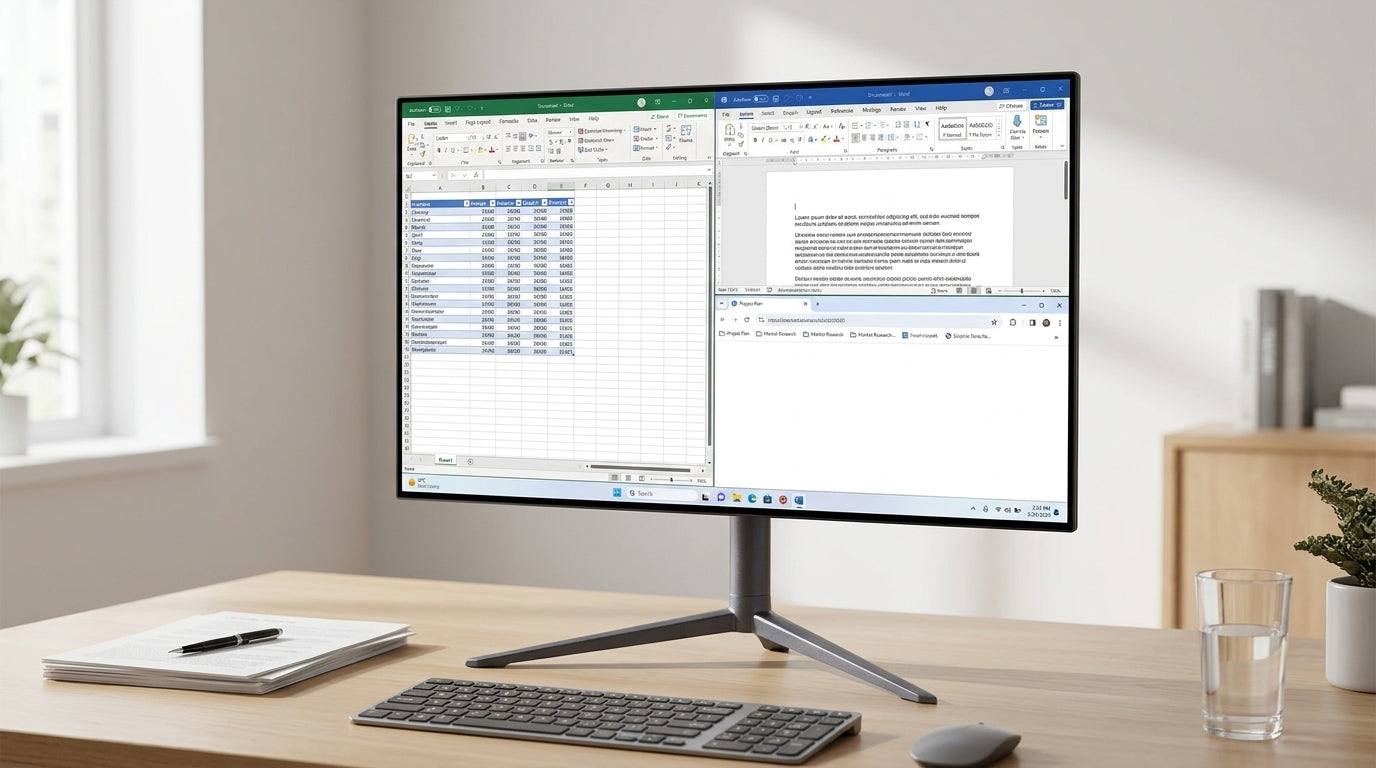
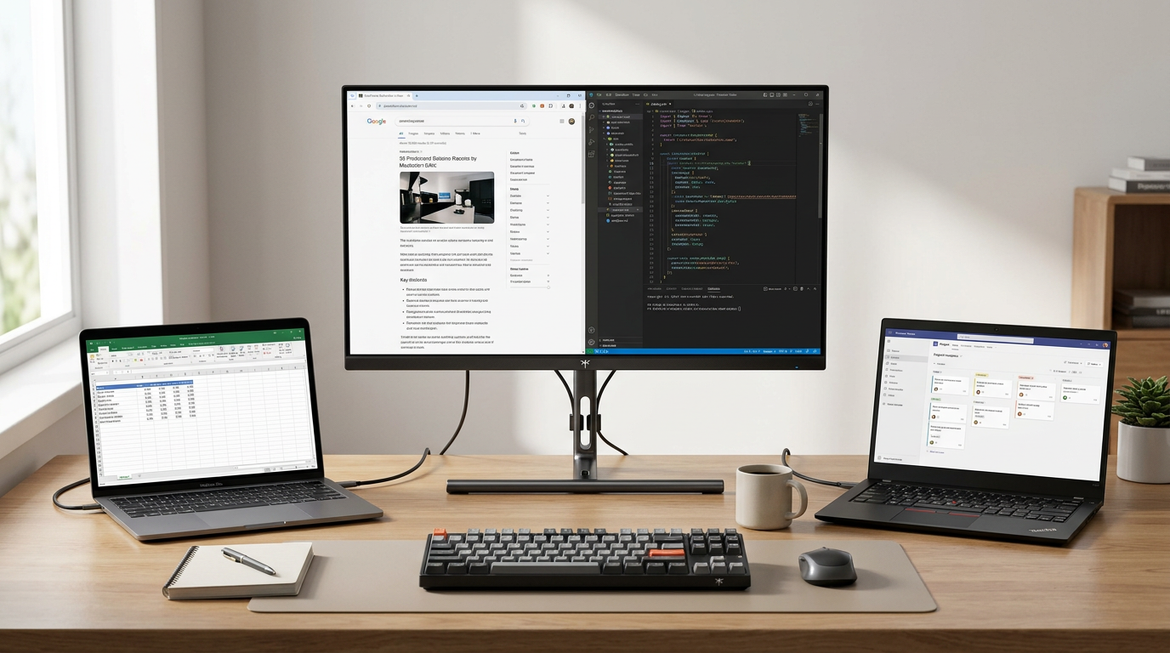
For spreadsheets, docs, and video calls, the daily pain points are usually washed-out whites, reflections, and constant small posture adjustments. A mini LED monitor for office use can help with brightness headroom, but it still needs a sensible desk layout. If the monitor faces a window or a bright task lamp, even a strong panel can look less usable than a cheaper screen placed better.
That is why the first filter is simple: if your desk is bright for only part of the day, you may not need Mini-LED at all. If your screen regularly fights daylight, then mini LED monitor options become more interesting because they give you more headroom before the image feels dull.
Mini-LED HDR behavior is worth understanding if you want the display to do more than just stay on. The point is not fancy HDR for its own sake. The point is that bright-room productivity buyers often want a screen that still feels present when the room is not dim.
What Makes Mini-LED Useful in Bright Rooms
The biggest practical advantage is brightness headroom. VESA's DisplayHDR 1400 requirements set a high bar for peak brightness and local dimming, which helps explain why HDR1400 Mini-LED models can hold highlights more confidently than many simpler office displays. That does not mean every desktop task needs HDR, but it does explain why the technology is attractive in lit rooms.
Local dimming is the other half of the story. It can improve perceived contrast and help bright elements stand out, but it can also show blooming around small bright objects depending on the scene and tuning. For work, that trade-off is usually acceptable if you care more about visibility than cinema-style uniformity.

For text-heavy work, mini LED monitor performance is not the same thing as sharper text. The pixel density and readability question still comes first. A 4K panel on a 27-inch screen usually makes dense text easier to work with than a lower-resolution panel, but scaling and font rendering still matter. Put simply, buy Mini-LED for brightness behavior, then check resolution for text comfort.
The ergonomic side matters just as much. Ergonomic monitor positioning guidance from Office Ergonomics is clear enough for most desks: the top of the screen should sit near eye level, and the panel should be easy to tilt and reposition. That is why a mini LED monitor with a full stand is more useful for office work than one with fancy brightness but poor adjustability.
A useful decision sentence: if your desk is bright and you spend hours in documents or browser windows, mini LED monitor options are sensible upgrades only when the model also gives you enough resolution and stand adjustment. If you need brightness but your room is already easy to control, a simpler monitor may be the better value.
Mini-LED vs OLED for Work Desks
For bright-room work, Mini-LED is often the safer fit because it usually has more peak brightness headroom than OLED, and RTINGS' Mini-LED vs. OLED comparison also points to OLED's different trade-offs with static UI use. That makes Mini-LED a practical choice for taskbars, spreadsheets, and browser-heavy days.
OLED is not a bad office technology. It can look excellent in lower-light rooms, and many people like its contrast. The question is whether your desk has enough ambient light and enough static app use to make brightness and burn-in trade-offs more relevant than deep blacks. For that reason, mini LED monitor vs OLED for work is less a "winner" question and more a "what kind of desk do you actually have?" question.
If you keep a lot of fixed interface elements on screen, Mini-LED is the easier long-term comfort bet. RTINGS notes the burn-in concern for OLED in static UI use, while Mini-LED avoids that specific risk. That does not make OLED unusable, but it does mean the recommendation flips when your workday is heavy on charts, pinned windows, and always-on taskbars.
A second decision sentence: choose Mini-LED first if your priority is bright-room visibility and you keep static work apps open for hours. Choose OLED first if you work in a controlled-light desk setup and value contrast more than daylight headroom. If neither description fits your routine, the panel type probably matters less than resolution and ergonomics.
Which KTC Models Fit Bright Office Desks
The most useful way to shop here is by desk problem, not by marketing tier. The M27P6 4K Mini-LED is the cleanest fit for buyers who want the most text-friendly option in the group. Its 27-inch 4K panel, HDR1400 brightness, 600-nit SDR brightness, and fully adjustable stand make it the strongest match for dense documents, multiple windows, and hybrid work where brightness matters all day.
The trade-off is price. At $424.99, it only makes sense if you will use the extra clarity and brightness headroom often. If your desk is only moderately bright, you may pay for capability you rarely notice.
The M27T6 1440p Mini-LED is the value-minded middle ground. It keeps HDR1400, local dimming, and a fully adjustable stand, but at 27 inches and 1440p it asks for a little less money and a little less text-heavy precision than the 4K model. For hybrid workers who want one screen for office apps and occasional gaming, this is the most balanced pick.
The M27T6S 1440p Mini-LED is the faster-feeling alternative. It still gives you Mini-LED brightness behavior and a full stand, but the HDR1000 tier and 200Hz speed shift the value toward smoother motion and mixed use. That makes it a better fit if you care more about general responsiveness than the strongest bright-room HDR headroom.
A neutral shopping shortcut is this: if your top priority is sharp text, start with the M27P6. If your top priority is value with strong brightness behavior, start with the M27T6. If you want a more speed-leaning hybrid display, the M27T6S is the compromise to check first. For browsing the full range, the Mini-LED lineup is the easiest place to compare the three side by side.
Desk Setup Checks That Change the Result
Before you blame the monitor, check the room. Bright-room monitor problems often come from light direction, not panel quality. OSHA recommends positioning monitors to avoid direct glare paths from windows and task lights, because a screen can wash out even when the spec sheet looks strong.
- Check where the main light is coming from. If a window sits behind you or directly in front of you, reflections are more likely to become annoying.
- Set monitor height first. The top of the screen should sit near eye level so you are not lifting your chin all day.
- Tilt the display until the brightest reflection moves out of your main line of sight.
- Verify text size and OS scaling before buying up for HDR. If the type already feels small, the real fix may be resolution or scaling, not brightness.
- Compare the current desk with the monitor you want. If a well-placed budget screen already feels comfortable, mini LED monitor features may not add enough value.
A practical rule of thumb: when placement and stand adjustment are poor, a brighter monitor only solves part of the problem. When the desk layout is good, Mini-LED has a much better chance of feeling worth the extra cost.
Best Fit Checklist Before You Buy
Use Mini-LED if your desk is bright, your workday is full of documents or browser tabs, and you want more brightness headroom than a basic office display. Skip it if your room is easy to control, your budget is tight, or you mainly want sharper text and not HDR behavior. For a text-first setup, the 4K model is the safest starting point. For balanced price and brightness, the 1440p HDR1400 option is the cleaner value. If you want to browse by category first, start with the Mini-LED lineup and narrow from there.
FAQs
How Does Mini-LED Help in a Bright Office?
Mini-LED can help a bright office by giving you more brightness headroom and more control over bright highlights, so the screen is less likely to feel flat in daylight. It still depends on placement, screen finish, and how reflective the room is.
What Matters More for Text Clarity, 4K or Mini-LED?
For text clarity, 4K usually matters more than Mini-LED because resolution and pixel density affect how crisp letters and thin lines look. Mini-LED helps with brightness behavior, but it does not replace the need for enough pixels and sensible scaling.
Can Mini-LED Replace an Office Monitor in Daylight?
It can, if the desk is bright and the model has enough stand adjustment and resolution for your work. If your setup is already controlled for glare, a simpler office monitor may be the easier and cheaper fit.
Why Compare Mini-LED vs OLED for Work Use?
Because the better choice depends on habits. Mini-LED is usually easier to justify on bright desks with static UI use, while OLED can still make sense in controlled lighting when contrast matters more than brightness headroom.
Can a Faster Mini-LED Monitor Still Work Well for Productivity?
Yes. A faster mini LED monitor can still be a good productivity screen as long as resolution, scaling, and ergonomics are in place. Refresh rate is a nice extra, but it should not come before text clarity and desk fit.
Final Takeaway
A mini LED monitor for bright room use makes sense when daylight, reflections, and long work sessions are all part of the deal. If the desk is bright enough, Mini-LED can be a better fit than OLED for office work, but only when resolution and ergonomics are also right. Start with the 4K model for text-heavy use, or the 1440p HDR1400 model for better value and balanced mixed use.