KTC monitor for bright room setups usually come down to one question: will the screen stay readable when daylight and office lighting push up the room's black levels? In many sunlit desks, Mini-LED is the safer bet than OLED because it keeps more brightness headroom and tends to preserve text and UI clarity better. If your desk sits near a window, that comparison matters more than peak refresh rate.

Why Bright Rooms Change Monitor Performance
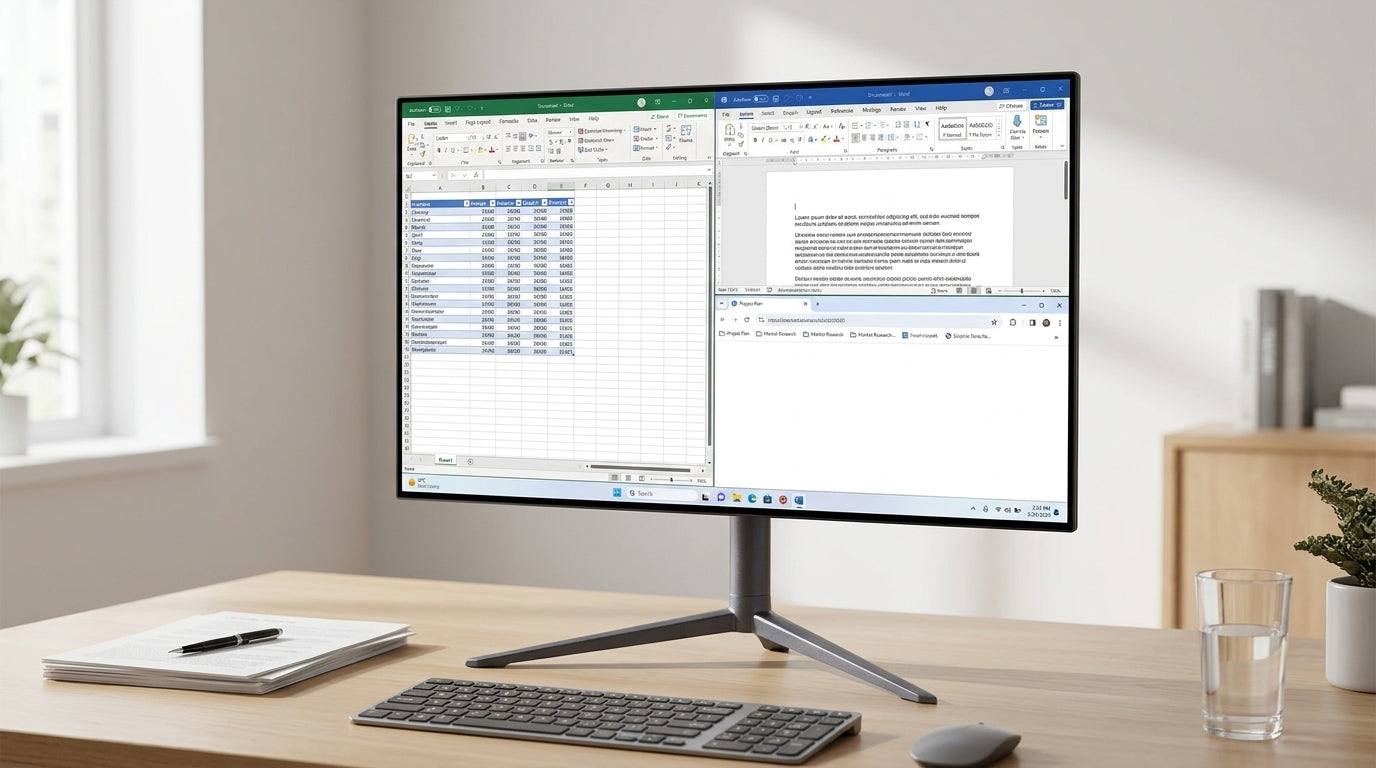
For most buyers, a bright room changes the decision before specs do. When sunlight or overhead lighting hits the workspace, dark areas on the screen look lighter than they would in a dim room, so contrast falls off fast. Reflections can also blur text or make interface lines harder to read even when the panel looks impressive on paper.
That is why the KTC monitor for bright room question should start with desk readability, not just HDR labels. KTC's own guidance on placing a monitor near a window is a useful reminder that position often changes the result before settings do. If the screen faces a south- or west-facing window, you may need to fix glare first and display settings second.
A practical rule: if you can still read spreadsheets, toolbars, and small text without leaning forward, the setup is doing its job. If you keep changing brightness but the image still looks washed out, the room is probably the main problem.
How Mini-LED Helps in Daylight
Mini-LED usually holds up better in bright rooms because it can combine higher peak brightness with local dimming, which helps the screen keep more structure when the room gets bright. A recent review on Mini-LED local dimming and ambient light supports the basic idea: stronger backlight control can help preserve contrast when the room is not dark.
For the KTC Mini-LED lineup, that matters in two ways. First, the bright-room headroom helps text stay visible during daytime work. Second, local dimming gives dark UI elements more separation, so the screen does not collapse into a flat gray look as quickly. KTC's Mini LED backlighting guide also frames the category as a contrast and HDR upgrade rather than just a brightness spec.

Anti-glare coating and desk position still matter a lot. If the screen catches a direct reflection, even a bright Mini-LED panel can look worse than a cheaper model placed better. In real use, that means you should treat brightness as a rescue tool, not the only fix.
Higher Brightness Headroom
The KTC M27P6 lists HDR1400 peak brightness and 1152 local dimming zones, while the M27T6 also lists HDR1400 with the same zone count. The M27T6S lists HDR1000 with 1152 zones. Those are manufacturer-led specs, but they point in a useful direction: all three models are built with more bright-room headroom than a basic office display.
That extra headroom is most helpful when you work during the day and keep the blinds open. It matters less if your room is already dark, because then the advantage can shrink into normal comfort rather than a dramatic visible change.
Local Dimming and Contrast Retention
Mini-LED local dimming is not magic, but it can help the screen avoid the washed-out feeling that bright rooms create. When backlight zones can dim separately, the display has a better chance of keeping dark interface areas distinct from light ones. That helps with spreadsheets, dashboards, code editors, and document work where small text and thin lines need to stay legible.
KTC's Mini-LED product pages reinforce that practical angle with 1,152-zone backlighting on the M27P6, M27T6, and M27T6S. If you mostly do static work, that is a more relevant selling point than motion specs.
Anti-Glare and Desk Placement
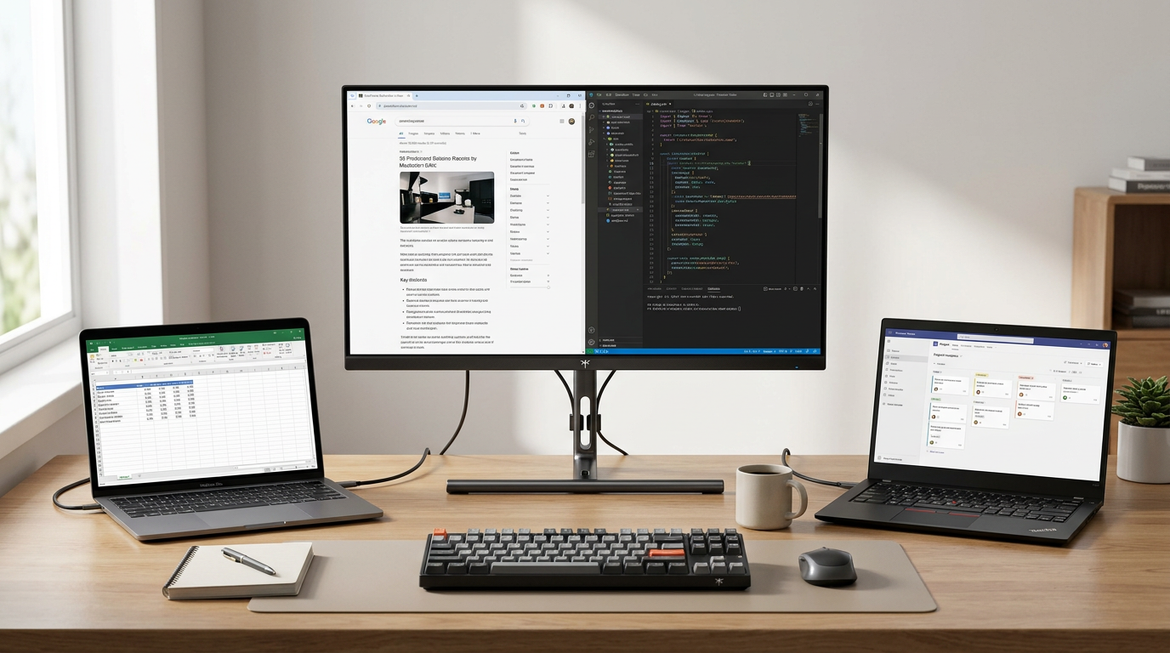
The strongest display panel still loses to bad placement. If the screen sits directly across from a bright window, glare will usually be the first thing you notice. If it sits perpendicular to the glass, the reflections usually become easier to manage.
KTC's bright-room setup article on window placement gives a simple, sensible baseline: angle the screen away from direct light and keep enough distance from the glass to reduce reflections. That is the right order of operations. Move the monitor first, then tune brightness, then decide whether the panel itself is the real limitation.
What to Expect From HDR in Bright Rooms
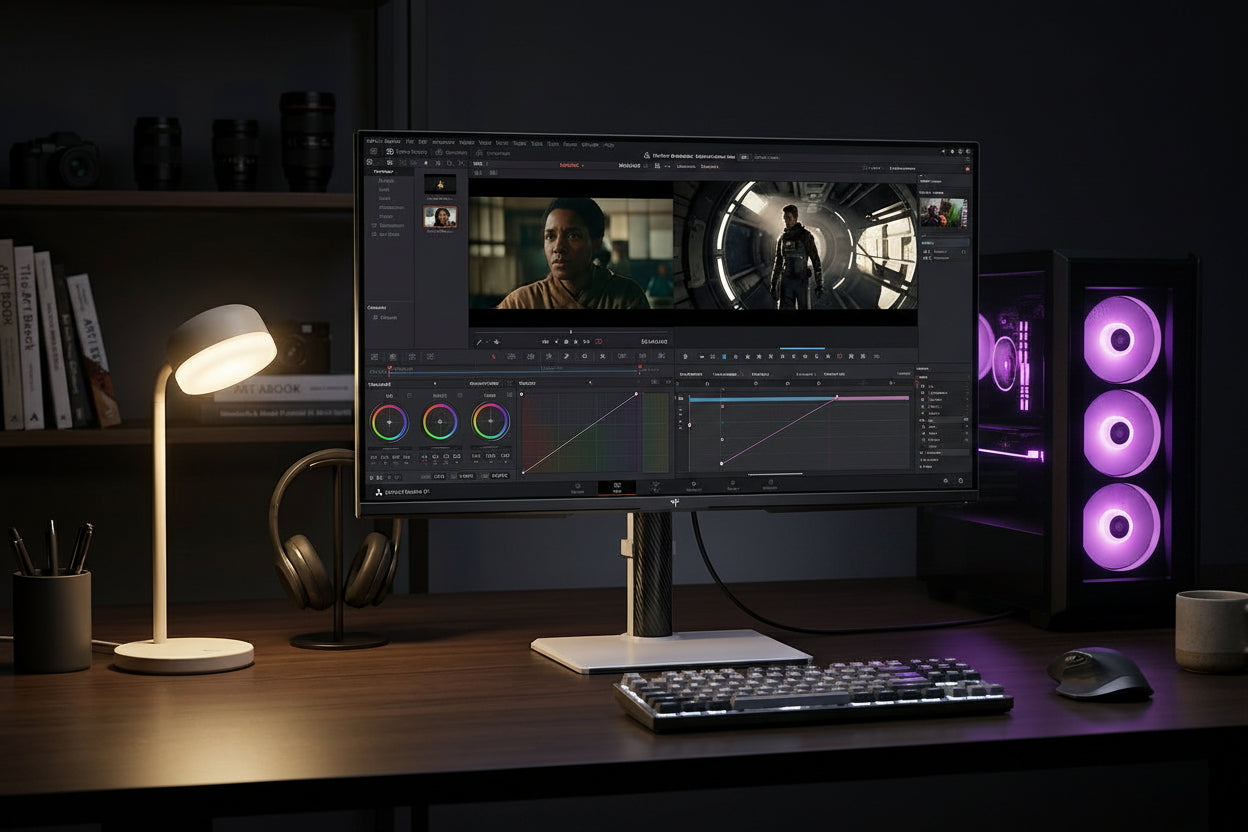
HDR still benefits from Mini-LED, but a bright room reduces the visible drama. Highlights may stay more controlled than on a lower-brightness panel, yet the room itself can flatten some of the effect. So if you want bright-room HDR that still reads well, expect a more practical win than a cinema-like one.
That is the key boundary: Mini-LED is mainly about keeping the image usable in daylight, not turning a sunlit office into a dark theater.
Mini-LED vs OLED in Bright Rooms
In a bright office, Mini-LED is usually the safer pick. OLED can look excellent in darker rooms, but strong ambient light can make dark areas and UI elements feel less stable, especially if the desk gets direct side light or overhead reflections. Mini-LED's brightness headroom usually makes it easier to keep text readable through a long workday. Research on Mini-LED panels in ambient light and Mini-LED vs OLED performance confirms ambient light raises perceived black levels on both technologies.
The comparison flips when the room gets controlled. If you work in a dim space, watch media after dark, and care more about deep blacks than daytime readability, OLED can still be the better experience. But for a window-side desk, the better question is not "which looks prettier in a demo," it is "which stays useful at 2 p.m.?"
If you want a deeper side-by-side, see OLED vs Mini-LED Gaming Monitor: Which Should You Buy?. The short version is simple: Mini-LED wins more often when room light is the deciding factor; OLED wins more often when room light is controlled.
| Bright-Room Factor | Mini-LED | OLED |
|---|---|---|
| Daytime readability | Usually stronger | Can lose some clarity in bright rooms |
| Black level in sunlight | More stable | Can look lifted by ambient light |
| Reflections | Still a concern, but easier to offset with brightness | Still a concern, especially on reflective setups |
| Static office UI | Usually safer for long daytime sessions | Better in darker rooms, less ideal when the desk is bright |
| Best-fit use case | Bright office, open blinds, hybrid work | Dim room, evening media, contrast-first viewing |
Which KTC Model Fits Your Desk
If you want the most daylight headroom in the lineup, the KTC Mini LED 27" 4K 160Hz HDR1400 Gaming Monitor | M27P6 is the top pick in this group. It combines 4K resolution, HDR1400 brightness, and 1,152 local dimming zones, so it is the best match when the desk stays bright and you also want sharper desktop text.
If you want a more value-focused bright-room option, the KTC Mini LED 27" 180Hz 2K HDR1400 Gaming Monitor | M27T6 is easier to justify. The 1440p resolution is less demanding than 4K, and the model still gives you Mini-LED brightness plus strong daytime usability.
If you want a similar 1440p setup with a faster refresh rate and a slightly different brightness balance, the KTC Mini LED 27" 200Hz 2K HDR1000 Gaming Monitor | M27T6S is the middle ground. It gives up some peak brightness versus the HDR1400 models, but it can make sense if you care about faster motion and still want Mini-LED benefits.
Choose a non-Mini-LED office monitor only if the room is controlled, cost matters more, or you know your workspace does not need extra brightness headroom. In a bright office, resolution and refresh rate are secondary to the screen staying readable.
A Quick Fit Check Before You Buy
- Choose M27P6 if you want the strongest bright-room headroom and care about 4K text sharpness.
- Choose M27T6 if you want strong daytime readability without stepping into the 4K price tier.
- Choose M27T6S if you want 1440p Mini-LED with a faster refresh-rate lean.
- Skip Mini-LED only if your workspace is dim, controlled, and low cost is the main goal.
Setup Checks That Improve Readability
Before you blame the panel, run through the basics. In many bright-room setups, the fix is placement or settings rather than a new monitor.
- Move the screen so direct sunlight does not hit it head-on. Perpendicular to the window is usually easier to manage than facing the glass.
- Adjust brightness to the room instead of leaving it at a default value.
- Check whether HDR, power saving, or night mode is changing the image unexpectedly.
- Make sure the signal cable is seated correctly, because a bad signal can look like bad contrast.
- Confirm the surface finish and stand angle work with your desk layout, especially near south- or west-facing windows.
KTC's brightness guidance for home offices reinforces a simple point: default brightness is often not the right starting point for daylit desks. That is especially true if you split time between documents, calls, and the occasional evening media session.
Bright-Room Buying Takeaways
For a sunny desk, the KTC monitor for bright room choice usually comes down to Mini-LED versus OLED. Mini-LED is the more practical default when daylight is part of the setup, because it gives you more readable contrast and better bright-room headroom. OLED still has a place, but mostly when the room is controlled and darker viewing matters more. Start with 4K Monitor or LCD Monitors collections for additional bright-room options.
FAQs
Q1. What Makes a Monitor Better for a Bright Room Office?
A good bright-room monitor keeps text readable without forcing you to max out brightness all day. Anti-glare behavior, enough brightness headroom, and better contrast retention matter more than one headline spec. For office use, the real test is whether spreadsheets, menus, and browser text stay easy to read when the blinds are open.
Q2. Can a Mini-LED Monitor Still Look Good Near a Sunny Window?
Yes, especially if the desk placement reduces direct reflections. Mini-LED is usually better suited to bright-room use than a dimmer panel because it has more light output to work with. If the screen is placed well and the room is not reflecting straight onto the panel, it can stay very usable.
Q3. Why Does OLED Often Feel Less Comfortable in Daytime Desk Use?
OLED can look excellent in darker rooms, but bright ambient light can lift dark areas and make some UI elements feel less crisp. That does not make OLED a bad technology. It just means its strengths show up more clearly when the room is controlled and the desk is not fighting reflections all day.
Q4. How Should I Set My Monitor for a Sunlit Desk?
Start by reducing glare, then adjust brightness to match the room. If HDR, power saving, or night mode is active, check whether one of those settings is making the image feel dimmer than it should. In most cases, placement and settings solve more problems than panel replacement.
Q5. Which KTC Mini-LED Model Is Best for Bright Rooms?
The M27P6 is the strongest bright-room option if you want the most headroom and 4K sharpness. The M27T6 is the value pick, and the M27T6S is the faster 1440p alternative. If your desk is bright most of the day, any of the three is more defensible than a lower-brightness office display.