The best portable monitor 2026 is the one that fits your real setup first. For travel, that usually means lighter weight and simple packing; for work, it means readable text and reliable connections; for gaming, it means matching the right input path and refresh needs. If you start with the use case, you are much less likely to buy a screen that looks good on paper but feels wrong on the road.
What Matters Before You Compare Models
Start with the job the monitor has to do. Travel, work, and gaming reward different trade-offs, so the same panel can be a smart buy in one scenario and a poor fit in another. USB-C convenience is nice, but it only helps if your source device actually supports video over USB-C. On many laptops and handhelds, that depends on the device and cable path, not just the monitor itself. Steam Deck's own support guidance also notes that external display behavior depends on the dock or hub path you use, not just the handheld alone. Steam Deck external display guidance
A good first filter is simple: what device will you plug in most often, and where will you use it most often? If you travel with a laptop, a portable monitor with a compact stand and a fallback input can save a lot of frustration. If you mainly need a second screen at a desk, portability matters less than ergonomics and text clarity. That is why a cheap portable monitor can still be the wrong purchase if it is too dim for hotel lighting or awkward on an airplane tray table.
For a low-cost example of the travel-monitor category, the KTC 15.6" FHD HDMI Portable Travel Monitor with Built-in Speakers丨H15F9 keeps the format simple: 15.6 inches, 1080p, 300 nits, 60 Hz, two USB-C ports, and Mini HDMI. That combination makes sense when you want a basic second screen without carrying a larger, desk-bound display. It is less compelling if you need color-critical work or a brighter panel for frequent window-side use.
Decision sentence: If your laptop or handheld does not support the connection you want, the monitor is not the problem yet, the cable path is. Check the source device first, then shop the monitor.
Travel Setup Priorities
For frequent travelers, the biggest regret usually comes from weight, bulk, and setup friction, not from chasing the fastest refresh rate. A 15.6-inch portable monitor is often the easiest size to place on a hotel desk or tray table, and it usually leaves enough room for a keyboard or mouse. KTC's H15F9 and H15F8 both sit in that compact lane with 1.4 lb portability and a 12 mm slim body, which is the kind of profile that is easier to pack than to brag about.


Brightness matters more in travel than many shoppers expect. A display that looks perfectly fine indoors at home can feel washed out near a bright window or under harsh hotel lighting. The H15F9's 300-nit rating is a reasonable indoor baseline, but it is still a "check the room" specification, not a universal daylight guarantee. For travel buyers, the practical question is simple: will this screen be used in controlled indoor light, or will it often sit next to windows, lamps, or reflective surfaces?
Connection simplicity also matters. If you want the cleanest possible desk setup, one-cable USB-C can be attractive, but only when your laptop or handheld supports video over USB-C. If you want a safer fallback, HDMI is useful because it avoids some of the guesswork around USB-C video support. The KTC travel monitor page includes both USB-C and Mini HDMI, which gives you a broader set of connection paths without turning the monitor into a complicated dock substitute.
If audio matters for calls or casual video, built-in speakers can reduce what you need to pack. They are not a replacement for a headset in a noisy airport lounge, but they can be enough for hotel-room meetings or a movie in a pinch. For a travel-first buyer, that is the kind of convenience feature that can quietly make the whole setup feel less annoying.
Not-a-fit filter: If you know you will work beside bright windows, or you want a screen that stays permanently on a desk, a travel-style portable monitor is usually the compromise, not the endgame.
Weight and Carry Comfort
For road warriors, the monitor should disappear into the bag without making the rest of the carry feel awkward. That does not mean the lightest model wins automatically. It means the weight should feel reasonable after you add the charger, cables, laptop, and any stand support you actually use. A monitor that sounds light in isolation can feel heavy once it becomes one more item in a packed carry-on.
Brightness and Screen Size for Changing Light
Around 15.6 inches is often the easiest travel starting point because it stays readable without taking over the whole desk or tray table. Brightness is the more important "hidden" variable. For many buyers, the decision flips here: if your travel life is mostly hotels and airplanes, prioritize a compact display with enough brightness; if your use includes bright coffee shops or window seating, look harder at the lighting limits before you buy.
Ports, Cables, and Power Simplicity
The easiest travel setup is the one you do not have to troubleshoot twice. USB-C can be clean, but it is not universal. HDMI is usually less elegant, but it is often easier to predict. If you are unsure about your laptop or handheld, the safer buy is the monitor that gives you both options instead of forcing a single-cable assumption.
Desk Space, Stand Angle, and Packing Practicality
The best travel monitor is not just thin, it is easy to prop up and easy to stow. A built-in stand or support that opens quickly matters more than a fancy-feeling design that eats desk space. That is one reason the built-in rotating support on the H15F9 style of portable monitor works well for short-term setups: it keeps the setup simple, even if it does not try to behave like a full desk monitor.
Workday Productivity Needs
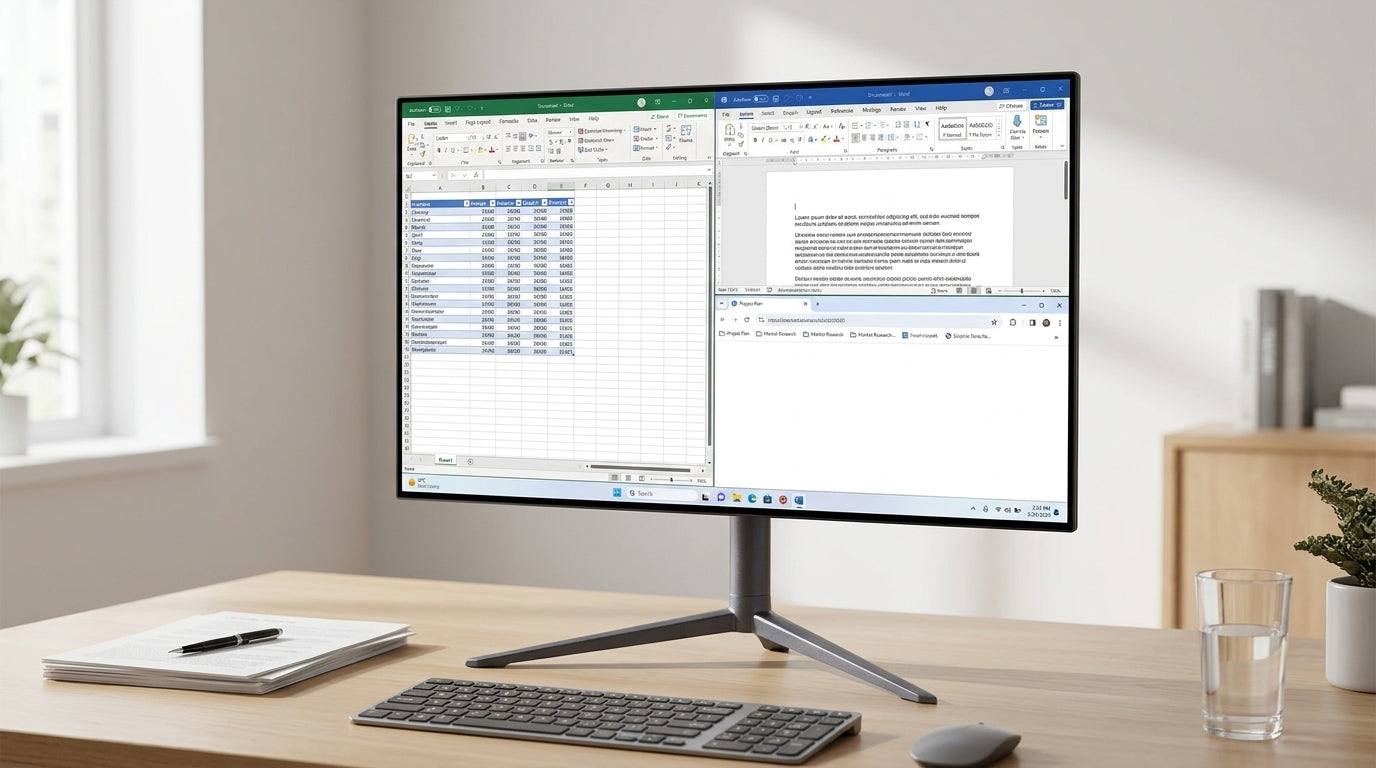
For remote work, the best portable monitor 2026 is the one that keeps text readable, connections stable, and desk friction low. If your workday is mostly email, docs, spreadsheets, and video calls, you want a monitor that behaves like a dependable second window, not a feature demo. In that case, connection reliability and usable screen area matter more than a flashy spec sheet.
A 15.6-inch panel can absolutely work for travel work, but it may feel small for all-day spreadsheet use or split-screen multitasking. That is where the choice often flips: if the monitor will spend most of its time on a desk, a larger portable or even a full-size office display may feel better than the smallest travel model. A smaller screen is easier to move, but a bigger one is easier to live with.
| Buying Factor | Why It Matters For Work | What To Look For | Common Mistake To Avoid |
|---|---|---|---|
| Screen size | Determines how much text and how many windows fit comfortably | Enough room for docs, sheets, or side-by-side apps | Buying too small for long sessions |
| Brightness | Helps readability in mixed hotel, home, or coworking light | A panel you can still read without cranking it constantly | Assuming indoor showroom brightness tells the whole story |
| Connection flexibility | Reduces adapter friction during setup | USB-C when supported, HDMI as fallback | Assuming every USB-C port carries video |
| Audio | Helps with quick calls and casual media | Built-in speakers can cover basic use | Treating speakers as a headset replacement |
| Portability | Determines whether you actually bring it | Light enough to pack often | Choosing desk comfort features you will never carry |
If you want a practical follow-up on audio behavior, see how to fix audio passthrough issues when connecting portable monitors via USB-C because audio and display routing can get confusing fast in portable setups. That is especially true when a dock or hub is involved.
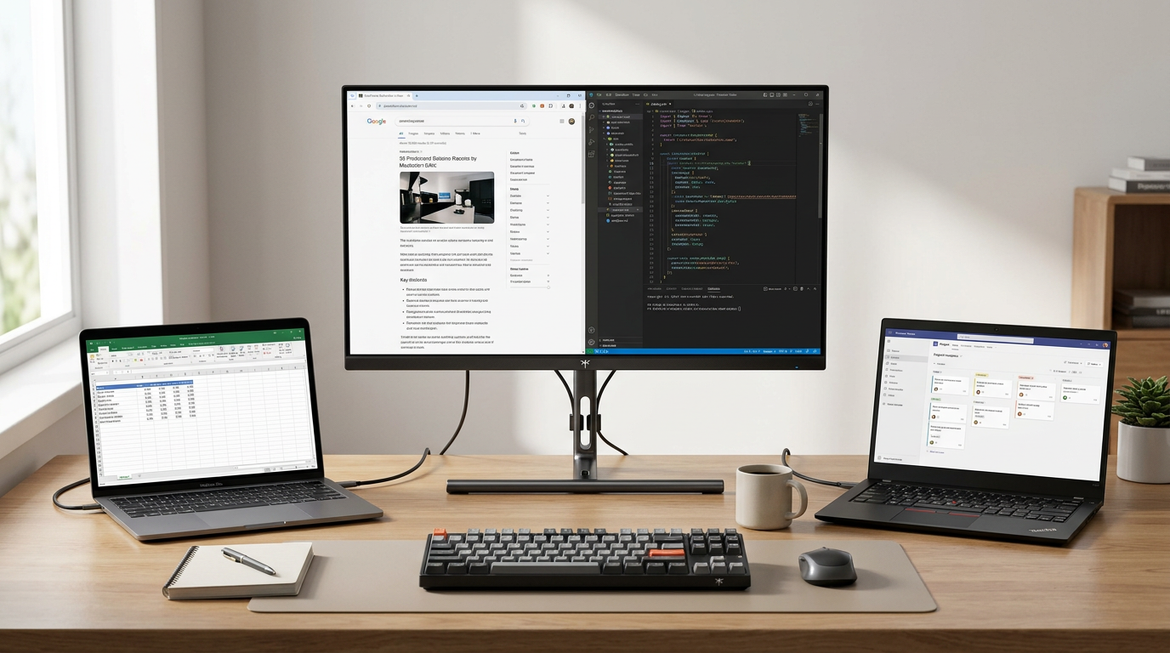
For a more work-focused browse path, All Monitors is the broader category to check once you know whether you need portability, a desk-sized panel, or something in between. If you are still comparing category directions, that path is more useful than jumping straight to a single spec.
Decision sentence: If the monitor will live on a desk most days, prioritize ergonomics and text comfort first. If it only travels occasionally, portability can stay the higher priority.
Gaming and Handheld Compatibility
For handheld gaming, the connection path matters as much as the panel. That is why Steam Deck owners should verify whether they are planning to use USB-C, a dock, or HDMI before they buy. Steam's own display guidance points buyers toward docks or hubs with HDMI or DisplayPort output, which is a useful reminder that single-cable success depends on the whole chain, not just the monitor. Steam Deck dock and hub guidance
The best portable monitor 2026 for gaming is not always the one with the highest refresh number. If your source device cannot drive the target resolution at the intended refresh rate, the extra speed is mostly wasted. For couch play or gaming at a friend's house, quick setup and a stable viewing angle often matter more than a tiny bump in refresh rate. That is a common regret trigger: buyers focus on motion specs, then discover the real pain point is cables, adapters, or stand setup.
A 15.6-inch portable screen can be a good fit for Steam Deck, Switch, or laptop gaming when you want a simple plug-in screen that does not dominate the room. The category is less compelling if you want a long-term desktop gaming display, because then you usually want more stand adjustability, a larger panel, or a higher-refresh full-size monitor instead. In other words, portable gaming and permanent gaming are not interchangeable buys.
Gaming Monitor is the better browse path if you decide the portable category is too compromised for your play style. That collection is a cleaner next step for players who want a faster, more adjustable desktop display.
Steam Deck and Handheld Output Checks
The main thing to verify is the output path, not the dream setup. If the handheld or dock does not send video the way you expect, the portable monitor will look defective even when it is not. For that reason, handheld buyers should treat compatibility as a three-part check: source device, dock or cable, and monitor input.
Refresh Rate Versus Real-World Benefit
Higher refresh rates matter most when the source can actually feed them. If you use the monitor for both work and play, a balanced 1080p portable panel is often easier to justify than a speed-only display that does little for documents and coding. The buying question is not "what is fastest," but "what still feels good when I am not gaming."
Input Options for Consoles and Laptops
HDMI fallback is valuable because it gives you another path when USB-C is inconsistent. For handhelds and consoles, that second input often turns a frustrating evening into a working setup. If you travel with more than one device, a monitor with both USB-C and HDMI tends to be the safer purchase.
Text Clarity, Motion, and Audio for Play Sessions
If a monitor is doing double duty for work and gaming, choose a middle ground. A sharper 1080p or 1440p panel is often easier to live with than a motion-first panel that looks great in a match and mediocre in a spreadsheet. Built-in speakers can also reduce accessory clutter, but they are still a convenience feature, not a core gaming requirement.
How to Match Specs to Your Use Case
- Choose the primary use case first: travel, work, or gaming.
- Set the minimum size and weight you would realistically carry.
- Pick the connection path you trust most, then check that your device supports it.
- Decide whether brightness or refresh rate matters more for your actual room or play style.
- Use return policy and warranty as the final tie-breaker when two models look close.
If you want a simple rule, use this one: travel buyers should start with weight and cable simplicity, work buyers should start with readability and connection reliability, and gaming buyers should start with the signal path. That sequence keeps you from overvaluing specs that do not change the day-to-day experience.
A model like the KTC 15.6" FHD HDMI Portable Travel Monitor with Built-in Speakers丨H15F8 fits best when you want the portable-monitor basics without stepping into the smart-touch or battery-powered category. It is a straightforward fit for light travel, simple second-screen use, and quick gaming hookups, but it is not the right answer if you really need a larger desk display.
For shoppers who want to compare broader display categories after narrowing the use case, Ultrawide & Portable Displays is a reasonable next stop. That collection helps if you are deciding between a travel screen and something more immersive.
Use this table to compare which specs usually deserve the most attention in each scenario.
| Scenario | Weight / size | Brightness | Connection flexibility | Refresh rate | Portability |
|---|---|---|---|---|---|
| Travel | High | Medium | Medium | Low | High |
| Remote work | Medium | High | High | Low | Medium |
| Handheld gaming | Low | Medium | High | High | Medium |
Final Checks Before You Add to Cart
Confirm your laptop, handheld, or console supports the planned output path. Re-check weight and dimensions for frequent packing. Match ports to your actual devices rather than an ideal future setup. Treat brightness and refresh rate as separate questions because they solve different problems. When two models appear similar, let return policy and warranty decide.
FAQs
Q1. How Do I Choose the Best Portable Monitor 2026 for Travel?
Start with carry comfort, then look at brightness and cable simplicity. A travel monitor should fit your bag, work on hotel desks or tray tables, and not force extra adapters. If you often sit near windows or bright lighting, prioritize a brighter panel over a feature-heavy one.
Q2. What Is the Best Screen Size for a Portable Monitor?
For most travelers, 15.6 inches is the easiest starting point because it balances readability and portability. If the screen will stay on a desk more often than it travels, a larger display can be more comfortable. The right size is the one you will actually carry and use.
Q3. Why Does USB-C Compatibility Matter So Much?
USB-C is convenient only when the source device supports video over USB-C. That means the laptop, handheld, cable, and monitor all have to cooperate. If you want fewer surprises, pick a monitor that also offers HDMI so you have a fallback when USB-C video is not available.
Q4. Can a Portable Monitor Work With Steam Deck?
Yes, but the connection path matters. Steam Deck can work through docks or hubs with HDMI or DisplayPort output, and direct USB-C success depends on the full setup. If you want the least guesswork, confirm the dock, cable, and monitor input before checkout.
Q5. What Should I Check If I Want One Monitor for Work and Gaming?
Choose a monitor that stays readable for documents but still supports the kind of gaming you actually do. For mixed use, brightness, text clarity, and input options usually matter more than chasing the highest refresh rate. If the screen cannot do work comfortably, it is not really a true dual-use choice.
Related Resources
- calculate exact PPI before buying
- How to Work with a Portable Monitor in Direct Sunlight at Outdoor Cafes or Beaches
- How to Maintain Portable Monitor Battery Health When Traveling Across Multiple Time Zones