The best monitor for work and gaming hybrid use is usually the one that balances text clarity, motion, and desk-friendly connectivity instead of chasing one spec. If your desk does both spreadsheets and evening games, the safest choice is usually a well-rounded 27-inch display with enough refresh rate for play, enough resolution for work, and a stand you will actually like using.

What Hybrid Buyers Need From One Monitor
A hybrid monitor has to do two jobs well enough: stay comfortable for long work sessions and still feel responsive when you launch a game. That usually means readable text, sensible scaling, useful ports, and an ergonomic stand. It also means accepting that no single screen is perfect for every use case.
The main trade-off is simple. Sharper resolution helps documents and desktop space, while higher refresh rates help motion and gaming feel. Connectivity matters because hybrid desks often switch between a laptop, a desktop, or a console. If a monitor looks impressive but lacks the right ports or stand movement, it may be a poor fit in real life.
For a broad browsing path, Office Monitor is a useful category starting point when work comfort matters most.
Text Clarity Versus Gaming Speed
For most hybrid desks, resolution matters first because text is the thing you stare at longest. A 27-inch 1440p screen is often a practical middle ground, while 4K can look sharper and give you more room for windows if your GPU can handle it. As a background guide, 1440p versus 4K resolution comparison explains why viewing distance and GPU load change the decision.
Refresh rate changes the feel of gaming more than the look of spreadsheets. Around 100Hz can feel fine for office-first users and casual gaming, but 144Hz to 180Hz is usually a safer hybrid floor if you play action games regularly. If competitive play matters, 200Hz-class or faster is easier to justify. As Standesk's work-and-gaming guide notes, the right number depends on how much time you spend in motion-heavy titles versus everyday work.
A useful decision sentence is this: if your day is mostly documents and browser tabs, prioritize resolution and text comfort first; if you spend several nights a week in fast shooters, raise refresh rate higher on the list.
2K Monitor is the collection to compare when you want the 1440p middle ground without jumping all the way to 4K.
Panel Types and Finish Trade-Offs
Panel family changes how the monitor feels in everyday use. Fast IPS is usually the safest all-around choice for mixed text work and gaming because it keeps viewing angles stable and handles a broad range of tasks well. For a plain-language comparison, RTINGS' IPS vs. OLED guide is a good reference point for why OLED can look amazing in motion but comes with text-fringing and static-content concerns for long desk sessions.
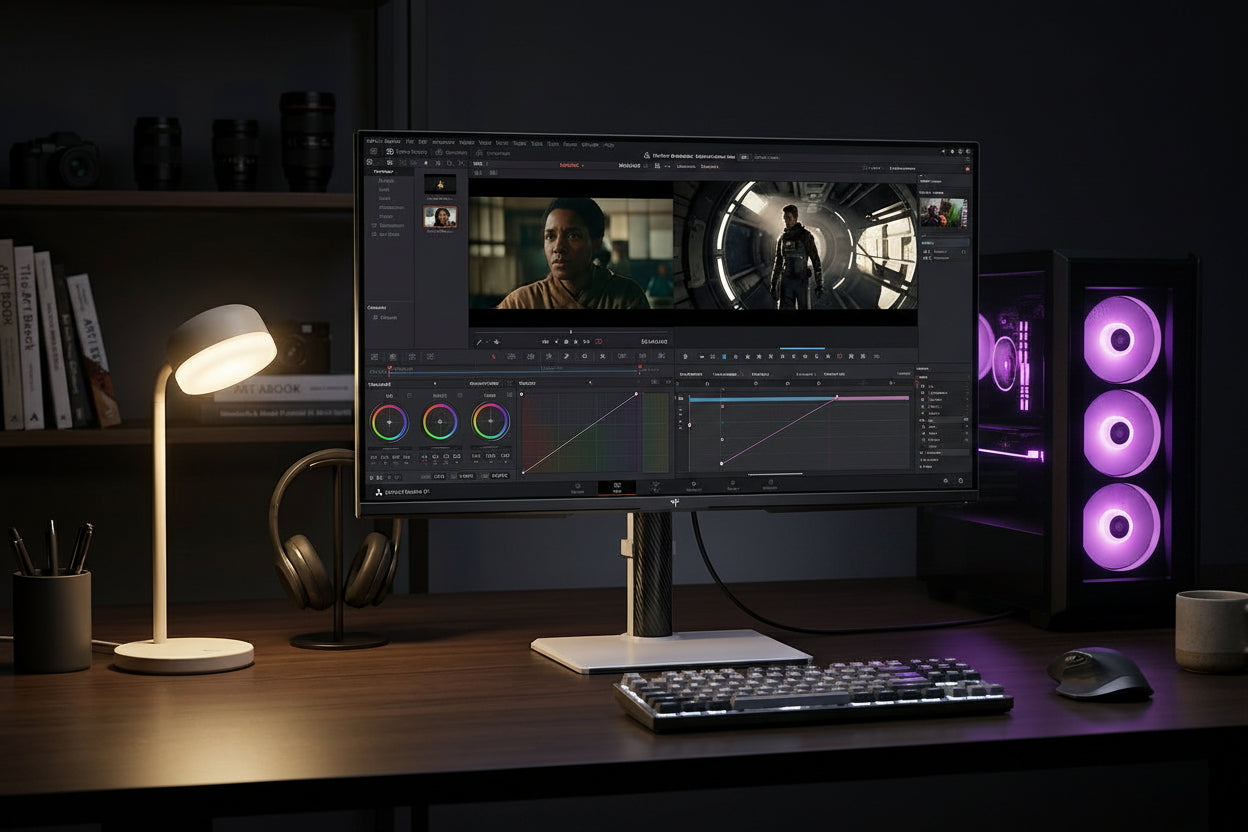
Mini-LED can be attractive if you want stronger HDR and contrast without moving to OLED. That said, hybrid buyers should still check how the screen behaves with white documents and spreadsheets, because local dimming can affect the way text-heavy layouts feel in some scenes. OLED is the most dramatic-looking option, but it makes the most sense for buyers who are comfortable with burn-in management and who do not leave static work windows open all day.
Finish matters too. Matte screens are usually safer near bright windows or office lamps, while glossier screens can look punchier but reflect more light. If your workspace changes through the day, glare control may matter more than a small spec bump.

Here is a conservative way to compare the main hybrid trade-offs.
| Option | Work Comfort | Gaming Responsiveness | Glare Control | Contrast Appeal |
|---|---|---|---|---|
| Fast IPS | High | High | High | High |
| Mini-LED | High | High | High | Very High |
| OLED | High | Very High | Medium | Very High |
| Matte Finish | Very High | High | Very High | Medium |
For readers who want to keep comparing by panel behavior, Text Clarity Across OLED Mini-LED and IPS is a useful follow-up. If you are still choosing by category, 4K Monitor gives you a broader mix of sharpness-focused options.
Connectivity That Makes a Hybrid Desk Easier
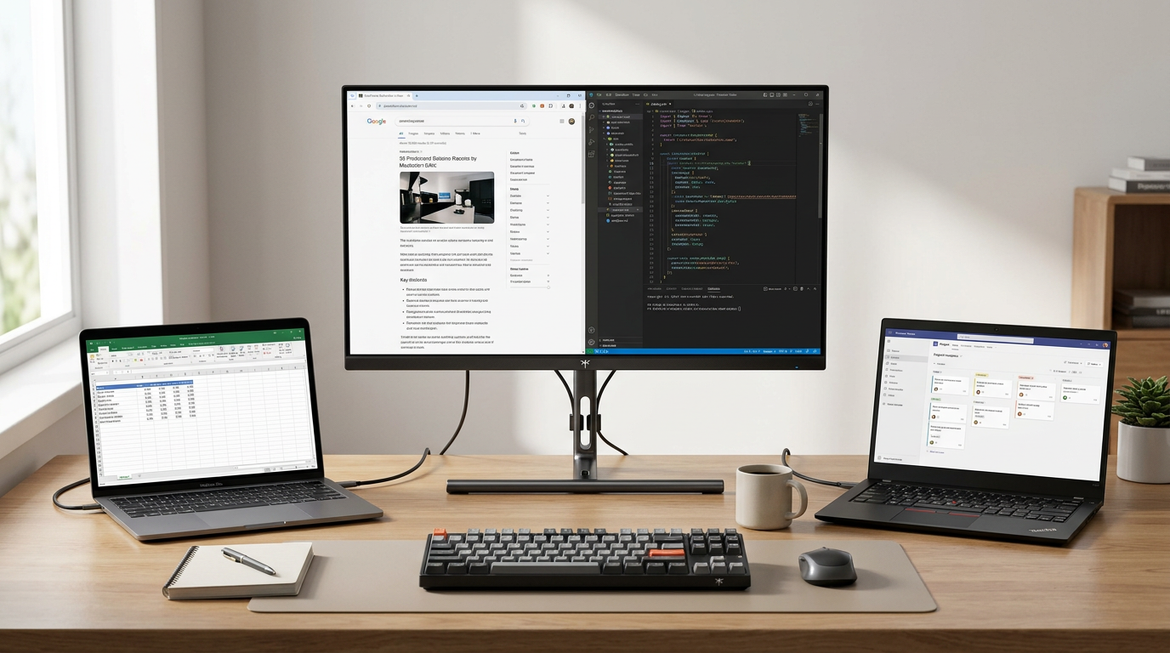
Connectivity is what turns a good screen into an easier desk. USB-C can be ideal for a laptop-centered setup because it may carry video and charging through one cable, but the exact behavior depends on the laptop and monitor. Treat it as a verification step, not a guarantee. The same applies to KVM, which can make shared keyboard-and-mouse switching easier if your devices and ports line up.
HDMI and DisplayPort still matter because many gaming PCs and consoles rely on them for the best signal path. A monitor with the right mix of inputs reduces adapter clutter and makes it easier to move between work and play without rearranging the whole desk. If you switch sources often, port layout and cable routing can be more annoying than the panel itself.
A useful product example is the KTC 27" 4K 160Hz/320Hz 90W Gaming Monitor | H27P6, which is worth checking if you want a high-refresh 4K option and care about 90W USB-C plus KVM-style convenience. Confirm the exact device support before buying, especially if your laptop has limited USB-C video output or unusual power needs.
For desk-side browsing, USB-C Monitors Collection and Ergonomic Monitors Collection are helpful if you want to filter by convenience instead of gaming specs alone.
Choose the Right Monitor for Your Desk
Start with your use pattern, not the shopping filter. If work clarity is the bigger daily priority, lean toward 1440p or 4K with a comfortable stand. If gaming speed matters more, lean toward a higher refresh rate before you chase extra sharpness. In many hybrid setups, the best result is a 27-inch Fast IPS screen with 1440p or 4K resolution and at least a 144Hz-class refresh rate.
The next decision is size. A 27-inch screen is often the easiest fit for a single desk because it keeps text readable without taking over the whole workspace. Larger screens can be better if you sit farther back or want more window space, but they raise the importance of resolution and stand adjustability. That is why size, resolution, and desk depth should be checked together.
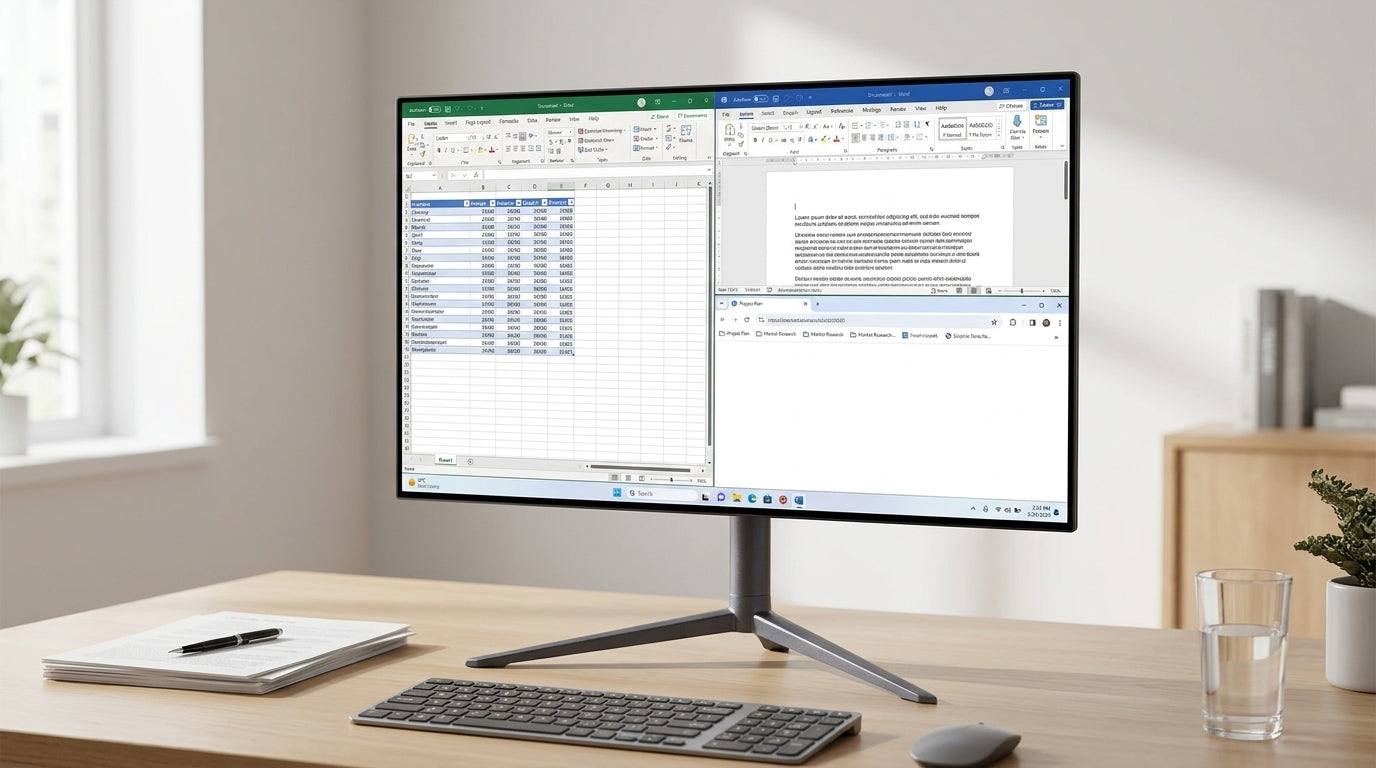
If you want to compare a work-leaning option against gaming-first models, H27T27 is a straightforward office-focused benchmark. It is not the right pick if competitive gaming is a priority, but it can be enough if your nights are mostly casual.
For a stronger mixed-use product check, KTC 27" 4K 160Hz/1ms HDR400 Gaming Monitor | H27P22S is the first model worth considering when you want sharp 4K text and faster gaming in one screen. For buyers who want more gaming headroom without going all the way to 4K, KTC 27" 2K 200Hz/210Hz HDR400 Gaming Monitor | H27T22C-3 is the cleaner 1440p choice.
A practical decision sentence: if you work in documents eight hours a day and only game after dinner, prioritize comfort and resolution; if you game several nights a week and care about smoothness, move the refresh-rate target up.
Comfort Checks Before You Buy
Comfort is where many hybrid buyers regret a near-miss purchase. Stand adjustment matters because the right height and tilt can reduce neck strain and help with glare. If the included stand only tilts, you may need a VESA arm or a different model to get the screen where you want it.
Also check how the monitor will sit in your room. Bright windows, overhead lighting, and viewing distance can all change whether a screen feels relaxed or tiring. The Ambient Lighting Ratio That Prevents Monitor-Induced Eye Fatigue is a helpful related read if your desk gets bright during the day.
One more boundary helps avoid mistakes: confirm that your laptop or desktop can actually output the resolution and refresh rate you want. A monitor may support a feature on paper, but the cable, port, or GPU output can still limit the result. That is especially important with USB-C docks, adapters, and mixed HDMI or DisplayPort setups.
FAQs
Q1. Is 1440p Enough for a Work and Gaming Monitor?
Yes, for many hybrid desks it is the best balance point. A 27-inch 1440p monitor usually gives enough sharpness for office work while keeping GPU demands more manageable than 4K. If your work is very text-heavy or you want extra desktop space, 4K can still be worth it.
Q2. What Refresh Rate Makes a Hybrid Monitor Feel Good for Gaming?
Around 100Hz can be fine for office-first use and casual play, but 144Hz to 180Hz is a safer minimum if gaming matters regularly. If you play fast shooters or competitive titles often, 200Hz-class and above gives you more headroom.
Q3. Can I Use One USB-C Cable for Work and Charging?
Sometimes, yes. The key is verifying that both the monitor and laptop support video output over USB-C and that the monitor can supply enough power for your device. If either side falls short, the setup may work only as a basic video link.
Q4. Why Does Panel Type Matter for Hybrid Use?
Panel type affects how text, motion, and contrast feel day to day. IPS-style panels are often the safest all-around compromise, Mini-LED can improve contrast and HDR, and OLED can look excellent in motion but needs more caution for long static work sessions.
Q5. Can a 4K Monitor Still Be Good for Gaming After Work?
Yes. A 4K monitor can work very well for gaming, especially if it also runs at a high refresh rate. The trade-off is that it usually asks more from the GPU, so it makes the most sense when you want sharper work output and your PC can keep up.
The Most Reliable Hybrid Setup Choice
For most shoppers seeking the best monitor for work and gaming, a 27-inch Fast IPS model with 1440p or 4K resolution, a refresh rate that matches the games you play, and stand and port options that fit your desk remains the lowest-risk path. Checking those three pieces first reduces the chance of overpaying for features that only help one side of the setup.