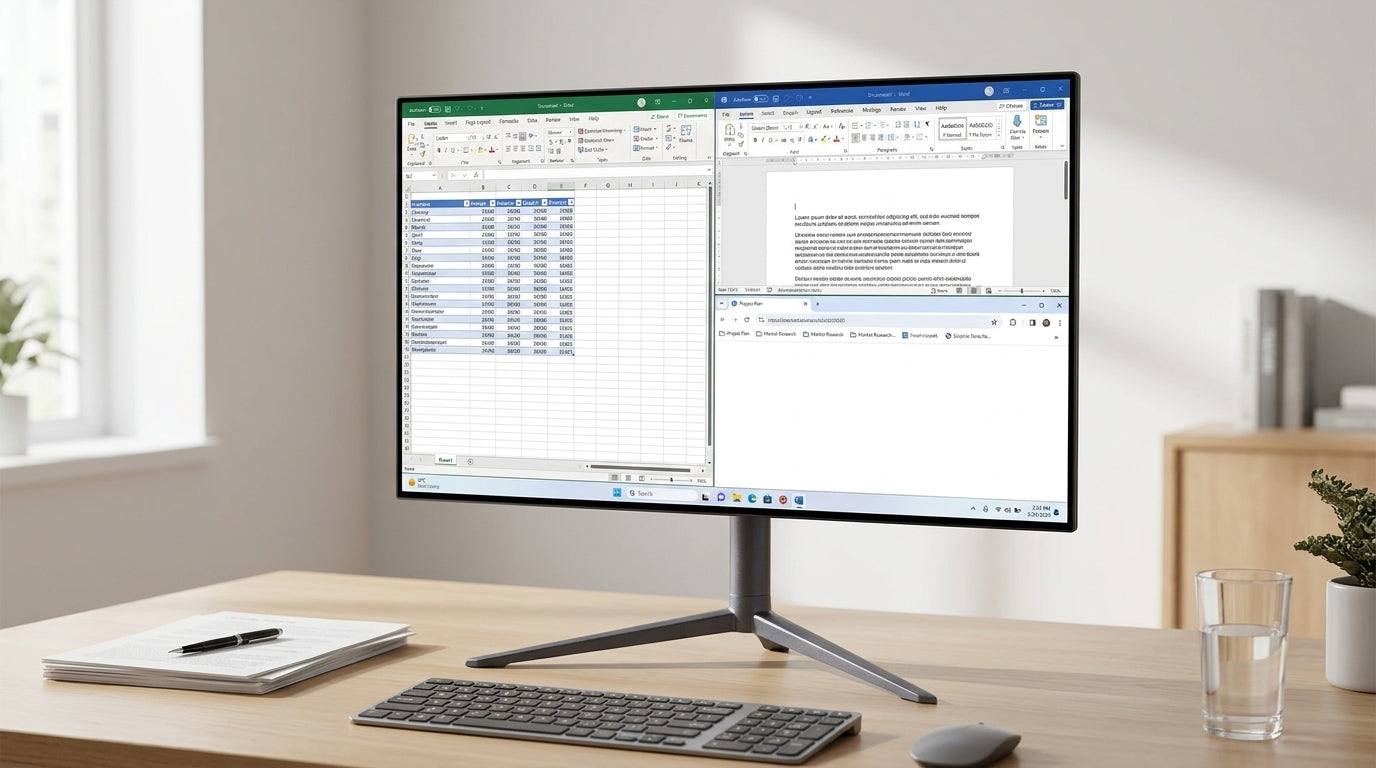
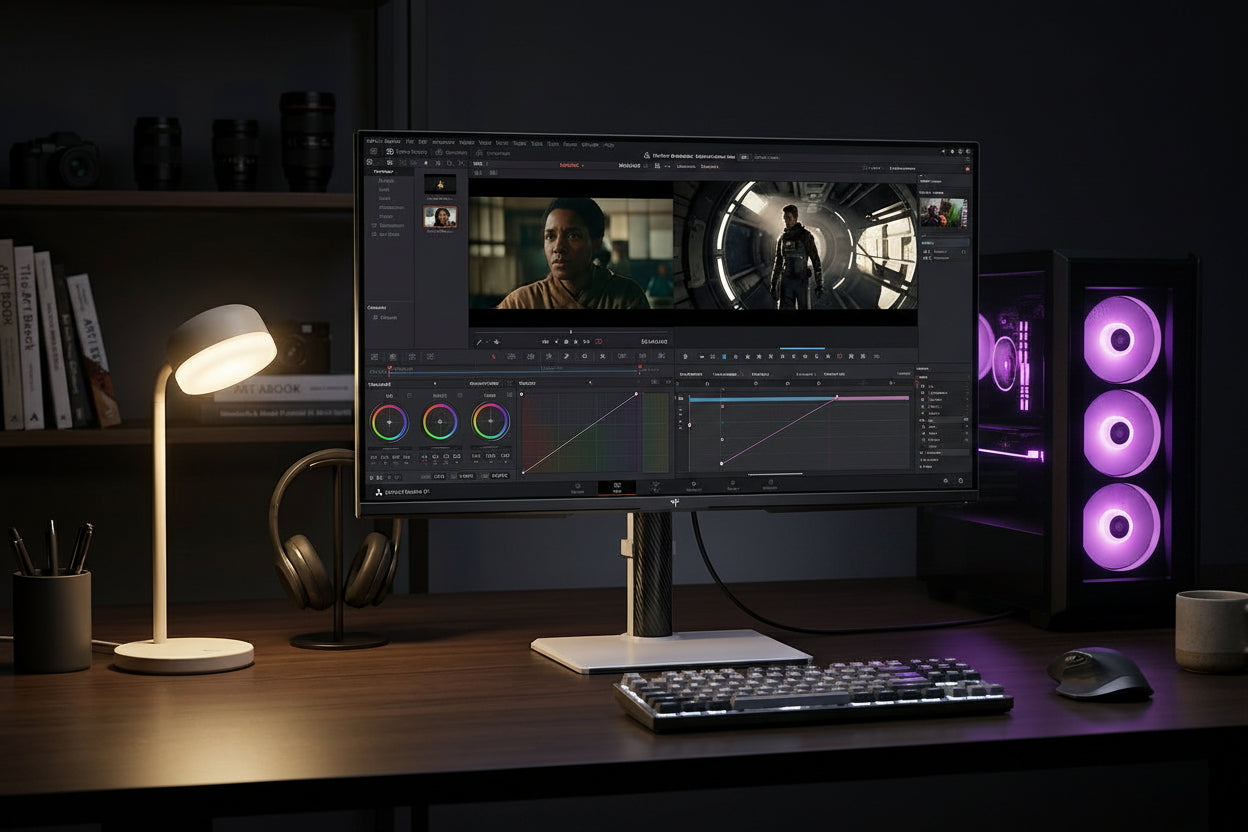
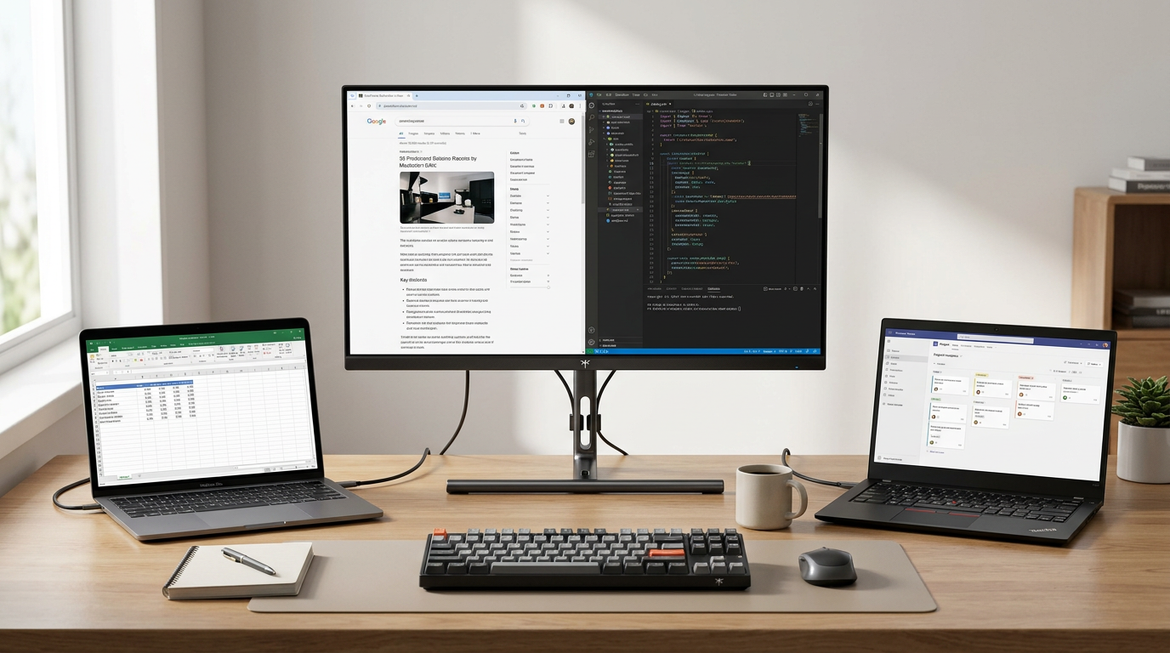
If you want the best monitor for RTX 6060 2026, 1440p is the sensible starting point and 240Hz is the stretch target, not the automatic answer. For most mid-range builds, the real question is whether you should pay for Mini-LED contrast and a faster refresh step, or stop at a cheaper QHD high-refresh panel that already fits your games and desk.

RTX 6060 Baseline at 1440P
For a 2026 mid-range GPU, 1440p is the practical resolution target because it leaves room for sharp image quality without pushing the display into unnecessary premium territory. That makes the monitor decision less about chasing the biggest spec sheet and more about matching the panel to the kind of games you actually play.
A useful rule of thumb is simple: if your library is split between competitive titles and visually rich single-player games, the best monitor for RTX 6060 2026 is usually the one that gives you enough refresh headroom without forcing you to pay for features you will not notice every session. If you lean almost entirely toward esports, you can justify a faster panel. If not, 1440p with a strong 180Hz-to-200Hz class already covers a lot of ground.
That is why this audit starts with fit, not hype. The goal is to find a display that keeps motion smooth, preserves image clarity, and avoids the kind of overspend that only looks reasonable on a spec comparison page.
Why 1440P 240Hz Mini-LED Fits the Build
1440p is the middle ground where sharpness and speed can coexist without the compromises of 1080p or the heavier demands of 4K. In practice, that matters because a mid-range build often feels better when the monitor keeps detail crisp while still leaving enough room for higher refresh rates in fast games.
Mini-LED changes the value equation because it adds local dimming and stronger HDR potential without moving you into OLED’s burn-in conversation. As KTC’s Mini-LED and quantum-dot overview explains, that combination is aimed at better contrast and wider color than a plain high-refresh panel, which is useful if your desk does double duty for games, media, and everyday use.
Resolution and Refresh Balance
For most players, 1440p at 180Hz or 200Hz already feels like a major step up from basic high-refresh displays. The jump to 240Hz can still be worthwhile, but it is best treated as headroom for genres that reward very fast motion, stable frame pacing, and low input delay rather than as a universal requirement.
What this means is that the best monitor for RTX 6060 2026 is not automatically the fastest panel in the class. If you spend more time in open-world or cinematic games, the extra refresh often matters less than contrast, color, and price. If you mainly play shooters, the faster tier becomes easier to justify.
Why Mini-LED Changes the Trade-Off
Mini-LED can make a 1440p setup feel more premium without forcing the whole purchase into flagship pricing. The trade-off is that local dimming and HDR are most noticeable in scenes with strong highlights and deep shadows, while pure competitive play often cares more about motion tuning and input behavior.
That is why Mini-LED is a strong fit when you want one monitor to do several jobs. If your use is almost entirely ranked play on a bright, fixed desktop, a non-Mini-LED high-refresh model may be the cleaner buy. If you want a display that also looks better for HDR content and single-player games, Mini-LED moves up the list.

What Specs Actually Matter for Competitive Play
Before you pay for a faster or pricier monitor, check the specs that actually change your day-to-day experience. Resolution affects clarity, refresh rate affects motion smoothness, panel type affects viewing character, and ports decide whether the advertised refresh is usable at full quality on your desk.
| Spec | Why It Matters | Watch For |
|---|---|---|
| Resolution | 1440p is the clean balance point for QHD gaming and desktop use | Avoid paying for 4K if your goal is only fast mid-range gaming |
| Refresh rate | Higher refresh gives more motion headroom and can feel smoother in fast titles | 240Hz is useful, but not every game or GPU path will make full use of it |
| Panel type | Mini-LED improves contrast and HDR behavior compared with plain backlit panels | If you do not care about HDR, plain Fast IPS can be better value |
| HDR / local dimming | Helps bright highlights and darker scenes look more separated | Blooming tolerance matters more than the marketing label |
| Ports | The wrong input can cap the usable refresh rate | Check DP first for the highest supported mode |
| Overdrive behavior | Tuning affects clarity and inverse ghosting | The best mode can change by refresh level and panel |
A simple filter follows from that table. If you want the best monitor for RTX 6060 2026 primarily for ranked play, prioritize refresh behavior, ports, and overdrive tuning first. If you want a one-screen gaming and media setup, put Mini-LED and HDR farther up the list.
Why Mid-Range Gaming Monitors Are Moving from Edge-Lit to Full-Array Backlighting is a useful background read if you want to understand why backlight design changes the image more than many shoppers expect. If you are choosing between panel families, that context is often more useful than another spec summary.
Where KTC’s Factory Pricing Changes the Math
The value argument is not that every retail brand is overpriced. It is that direct sourcing can reduce the amount you pay for middle layers that do not improve the panel itself.
- The All-Mini-LED Monitors collection is the easiest place to compare Mini-LED QHD options side by side without mixing them into unrelated categories.
- The 2K Monitor collection is broader, which helps when you want to compare 1440p refresh tiers before deciding whether Mini-LED is worth the extra spend.
- The Gaming Monitor collection is the widest browse path if you are still deciding whether your next screen should be a QHD gaming panel, a faster esports model, or a higher-resolution alternative.
The practical point is that a lower shelf price makes a 1440p 240Hz Mini-LED target easier to reach. That does not mean 240Hz is always the correct choice, only that the upgrade is less painful when the pricing structure stays closer to the hardware value.
Vertical Integration Arbitrage: How KTC Delivers 2000-Zone Panels for Less shows how factory-direct paths cut markups while keeping zone counts high.
When A Higher Refresh Rate Is Worth Paying More
A conservative fit guide for 1440p Mini-LED and QHD gaming monitors. The chart groups the listed refresh classes by the prices supplied in the product facts so readers can judge when the step-up looks like a small premium and when it starts to look like a bigger trade-off.
View chart data
| Category | Price band |
|---|---|
| 180Hz class | 280 |
| 200Hz class | 290 |
| 240Hz class | 0 |
Which KTC Options Fit Different Buyer Types
Balanced 1440P Mini-LED Value
The KTC Mini LED 27" 180Hz 2K HDR1400 Gaming Monitor | M27T6 is the most balanced choice if you want Mini-LED contrast without paying for faster refresh you may not fully use. It offers 2560×1440 at 180Hz, 1152-zone Mini-LED backlighting, and HDR1400-class brightness, which is a strong mix for mixed gaming and media use.
This is the better fit when your priority is overall value, not the largest refresh number on the page. It is less compelling if your main goal is squeezing every possible frame advantage out of a fast competitive setup.
Higher-Refresh QHD for Faster Titles
The KTC Mini LED 27" 200Hz 2K HDR1000 Gaming Monitor | M27T6S fits the buyer who wants the Mini-LED route but prefers a faster class of motion. Its 2560×1440 at 200Hz panel, with 210Hz overclock support, makes it the more speed-focused Mini-LED option.
The KTC 27" 2K 200Hz/210Hz HDR400 Gaming Monitor | H27T22C-3 is the lower-cost speed-first alternative. It drops Mini-LED and HDR emphasis, but it keeps the same general 1440p 200Hz class, so it is the cleaner pick if you want refresh rate first and price second.
Premium Mini-LED If HDR Matters More
If you care more about stronger HDR presentation than the raw speed jump, the M27T6 is still the safer value call. The M27T6S gives you more refresh headroom, but the listed HDR1000 tier is a different compromise from the M27T6’s HDR1400 positioning.
That makes the choice easier to frame: choose M27T6 when contrast and HDR depth matter most, choose M27T6S when motion speed matters more, and choose H27T22C-3 when you want the cheapest path into fast 1440p gaming.
The 2026 'No-Brand-Tax' Gaming Setup: High Specs on a Budget is a useful companion if you are comparing direct-sourced pricing against broader market pricing patterns. It is a background read, not a substitute for checking the exact panel class you need.
Set Up the Pairing Without Wasting Headroom
- Start with the cable and port that support the highest stable mode. On a PC, DisplayPort is usually the safest first check when you want the top refresh rate.
- Set resolution before chasing the highest refresh setting. If the signal is unstable, return to a lower baseline and work upward.
- Validate the monitor in a simple desktop scene before opening a game. That makes it easier to see whether the image is stable, clean, and correctly scaled.
- Tune overdrive carefully. KTC’s overdrive guidance makes the core trade-off clear: response time improves as tuning gets more aggressive, but inverse ghosting can become more visible if you overshoot.
- Recheck HDR and brightness after the refresh mode is stable. Brightness behavior can change how useful the monitor feels in a real room, especially on a Mini-LED panel.
If input lag or motion feels inconsistent, the issue may be the full signal path rather than the panel itself. What Causes Your Monitor’s Input Lag to Spike During Specific In-Game Scenarios? is a practical follow-up if you want a setup checklist before you start changing game settings.
The Sourcing Verdict on Total Cost
The cheapest option is not always the best value, but the best-value display usually avoids paying for features you will not use. For the best monitor for RTX 6060 2026, that means choosing the refresh tier, HDR behavior, and panel type that match your games instead of buying a spec ceiling as a badge.
Quick Decision Checks
- Mixed use (gaming + media): favor M27T6 for HDR1400 contrast.
- Pure competitive focus: favor M27T6S or H27T22C-3 for higher refresh at lower cost.
- Budget cap under $300: start with the H27T22C-3 and verify port compatibility.
If you want a single balanced answer, the M27T6 is the safest value position. If you want more speed, the M27T6S is the cleaner step up. If you want the lowest entry price into fast QHD gaming, the H27T22C-3 is the sensible compromise.
FAQs
Q1. How Much Refresh Rate Headroom Does RTX 6060 Need at 1440P?
For many mid-range builds, 180Hz already covers a lot of practical use, and 200Hz is the point where the extra step starts to matter more for fast titles. A 240Hz monitor can still make sense, but it is better treated as headroom for specific games rather than a universal requirement.
Q2. What Mini-LED Zone Count Is Worth Paying for in 2026?
Zone count matters most when you care about HDR separation and how clean dark scenes look beside bright highlights. In this category, a higher zone count is more useful if you often play story games or use the monitor for mixed media, while competitive-only users can tolerate less.
Q3. Why Does a 1440P 240Hz Monitor Still Make Sense If Many Games Run Below 240 FPS?
Because refresh ceiling is only one part of the experience. Even when average FPS stays below the maximum, higher refresh classes can still improve motion smoothness and leave more room for less noticeable frame pacing dips.
Q4. Can Mini-LED Be Better Than OLED for a Shared Gaming and Work Desk?
Often, yes, if your desk includes static UI, long sessions, or mixed gaming and productivity. Mini-LED avoids OLED burn-in concerns and can be a better fit when brightness and long-term desktop use matter more than the absolute black-level behavior of OLED.
Q5. What Is the Real Total Cost of a Factory-Sourced Gaming Monitor in 2026?
The upfront price is only part of the total cost. Shipping, warranty length, return terms, and whether the panel actually matches your use case all shape the real value, so the cheapest sticker price is not always the lowest-risk purchase.