MacBook Pro users who want sharp text, reliable single-cable charging, and color that matches their laptop’s display can find strong alternatives to Apple’s own monitors. The key is matching pixel density to macOS scaling needs, confirming enough USB-C power delivery for the specific model and workload, and verifying wide-gamut coverage with factory calibration.

Why Text Clarity Matters: 4K vs. 5K Scaling on macOS
macOS removed subpixel antialiasing years ago, so text sharpness now depends almost entirely on pixel density. A 27-inch 5K panel reaches the ~218 PPI target Apple designed for, letting the system use clean 2x integer scaling that maps one logical pixel to four physical pixels. A standard 27-inch 4K panel sits at roughly 163 PPI, so macOS must render a higher-resolution buffer and downsample it, which introduces slight softness in fine text and UI elements.
For coders, designers, and anyone who spends hours reading or editing type, the difference shows up immediately. A 5K monitor such as the KTC H27P3 keeps fonts crisp without forcing the GPU to handle fractional scaling overhead. Users who value refresh rate over absolute sharpness often accept the small softness of 4K fractional scaling, but anyone upgrading from a Retina MacBook display usually notices the gap right away.
This guide on subpixel layouts explains why high-PPI panels also reduce the need for manual font tweaks.
USB-C Integration: Single-Cable Power and Productivity
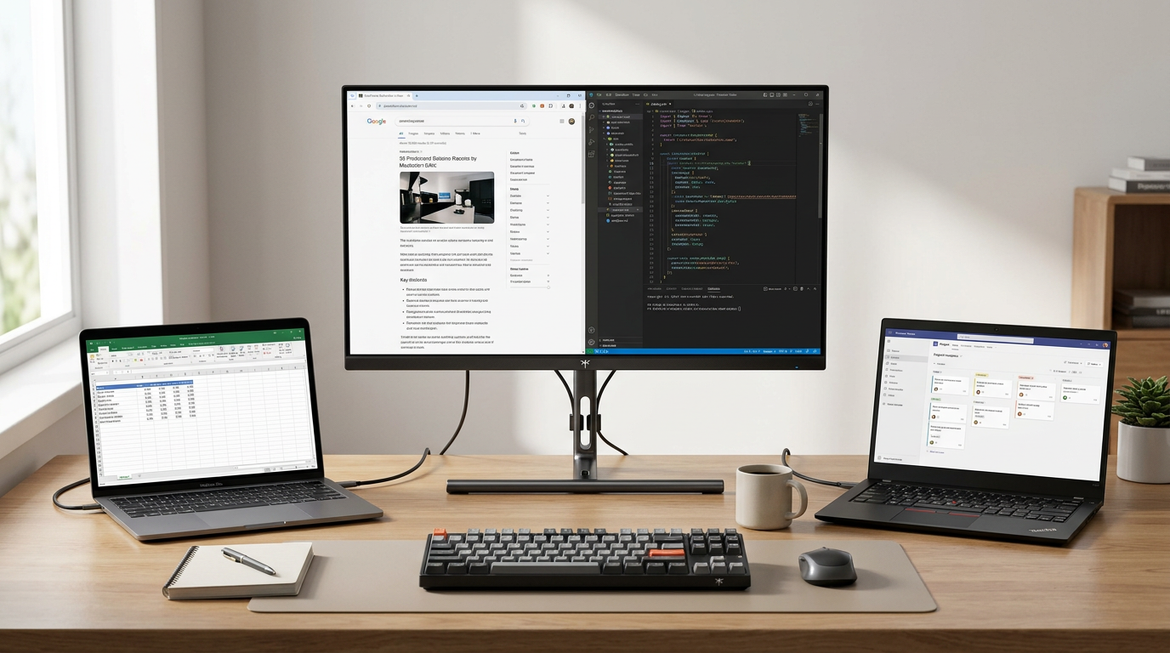
A single USB-C cable can carry video, data, and power, which removes the clutter of separate chargers and docks. Most KTC monitors deliver 65 W to 90 W of Power Delivery, enough for 14-inch MacBook Pro models during office work and light creative tasks. The 16-inch MacBook Pro can draw 140 W under heavy load, so 90 W connections may result in slow battery drain during 4K exports or 3D renders.
This chart helps you judge whether a single USB-C cable is likely enough for a given MacBook Pro setup. In most office-use cases, 90 W is the practical middle ground; for 16-inch models under heavier export loads, 140 W is the safer choice.
USB-C Power Delivery Fit for MacBook Pro
Use this chart to judge whether a single USB-C cable is likely enough for charging and normal use, and where higher wattage matters under heavier load.
View chart data
| Scenario | 65W | 90W | 140W |
|---|---|---|---|
| 14-inch / Office | 2.0 | 2.0 | 1.0 |
| 14-inch / 4K Export | 2.0 | 1.0 | 2.0 |
| 16-inch / Office | 2.0 | 2.0 | 1.0 |
| 16-inch / 4K Export | 2.0 | 1.0 | 1.0 |
Some Apple Silicon Macs also experience occasional wake-up handshake issues over USB-C. A quick cable replug or switching to the monitor’s HDMI port usually restores the connection. DisplayPort Alt Mode over USB-C keeps video and data stable once the link is established.

Color Accuracy: Matching the Apple Creative Standard
Apple devices use the Display P3 gamut, which covers roughly 25 percent more color volume than standard sRGB. Monitors that reach 98–99 percent DCI-P3 coverage can match the MacBook Pro’s internal display for photo, video, and UI work without obvious shifts.
Factory calibration with Delta E under 2 keeps colors consistent across devices. For web projects that must look identical on consumer screens, switching to an accurate sRGB preset prevents oversaturated reds and greens. The explanation of Delta E values shows how to read these numbers for any workflow.
Choosing the Right KTC Monitor for Your MacBook Pro Workflow
Text-heavy users who need pixel-perfect Retina scaling usually prefer the 27-inch 5K H27P3. Its 99 percent DCI-P3 coverage and factory calibration also suit photographers and designers who stay inside the Apple color space.
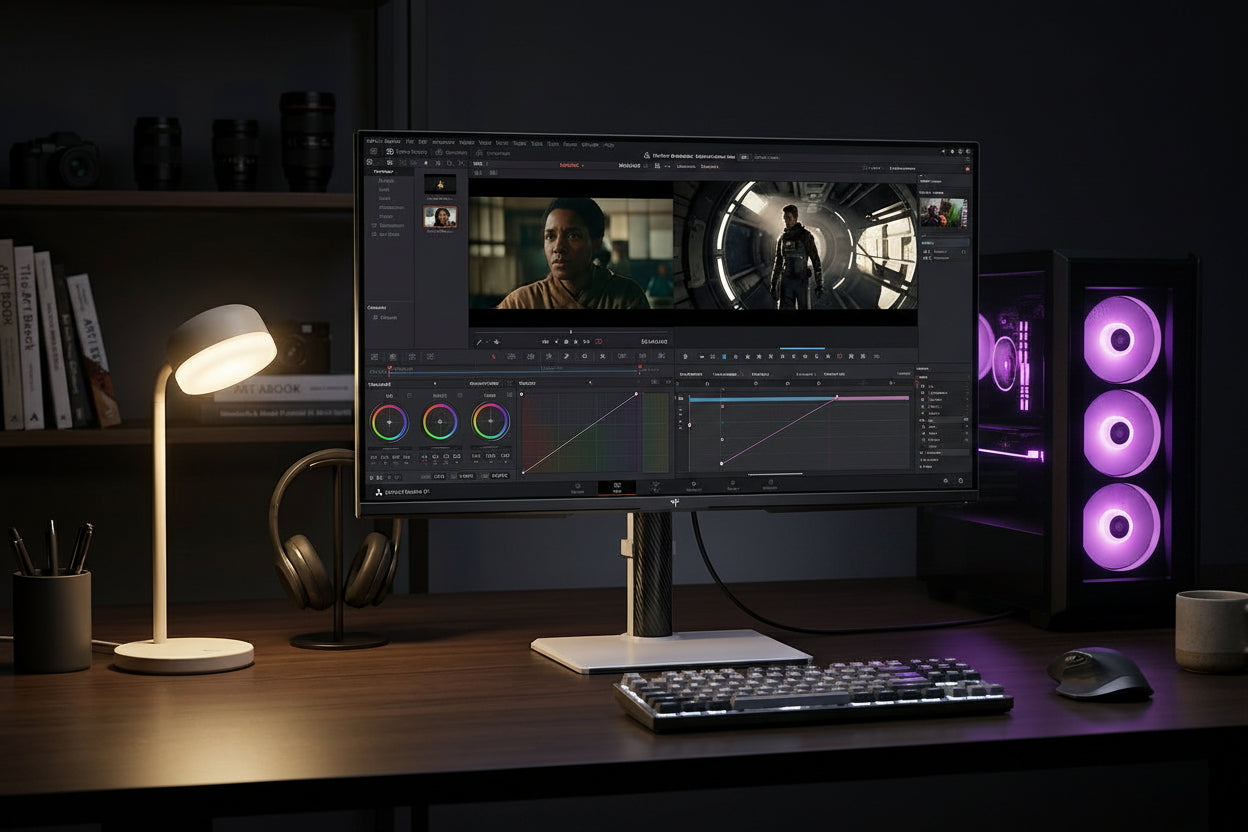
Video editors and HDR creators often choose the M27P6 Mini-LED model for its 1400-nit peak brightness and high contrast, though local dimming can produce faint blooming around text in dark-mode macOS. Hybrid users who want both 4K sharpness and 160 Hz smoothness for occasional gaming or motion graphics frequently select the H27P6.
Budget-conscious professionals who still want 4K density without the 5K or Mini-LED premium can consider the H27P27. It delivers solid color volume and a simple tilt stand while keeping the single-cable USB-C experience intact.
All four models support the resolutions and color modes macOS expects, so the final choice comes down to whether text sharpness, HDR brightness, or refresh rate matters most for the daily workload.
Frequently Asked Questions
Does 90 W USB-C Charging Work With a 16-Inch MacBook Pro?
Ninety watts covers light office work and browsing on 16-inch models. Heavy 4K exports or 3D renders can pull more power than the connection supplies, so the battery may drain slowly until the native charger is connected.
Will a 4K Monitor Look as Sharp as My MacBook Pro Screen?
A 27-inch 4K panel uses fractional scaling on macOS, which renders a higher-resolution buffer and downsamples it. The result is usable but slightly softer than the native 2x integer scaling available on a 27-inch 5K display.
How Important Is DCI-P3 Coverage for Everyday Work?
Most web and office content stays inside sRGB. Design, photo, and video projects that match the MacBook Pro’s display benefit from 98 percent or higher DCI-P3 coverage so colors remain consistent across devices.
Can I Use One Cable for Video, Power, and Peripherals?
Yes. KTC monitors with USB-C hubs pass video, data, and up to 90 W of charging through a single cable. Some users add a small dock if they need more ports or faster charging for 16-inch models.
What Happens If the Monitor Does Not Wake From Sleep?
A quick unplug and replug of the USB-C cable usually restores the signal. Using HDMI as a secondary connection avoids the handshake issue for users who experience it regularly.