The best monitor for AI prompt engineering is usually a 27-inch 5K or a well-placed 4K setup, especially if you keep prompts, logs, and references open at the same time. Triple-vertical arrays only make sense when your desk depth, mounting, and window habits can support them without constant head turning.
Why AI Workflows Need More Screen Real Estate
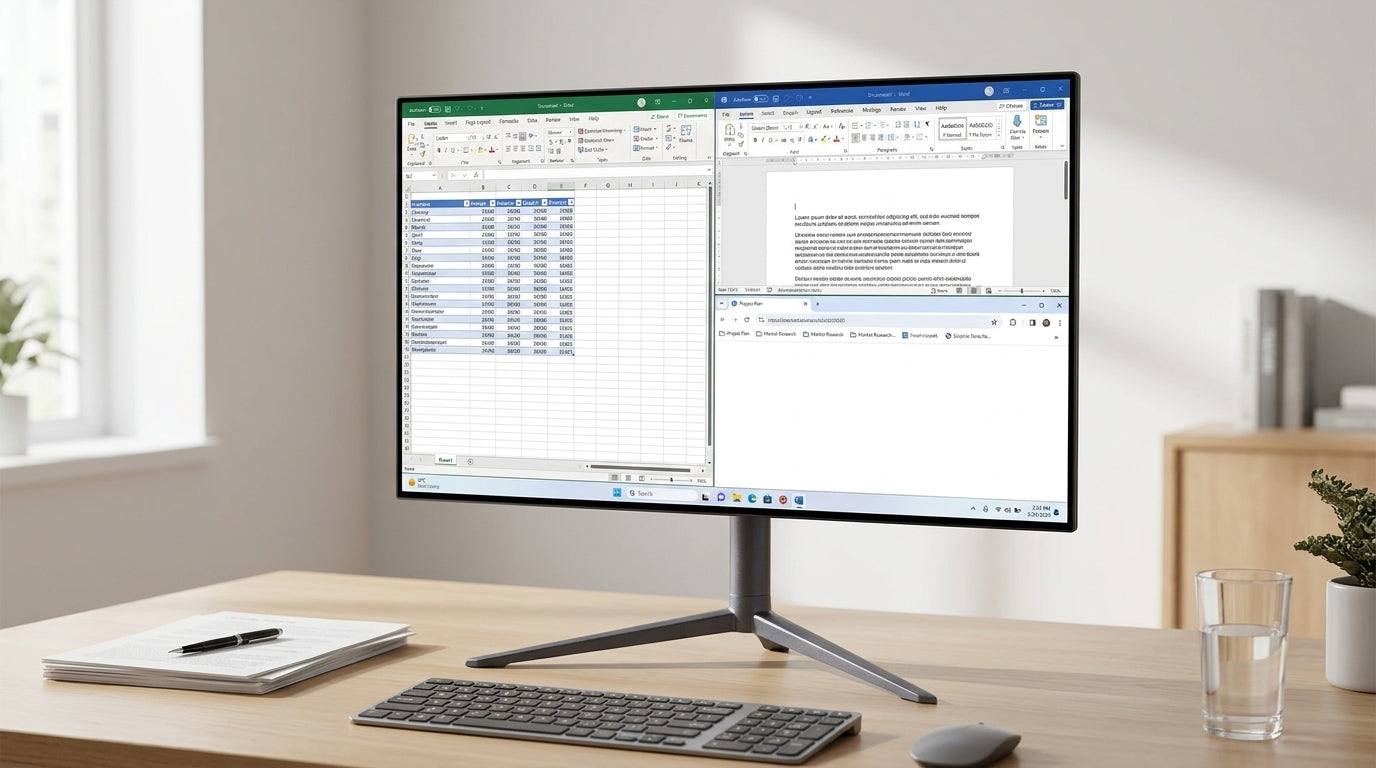
AI workspaces slow down when prompts, logs, references, and output previews all fight for the same narrow view. The practical win is not magic productivity, it is fewer context switches, less window shuffling, and a cleaner place to compare results while you iterate.
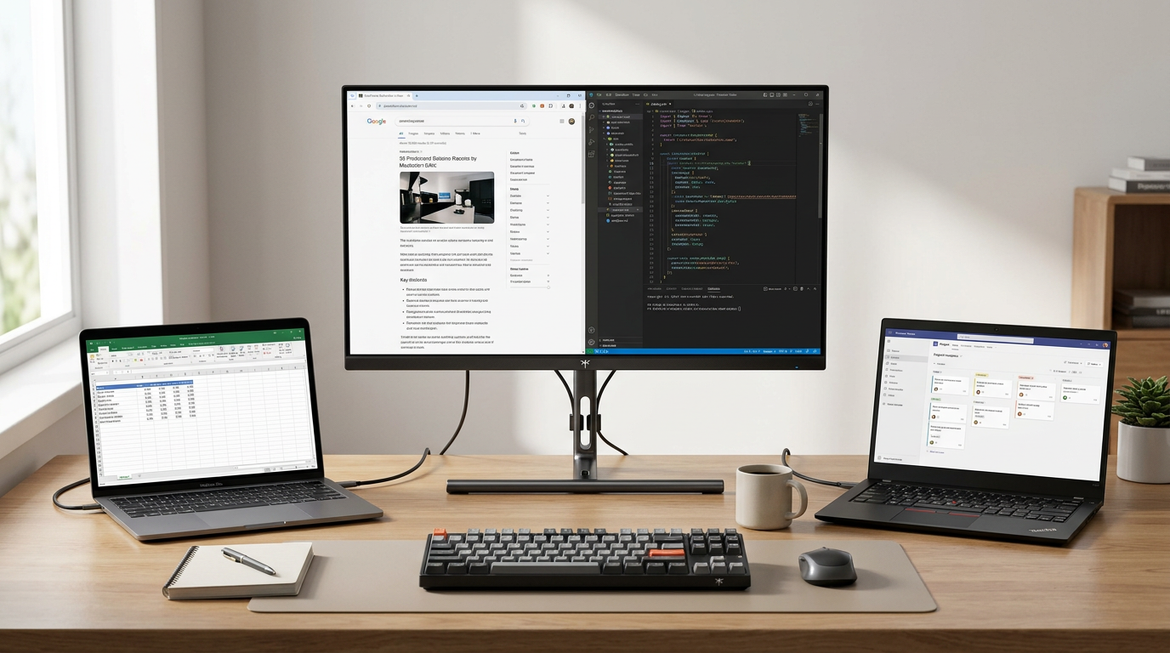
For long sessions, the main screen should stay centered and the side screens should carry supporting material. OSHA’s multi-monitor placement guidance favors that arrangement because it reduces unnecessary head turning, and its monitor viewing angle guidance puts the top of the screen at or below eye level. That is a comfort and consistency rule, not a promise of better output.
A useful quick filter is this: if your workflow lives in code, prompts, and logs, prioritize readability and layout control first; if it lives in games or motion-heavy testing, treat refresh rate as more important. If you mainly review long text, the pixel-density note for dense technical documentation is a better starting point than chasing the biggest panel.

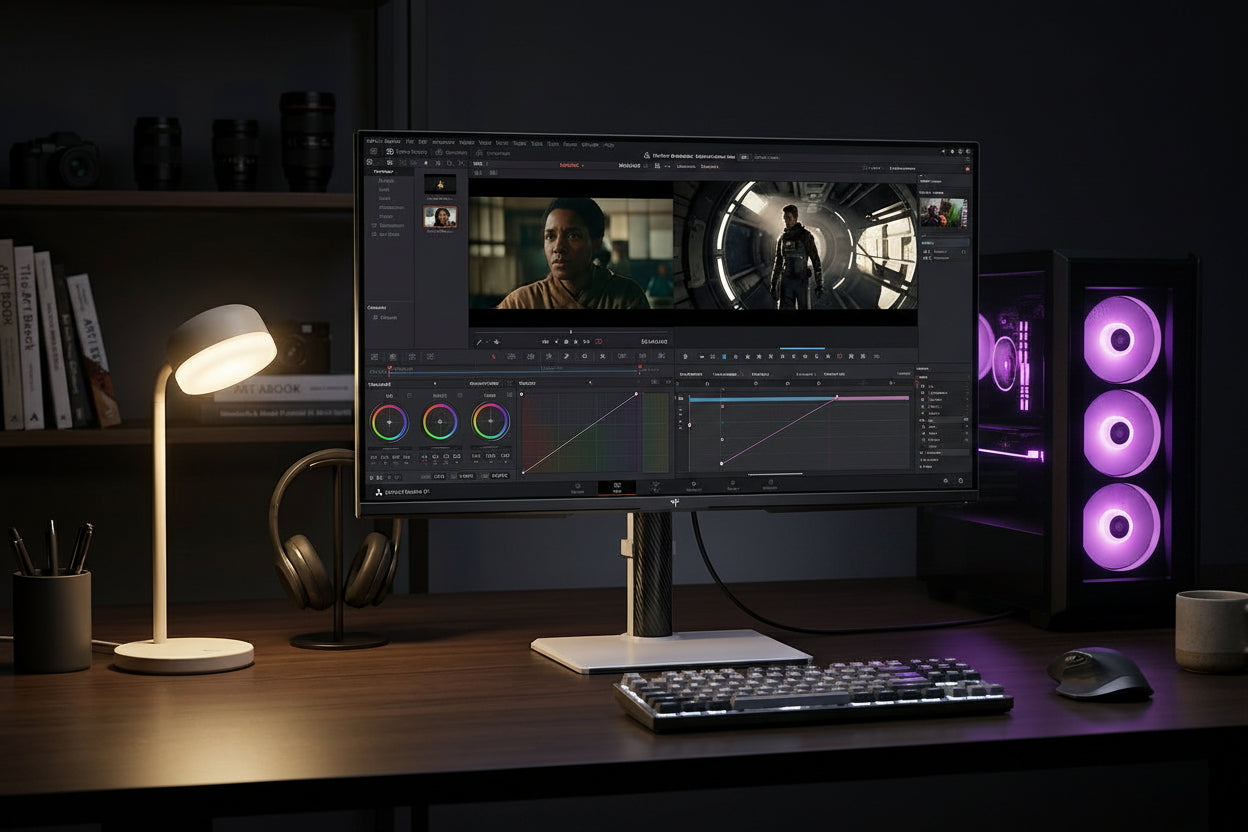
One useful rule of thumb is that denser text interfaces become easier to scan when the panel gives you more pixels per inch, because small glyphs stay cleaner and the UI can be packed more tightly without feeling cramped. For accessible line length in technical text, see the UMN accessible text length guidance. Harvard’s typography guidance supports the same principle and matters most when you live in dark-mode editors, terminal logs, or long prompt threads.
Resolution and Layout Choices for AI Screens
For most prompt-heavy workflows, 5K is the sharpest option when text clarity matters more than motion. A 27-inch 5K panel such as the H27P3 5K monitor gives you 5120×2880 at 27 inches, which is a strong fit for compact UI density and text-heavy creator work. The trade-off is that 5K usually makes the most sense when your apps and scaling are stable enough to use it comfortably.
That said, 4K is often the simpler default for mixed work. It is usually easier to live with across operating systems, browser layouts, and app scaling behavior, and it leaves enough room for prompts, docs, and references without forcing everything into tiny columns. If you want a broader comparison of that trade-off, the 4K vs 5K monitor comparison is a natural follow-up.
A super-ultrawide changes the decision again. It removes bezel breaks and gives you one long working surface, which is useful when you want a timeline-like view of logs, chat, or reference windows. But if your task needs clear separation between prompt, output, and notes, a multi-panel setup may be easier to manage. The triple monitor vs 49-inch super ultrawide comparison is worth reading if you are deciding between continuity and modularity.

A practical boundary helps here. If you can only keep one screen clean and the rest become clutter magnets, a triple setup may create more noise than value. If you already use a centered primary display with side panels for logs and reference, a portrait-friendly stack can feel more natural than one giant wide canvas. The vertical monitor setup article is a good reference for that kind of layout.
Ergonomics for Long Prompt Sessions
For long prompt sessions, the best layout is the one you can keep aligned without thinking about it. Center the primary text display, then place side monitors where a glance is enough for status checks. The home office ergonomic monitor guide is a useful reminder that posture problems often start when a screen is just a little too high, too low, or too far off-center.
A triple-vertical arrangement can work well for code, logs, and notes, but only if the desk depth and mounting hardware are doing real work for you. If the desk is shallow, you may end up with a head-tilt habit instead of a cleaner workflow. In that case, two well-placed displays are often the better call.
Use this self-check before you buy arms or rearrange the desk:
- Can you keep the main display centered without twisting your shoulders?
- Can you read the side panel with a short eye movement instead of a neck turn?
- Can you sit far enough back that the center and side panels feel balanced?
- Will your app windows stay organized, or will the extra screen become a dumping ground?
The answer matters more than the number of panels. A tidy two-monitor setup often beats a messy three-monitor array, and a 49-inch ultrawide only helps if your work actually benefits from uninterrupted horizontal space.
Product Fits for AI Command Centers
Here is the simplest way to think about the main options. The table below summarizes which KTC display fits which AI workflow pattern, without pretending there is one universal winner.
| Product | Best Fit | Strength For AI Workflows | Ergonomic Profile | Caveat |
|---|---|---|---|---|
| KTC 27" 5K Professional Monitor | H27P3 | Dense text, prompt windows, creator-style desks | Sharpest text-first option in this group, with 5120×2880 at 27 inches | Tilt-only stand, so portrait or height tuning needs a VESA arm |
| KTC 27" 4K 160Hz/320Hz Gaming Monitor | H27P6 | Mixed coding, prompting, and high-refresh flexibility | Dual-mode 4K and 1080p high-refresh behavior suits users who switch tasks often | Better for versatile use than for maximum pixel density |
| KTC 32" 4K 165Hz Gaming Monitor with Vesa Mount | H32P22P | Larger canvas workstations | Bigger 4K workspace with height adjustment and a calmer desk presence | Less flexible than a fully articulated stand |
| KTC 49" DQHD 180Hz Curved Gaming monitor | H49S66 | Panoramic multitasking and timeline-style work | One continuous horizontal surface can reduce bezel breaks and simplify wide dashboards | Height and swivel are useful, but it is still a large footprint |
A few buying filters matter more than the brand names. Choose 5K if you spend most of the day reading dense text. Choose 4K if you want a safer balance between sharpness and app compatibility. Choose a super-ultrawide only when your workflow benefits from one broad canvas more than from separate zones. Choose triple screens only if you can keep the center panel primary and the side panels genuinely secondary.
For readers who want a broader browsing path, the 4K Monitor collection is the cleanest place to compare sharper general-purpose options, while the 4K & 5K High-Refresh Monitors collection is better if you want stronger motion handling alongside productivity use. If your setup is more gaming-leaning than office-leaning, the Gaming Monitor collection is the broader category page to start from.
A Practical Setup Checklist
Before you commit to a multi-monitor AI workstation, check the parts that usually cause regret later:
- Confirm the main screen matches your dominant task, not your aspirational one. If you mostly read and edit text, prioritize pixel density. If you mostly juggle windows, prioritize layout flexibility.
- Measure desk depth before buying a third display. A crowded desk often turns a clever setup into a posture problem.
- Verify cable standards and input support before expecting a higher refresh mode to work.
- Make sure the stand or arm can place the primary display at a natural eye line, with side screens slightly off to the side.
- Keep a fallback plan for scaling, window behavior, and app compatibility. The ideal layout is only useful if your software cooperates.
If the setup fails one of those checks, simplify rather than forcing it. The best monitor for AI prompt engineering is the one that keeps text readable, side panes accessible, and your desk workable for hours at a time.
FAQs
Q1. How Do I Choose Between 4K and 5K for Prompt Engineering?
Choose 5K if your priority is sharper text and denser workspace packing. Choose 4K if you want easier scaling, broader compatibility, and a more forgiving setup. In practice, 5K is the sharper tool, but 4K is often the lower-friction choice for mixed AI, coding, and browser-heavy work.
Q2. What Is the Best Layout for LLM Training Logs?
A centered primary monitor with a dedicated side panel for logs is usually the cleanest setup. That keeps the main screen focused on prompts or code while the log window stays visible enough to check quickly. A vertical side display works especially well when log lines are long and status changes matter more than image width.
Q3. Can a Triple-Monitor Setup Reduce Context Switching?
Yes, if each screen has a clear role. Prompts on the center panel, references on one side, and logs or output on the other can reduce tab flipping. It stops helping when the extra screens become unassigned clutter, so the layout only pays off if your workflow stays disciplined.
Q4. Why Does Pixel Density Matter for Dark-Mode Coding?
Higher pixel density makes text edges cleaner, which helps dark interfaces stay legible during long reading sessions. That matters when code, terminals, and chat windows are open all day. It does not solve poor posture or bad scaling, but it often makes dense interfaces less tiring to scan.
Q5. What Should I Check Before Buying a Super Ultrawide for AI Work?
Check desk depth, window management habits, and whether you actually benefit from one continuous canvas. If you need clear separation between prompts, references, and outputs, multiple displays may be easier to live with. If you prefer one long workspace and minimal bezel interruption, a super-ultrawide is more compelling.
The Setup That Stays Out of Your Way
The smartest AI command center is not the one with the most panels. It is the one that keeps prompts readable, logs visible, and posture neutral enough that the setup disappears into the work. If you get the layout right first, the monitor choice becomes easier, and the rest of the workstation feels calmer for long sessions. Test the full arrangement with your actual prompt and log windows before finalizing any purchase.