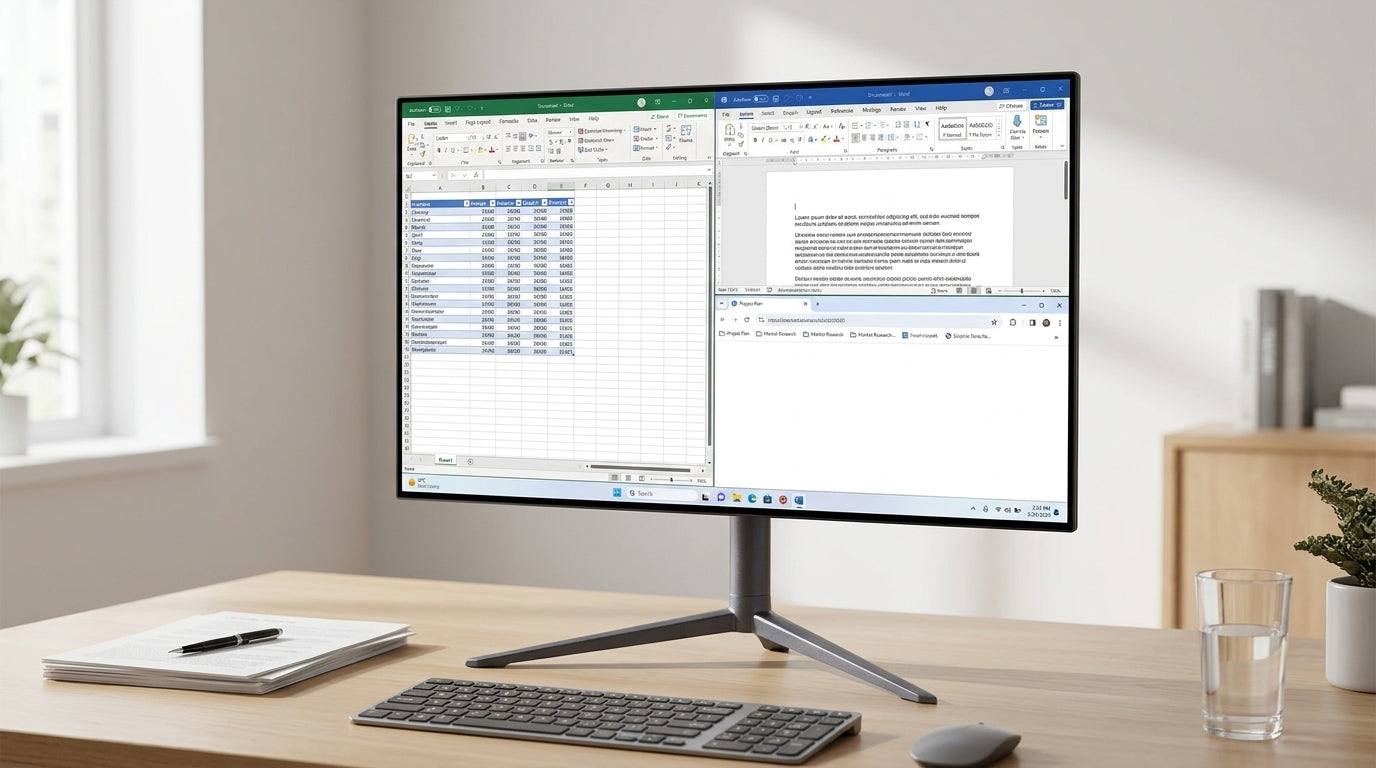
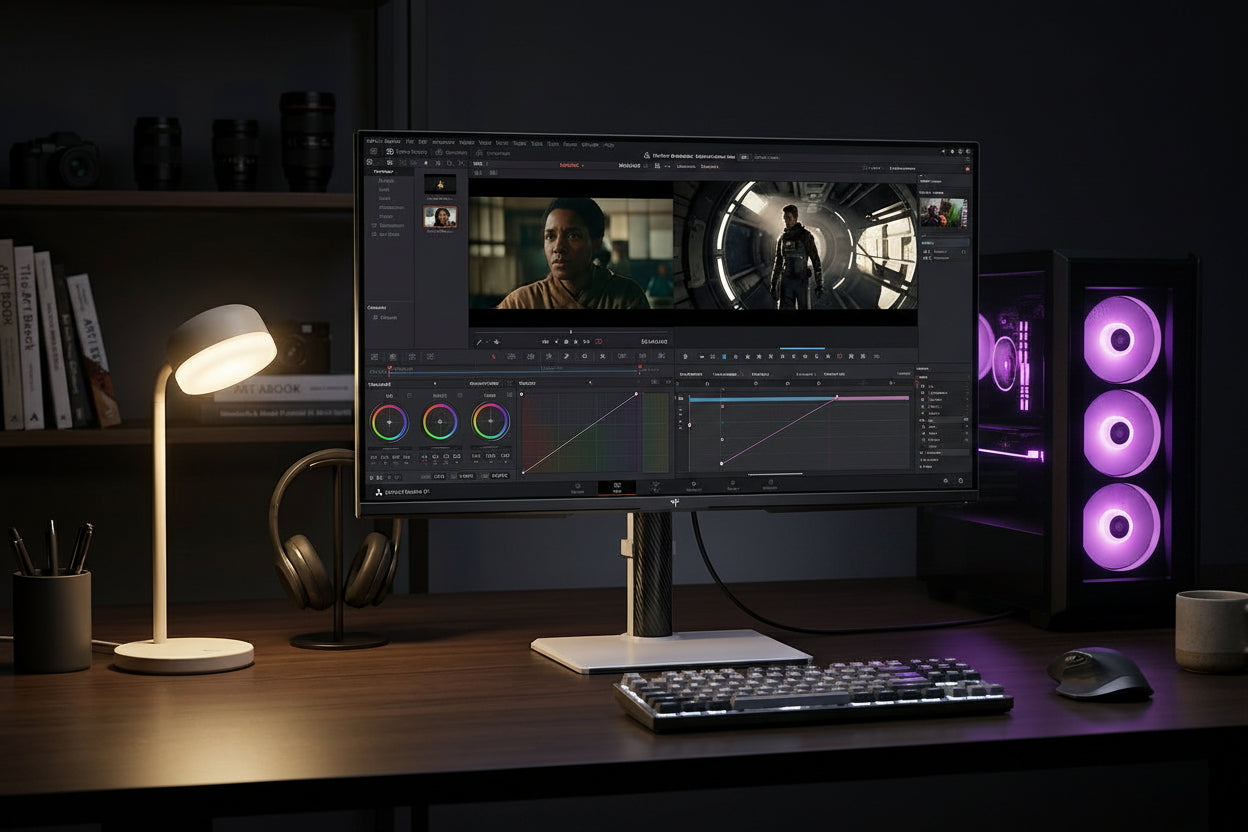
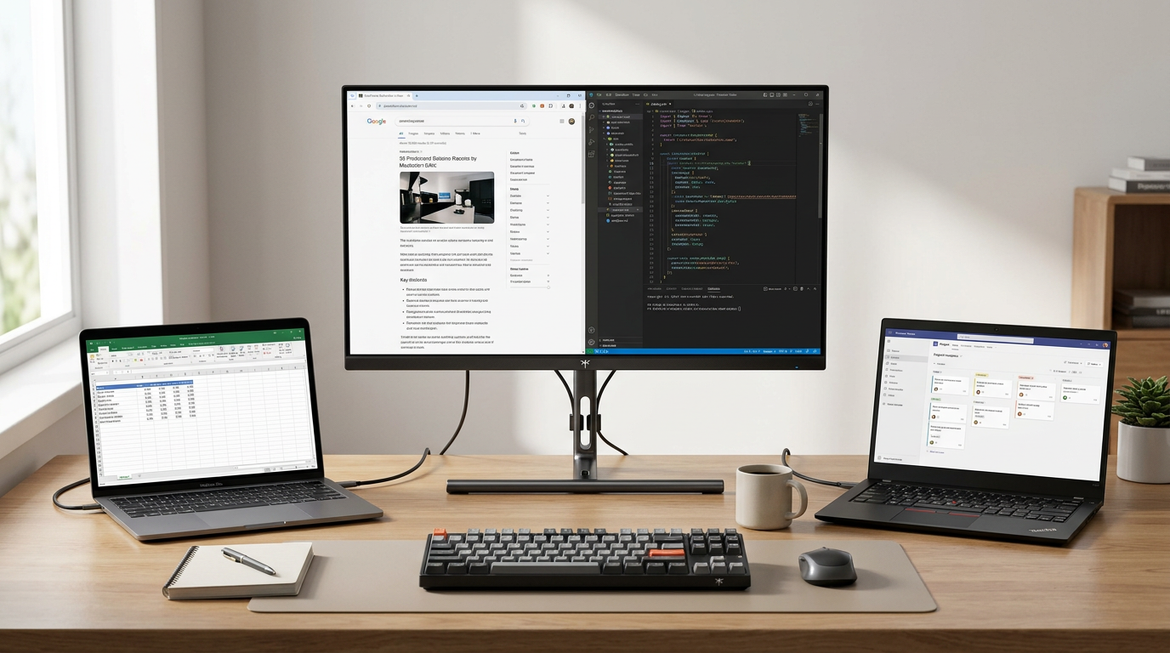
If you need an affordable color accurate monitor 2026, the practical target is still simple: prioritize a monitor that can be calibrated reliably, covers the color space your work uses, and behaves consistently enough to trust after setup. OEM scale can help lower costs, but it is not proof of calibration quality or long-term stability.

For color-critical work, the real question is not whether a monitor sounds professional. It is whether the panel, calibration path, and workflow fit your output. Widely referenced standards from organizations such as the International Color Consortium and the CIE color science framework remain useful background points when you compare claims, while vendor calibration guidance such as X-Rite’s monitor calibration workflow helps translate those claims into setup decisions.
Why Creator Monitors Still Cost More
Creator monitors are more accessible in 2026, but the price gap has not disappeared. The buyer is usually paying for tighter factory tuning, better uniformity, wider gamut control, and a workflow that stays predictable after calibration. That is why a cheaper panel can look spec-rich yet still be the wrong fit for editing or design.
One useful filter: if your work is mostly web video, social content, or client mockups, you can often stay in a mid-budget tier. If you need repeatable print-adjacent color or you notice shifts across the screen, the cheap option stops being a bargain quickly.
A good starting point for the value side of the market is the factory-direct monitor buying guide, which frames sourcing efficiency as a budget lever rather than a quality guarantee.
The Spec Floor That Actually Matters
For most buyers, the spec floor is easier to judge if you separate what helps color work from what mostly helps marketing.

Delta E and Factory Calibration
Delta E is a useful accuracy signal, but only as a comparison aid. A low number usually means the monitor was tuned close to a target, yet it does not guarantee every unit will behave the same way. For SDR creative work, that makes Delta E < 2 a sensible baseline, not a universal promise.
Decision sentence: if you will calibrate and verify the display yourself, a modest factory-calibrated panel can be enough; if you will not calibrate at all, a slightly better-tuned display matters more than a higher spec claim.
Color Coverage Versus Color Volume
Coverage tells you how much of a reference gamut the display can reach. Volume can exceed 100% and still not mean better practical coverage. That difference is where many budget buyers get misled.
The safest rule is simple: if your work is mostly digital, strong sRGB coverage usually matters more than a flashy volume number. If your work involves wider color-managed output, the gamut claim matters only when your software and profiles are also under control.
4K, Mini-LED, and HDR Trade-Offs
Mini-LED and HDR can improve visual impact, but they do not automatically make a monitor more color-accurate. VESA’s DisplayHDR spec overview shows why HDR certification is about multiple requirements, not just brightness alone. In real creator use, HDR is helpful only if your workflow actually uses it.
Decision sentence: if your main goal is accurate SDR editing, do not pay extra for HDR unless it also brings better calibration control or uniformity; if you work on HDR-aware video, Mini-LED becomes more relevant, but only inside a managed workflow.
OS Workflow Checks and Daily Stability
Even a strong panel can feel inconsistent if the signal path or OS behavior is awkward. Wide-gamut displays can look oversaturated outside color-managed apps, and a monitor that needs constant preset switching is annoying in day-to-day use.
For most creators, the best monitor is the one that stays predictable after you set it once. That is why calibration support, profile handling, and stable presets matter more than headline refresh rates.
Which Models Clear the Budget Line
The comparison below focuses on value tiers that make sense for creator work, not on every model in the catalog.
| Model | Price Tier | Size | Resolution | Refresh Rate | Color Accuracy Signal | Best Fit |
|---|---|---|---|---|---|---|
| [KTC Mini LED 27" 4K 160Hz HDR1400 Gaming Monitor | M27P6](https://us.ktcplay.com/products/27-inch-4k-hdr1400-miniled-gaming-monitor) | Mid-budget 4K | 27" | 4K | 160Hz | Factory calibration claims, Mini-LED, strong all-round creator value |
| [KTC Mini LED 27" 180Hz 2K HDR1400 Gaming Monitor | M27T6](https://us.ktcplay.com/products/27-inch-180hz-hdr1400-miniled-gaming-monitor) | Value Mini-LED | 27" | 2K | 180Hz | HDR1400 class, Mini-LED, creator-friendly value balance |
| KTC Mini LED 27" 200Hz 2K HDR1000 Gaming Monitor | M27T6S | Value Mini-LED | 27" | 2K | 200Hz | High refresh, HDR1000 class, lower entry cost |
| KTC 27" QHD Creator / Office Monitor | H27P22S | Lower-cost creator tier | 27" | QHD | Varies by SKU | Usually the entry-friendly choice |
| KTC 27" 5K Creator / Office Monitor | H27P3 | Premium clarity tier | 27" | 5K | Text and detail clarity focus | Design, UI, and high-density workspace use |
If your work is mostly image and video editing, the 4K Mini-LED tier is often the most balanced compromise. If you care more about affordability and you can live with lower resolution, QHD can still be a smart value tier. If you mainly want sharper text and layout space, 5K is more of a clarity choice than a baseline requirement.
The Best Fit by Creator Workflow
Start with the most demanding workflow, then move down to broader value tiers.
- Choose 5K if your work is design-first or text-heavy. It is useful when you want more workspace density and sharper interface elements, but it is not mandatory for creator accuracy.
- Choose 4K Mini-LED if you want the best mid-budget balance. This is the sensible lane for HDR-aware editing, mixed creator use, and buyers who want stronger visual impact without jumping to premium pricing.
- Choose QHD Mini-LED if value matters more than pixel density. This works when the buyer wants a stronger price-to-performance balance and can accept less detail than 4K.
- Choose a gaming-class model only if the color path still holds up. High refresh is nice, but it should never outrank calibration behavior for creator tasks.
Decision sentence: if the monitor will serve as your main editing screen, prioritize color behavior first and refresh rate second; if it will split time between work and play, a faster panel can make sense, but only after it clears the accuracy floor.
Signals to Verify Before Buying
Before you buy, check the few details that actually change whether the monitor will feel creator-ready in daily use.
- Confirm the accuracy claim and the color-space claim together. A low Delta E number by itself is not enough if the gamut target is unclear.
- Check the stand and ergonomics. Long editing sessions are annoying when height or tilt is awkward.
- Verify the connection mix you need, such as HDMI 2.1, DisplayPort, or USB-C power delivery, before assuming a dock-free setup.
- Treat HDR as a workflow feature, not a substitute for calibration or gamut coverage.
- Review warranty and support terms, because low price only helps if the after-sale experience is workable.
If you want a broader sourcing lens, the All-Mini-LED Monitors collection is a useful browsing path, while the 4K and 5K high-refresh collection helps you compare higher-density options in one place.
Common Tradeoffs in the Budget Segment
Budget creator displays usually force at least one compromise. The most common ones are:
- better color coverage but weaker oversaturation control
- higher refresh rate but looser factory tuning
- lower price but weaker stand ergonomics
- HDR branding with little practical benefit for SDR work
- good center performance but uneven corners or edges
That is why the right choice depends on the workflow, not the headline spec sheet. A creator who mostly publishes to the web can often tolerate a different tradeoff than a designer who checks color across multiple apps and lighting conditions. For example, a photo editor working under mixed room lighting may accept slightly weaker uniformity in exchange for stronger factory Delta E, while a video editor focused on HDR delivery will prioritize Mini-LED zone count and calibration path even if it raises the price.
What to Buy First and What to Upgrade Later
If you are building an affordable color workflow, the most sensible sequence is usually:
- Buy the best calibrated IPS or IPS-like display you can afford.
- Add a basic calibration tool if your work is color-sensitive enough to justify it.
- Improve room lighting and keep the viewing environment neutral.
- Upgrade to wider gamut or better uniformity only when your output actually needs it.
That order usually produces better results than buying the flashiest panel first and hoping the rest of the workflow makes up the difference.
For buyers who want a more technical lens on setup risk, the hardware calibration guide is a useful next step when color mistakes are costly.
FAQs
Q1. How Do I Know If Delta E < 2 Is Enough for Creator Work?
It is usually a strong baseline for SDR design, photo, and video editing, but only when the rest of the workflow is sane. If you do not calibrate, or if your software is not color-managed, the number matters less than the practical setup.
Q2. What Is the Difference Between Color Coverage and Color Volume?
Coverage is how much of a reference color space a display can reproduce. Volume is the total range it can show, which can be larger without meaning better real-world accuracy. For most buyers, coverage is the more useful number.
Q3. Can a Mini-LED Monitor Replace a Dedicated Color Grading Display?
It can be a strong value option for many creators, especially in mixed-use or budget-conscious setups. It is not automatically a substitute for a high-end reference workflow, especially when consistency and validation matter more than visual punch.
Q4. Why Does OEM Vertical Integration Matter for Budget Creator Monitors?
It can help a brand reduce sourcing and assembly costs, which may make lower pricing possible. It does not, by itself, prove calibration quality, uniformity, or long-term consistency, so it should be treated as a value signal, not a guarantee.
Q5. Can I Use a Gaming Monitor for Design and Video Editing?
Yes, if the monitor clears the accuracy, gamut, and workflow checks that matter for your work. Refresh rate is useful, but for creator tasks it is secondary to color correctness and stable behavior.
Choosing an Affordable Color Accurate Monitor in 2026
Affordable color accuracy in 2026 is less about chasing premium labels and more about choosing a display that behaves predictably after calibration. Match the color space to the job, separate marketing numbers from useful specs, and verify the setup before buying. You can reach creator-grade results without paying reference-display prices when the workflow stays under control.