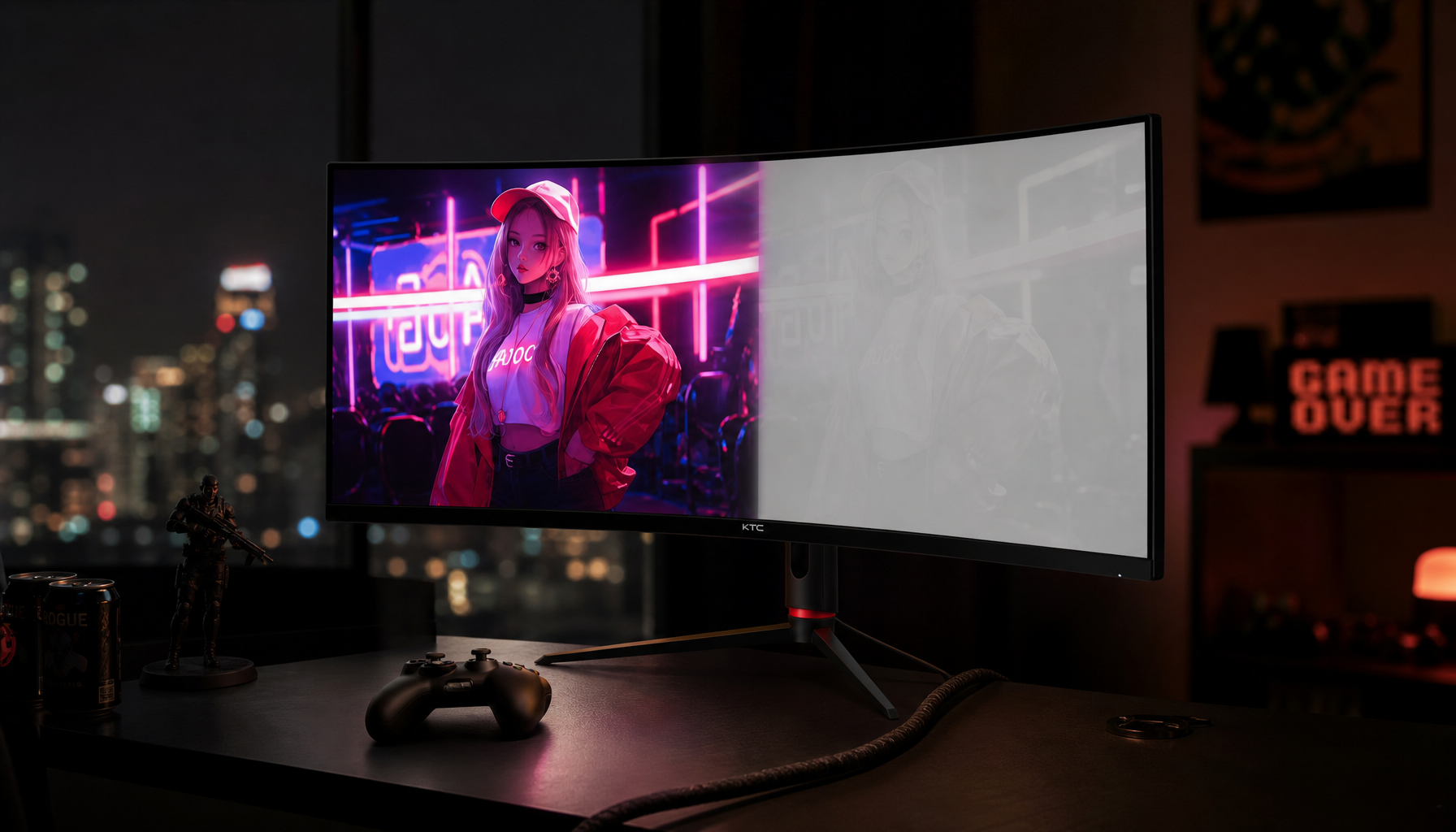
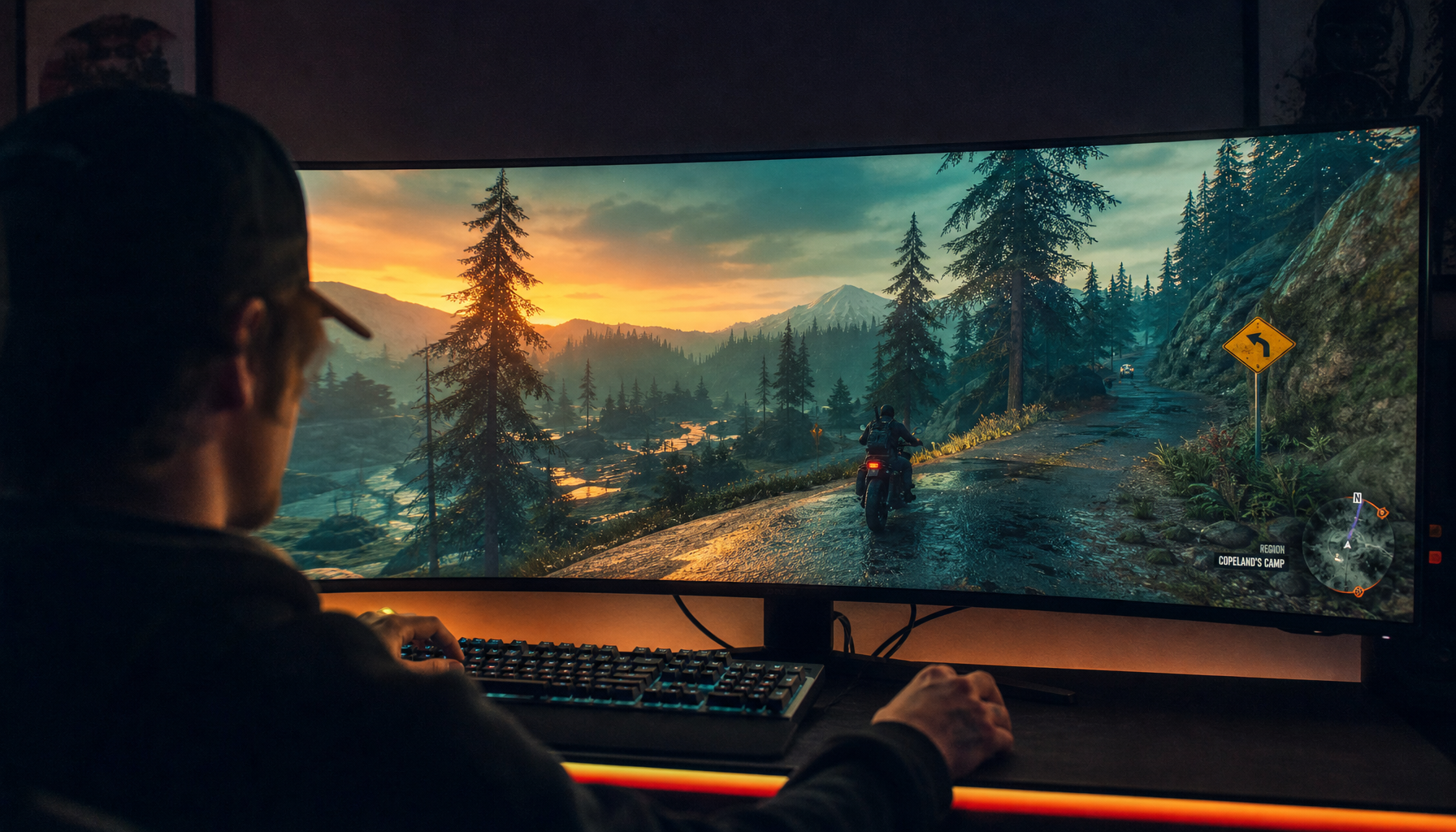
HDR often fails with scaling because the signal, operating system, GPU, and monitor no longer agree on brightness, color mapping, or pixel placement. Keep native resolution whenever possible, use clean integer scaling when performance demands a lower resolution, and calibrate HDR only after the display pipeline is stable.
Does HDR look washed out, too dark, blurry, or strangely muted when you switch from native resolution to a scaled desktop or lower game resolution? A quick test is to return the monitor to native resolution, re-enable HDR, and compare the same HDR video or game scene before changing any color sliders. That comparison helps identify whether the problem is scaling math, HDR handling, monitor limits, or a weak HDR implementation.
Why Scaling Can Break the HDR Experience
HDR is not just “more brightness.” It depends on tone mapping, color metadata, peak brightness, black level, color depth, and the display’s real hardware behavior. Desktop HDR documentation notes that HDR output can involve GPU-side tone mapping before the final desktop image is composed, using display color information and content metadata to decide how highlights, shadows, and colors should appear on screen.
Scaling adds another processing step. Instead of sending one rendered pixel to one physical panel pixel, the system must stretch or map the image. That can happen in the GPU, in the monitor, or through operating-system-level desktop scaling. Once that happens, HDR has to preserve luminance and color intent while also resizing the image.
For a gaming monitor, that matters immediately. A 4K panel has a physical grid of 3840 x 2160 pixels. If you run it at 1920 x 1080, each source pixel can map cleanly to a 2 x 2 block of panel pixels. Forum users discussing lower-than-native monitor resolutions correctly identify this as cleaner integer scaling, while uneven resolution choices are more likely to look soft. That math affects sharpness first, but it can also change how you perceive HDR contrast because blurred edges, softened highlights, and lifted dark detail make HDR look less precise.
Native Resolution, Non-Native Resolution, and Display Scaling
Native resolution is the monitor’s physical pixel grid. A 27-inch 4K display is still a 3840 x 2160 panel whether your game renders at 4K, 1440p, or 1080p. Non-native resolution means the incoming image does not match that grid, so something must scale it.
Display scaling is the resizing process that makes a lower-resolution signal fill the screen. GPU scaling means the graphics card does the resizing before sending the signal. Monitor scaling means the display receives the lower-resolution signal and uses its internal scaler to stretch it. Operating-system scaling keeps the output resolution high while resizing interface elements for readability.
The cleanest case is native resolution with interface scaling, such as 4K at 150% or 200% desktop scale. Text and interface elements become readable, but the signal can still remain native. The riskier case is changing the actual output resolution, such as setting a 4K monitor to 2560 x 1440 or 1920 x 1080. A hardware forum discussion captures the practical tradeoff: lower resolution can improve game performance, but desktop clarity will usually suffer compared with native 4K.
Main Benefit |
Main HDR Risk |
|
Native resolution with interface scaling |
Sharpest desktop and most predictable signal |
Some apps may handle HDR/SDR mixing poorly |
4K monitor at 1080p |
Clean 2 x scaling and better FPS |
Less detail than native 4K |
4K monitor at 1440p |
Better FPS than 4K with more detail than 1080p |
Uneven scaling can look softer |
GPU scaling |
Consistent control from the graphics driver |
Driver bugs or forced scaling behavior |
Monitor scaling |
Can reduce GPU processing load |
Quality depends heavily on the monitor scaler |
The Main Causes of Incorrect HDR With Scaling
The Pixel Grid No Longer Matches the Rendered Image
HDR highlights depend on precision. A small neon sign in a dark game scene, a sun reflection on a car hood, or bright text over a dark UI needs clean edge definition. When a non-native resolution is stretched unevenly, the scaler blends pixels. That blending can make highlights look hazy, blacks look less deep, and fine UI text look gray instead of crisp.
A simple calculation explains why 1080p often behaves better on a 4K monitor than 1440p. 3840 divided by 1920 is exactly 2, and 2160 divided by 1080 is exactly 2. A 1080p frame can scale evenly into a 4K grid. By contrast, 2560 x 1440 into 3840 x 2160 requires 1.5 x scaling, which means the scaler has to interpolate pixels instead of duplicating them evenly.

For competitive gaming, the benefit is clear: dropping resolution can raise frame rate and reduce GPU load. The tradeoff is that HDR loses some of its premium feel because brightness detail rides on a softer image. For office productivity, the compromise is usually worse because text, spreadsheets, dashboards, and code reveal scaling softness faster than motion-heavy games.
SDR and HDR Content Are Handled Differently
A scaled desktop often makes users blame HDR when the real issue is mixed SDR and HDR content. The system has to show SDR apps, HDR videos, browser windows, game launchers, and desktop elements together. HDR documentation explains that standard HDR content should display accurately in certified HDR modes, but the system still performs tone mapping and composition across different color spaces.
That is why your desktop may look dull while an HDR game looks correct. SDR apps are usually designed around the sRGB color space, while HDR output can use a wider color and brightness range. When SDR is shown inside an HDR desktop, the system must map it into the HDR environment. If the SDR brightness balance is wrong, documents can look dim, browser pages can look gray, and game launchers can look flat.
The practical fix is not to crank saturation in the monitor menu first. Set the monitor to its accurate HDR preset, keep the output resolution native, then adjust the SDR content brightness slider until SDR windows are comfortable. After that, judge HDR using real HDR content, not the desktop wallpaper.
The Monitor’s HDR Hardware Is Not Strong Enough
Scaling can expose weak HDR, but it does not always cause it. Many monitors accept an HDR signal without having the brightness, contrast control, local dimming, or color depth to make HDR convincing. KTC’s HDR calibration notes point out that failed HDR often shows up as washed-out desktops, lifted shadows, clipped highlights, gray blacks, or full-screen HDR looking worse than windowed mode.
This is where spec-sheet discipline matters. A monitor with low peak brightness, no meaningful local dimming, and basic 8-bit color may advertise HDR but still look worse in HDR mode than in well-tuned SDR. In hands-on display setup work, the fastest reality check is to compare three scenes: a dark movie scene with small highlights, a bright outdoor game scene, and a normal SDR desktop. If only the HDR badge changes while blacks turn gray and highlights clip early, scaling is probably not the primary problem.
For gaming displays, stronger HDR usually requires more than format support. A monitor can accept HDR input and still lack the panel performance for impactful HDR. Gaming monitor buying guidance also emphasizes matching resolution, refresh rate, response time, panel type, HDR, and connectivity to the actual use case rather than chasing one gaming display badge.
GPU Scaling, Display Scaling, and Wake Behavior Can Conflict
HDR handshakes are sensitive. The GPU, cable, monitor, and operating system exchange information about supported resolution, refresh rate, color depth, HDR modes, and brightness behavior. After sleep, input switching, or signal loss, some systems can return with different scaling behavior than before. The symptom is familiar: HDR was working, then the monitor wakes and the image looks wrong, scaling options disappear, or the driver seems to force GPU scaling.
When this happens, do not start with random color changes. Refresh the display handshake first by toggling HDR off and on, changing refresh rate and changing it back, or reconnecting the display cable. Then check whether the output is still native resolution, whether refresh rate is still correct, and whether the color format or bit depth changed in the GPU control panel.
Cables and ports matter here. High-refresh 4K HDR pushes far more data than basic SDR desktop use. If a system is near the bandwidth limit, changing refresh rate, chroma format, bit depth, or scaling mode can force compromises that affect text clarity, color detail, or HDR availability.
A Practical Troubleshooting Flow
Start with the cleanest signal. Set the monitor to native resolution and its intended refresh rate, then enable HDR in the operating system. Open a known HDR game or HDR video and compare it with HDR off. If HDR looks correct at native resolution, the monitor and system are probably functional.

Next, change only one variable. If you need more FPS, test 1080p on a 4K monitor before trying 1440p because the integer scale is cleaner. If you use a 1440p monitor, avoid assuming every lower resolution will scale gracefully; uneven scaling often produces softness that no HDR slider can repair.
Then decide whether GPU scaling or monitor scaling looks better on your specific setup. There is no universal winner because monitor scaler quality varies. A premium display may scale gracefully, while another panel may look softer than GPU scaling. For serious esports, prioritize latency, frame pacing, and readability. For cinematic HDR games, prioritize native resolution, contrast, and stable tone mapping.
Finally, calibrate only after the resolution and scaling mode are final. HDR calibration done at one output mode may not feel right after switching resolution, refresh rate, or HDR preset. KTC’s notes are especially relevant here: HDR uses absolute brightness behavior, so the monitor must map content to its real peak brightness and black floor.
When to Use HDR and When to Stay in SDR
HDR is worth using when the content is mastered for HDR and the display has enough hardware capability to show the difference. That means HDR games, HDR movies, and creative review work where highlight detail and shadow control matter. It is less compelling for spreadsheets, email, standard web browsing, and productivity apps that are mostly SDR.
For office productivity, visual comfort matters as much as image impact. Workspace guidance consistently points to lighting, glare control, and reduced visual strain as productivity factors, especially for people who spend long hours reading screens. Better lighting and glare control can matter more than forcing HDR onto a weak display. A washed-out HDR desktop is not a productivity upgrade; it is extra eye work.
A balanced setup is often best. Use SDR for daily desktop work if it looks cleaner and more consistent. Switch to HDR for games and video that actually benefit. Keep native resolution for work, and use lower render resolution inside games when you need performance, preferably with the game’s own resolution scaling or a high-quality reconstruction option when available.
FAQ
Why does HDR look washed out after I lower resolution?
Lowering resolution forces scaling, and scaling can soften edges, blend highlights, and reduce perceived contrast. If the content is SDR inside an HDR desktop, tone mapping can also make normal apps look less vivid than expected.
Is 1080p on a 4K monitor better than 1440p for HDR?
It can be cleaner because 1080p maps evenly into 4K at 2 x scaling. However, 1440p has more source detail, so the better choice depends on scaler quality, game type, viewing distance, and whether you value sharpness or frame rate more.
Should I leave HDR on all day?
Only if your monitor handles SDR inside HDR well and the desktop looks comfortable. Many users get better productivity results by leaving HDR off for normal work and enabling it for HDR games or video.
Bottom Line
Incorrect HDR during scaling is usually a pipeline problem, not a single bad setting. Lock in native resolution first, use clean scaling only when performance demands it, verify HDR with real HDR content, and treat weak HDR hardware honestly. A premium screen should provide immersion and control, not a brighter version of uncertainty.