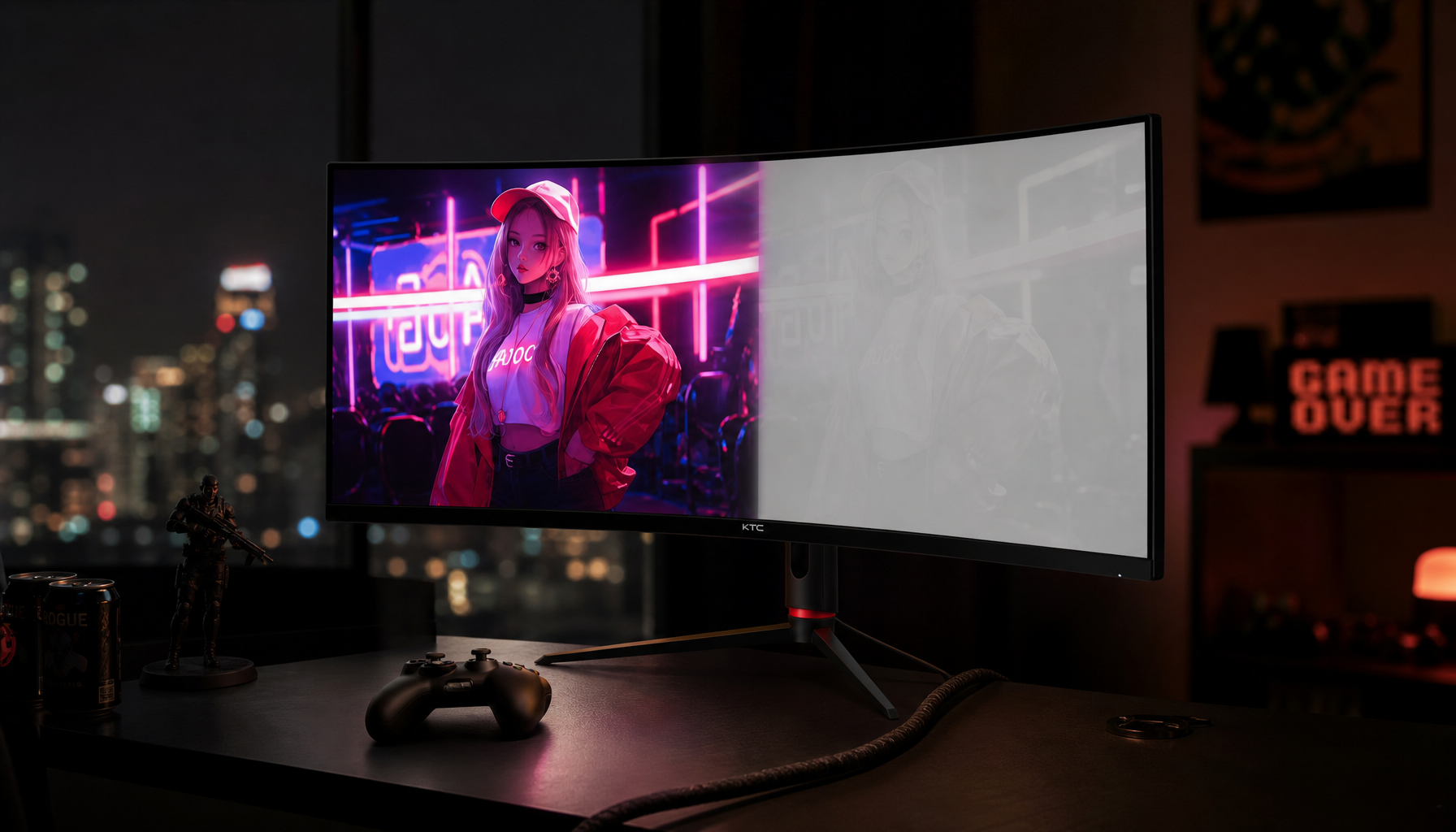
Some dimming algorithms ignore tiny bright objects because lighting a whole backlight zone for a mouse cursor can create a larger, more distracting halo than letting the cursor appear slightly dimmer.
Local Dimming Is Zone-Based, Not Pixel-Based
On a Mini LED or FALD LCD, the backlight is divided into zones that brighten or dim behind groups of pixels. That means a single white cursor on a black desktop may sit inside a zone that also covers thousands of surrounding dark pixels.
If the monitor fully brightens that zone, the cursor pops, but the black area around it glows. That glow is the familiar blooming or halo effect, where a small bright object lights up nearby dark pixels because the controllable backlight area is larger than the object.
This is why Mini LED behaves differently from OLED. OLED can light pixels individually. Mini LED can deliver stronger full-screen brightness and excellent HDR punch, but each dimming zone still covers a region rather than one pixel.
Why Cursors, Stars, and Subtitles Get Treated Differently
A good dimming algorithm does not simply chase every bright pixel. It evaluates object size, motion, contrast, scene history, and sometimes content mode before deciding whether a highlight is worth boosting.
Small UI elements are especially tricky. A cursor moves quickly, changes direction instantly, and often appears over dark backgrounds in productivity apps. If the backlight follows it aggressively, users may see a moving halo, pulsing blacks, or delayed light trails.

So the algorithm may apply a threshold: tiny highlights below a certain area are preserved mostly through the LCD pixel layer, while the backlight stays dim to protect black uniformity. That can make a cursor look less brilliant than an HDR explosion, but it keeps the desktop calmer.
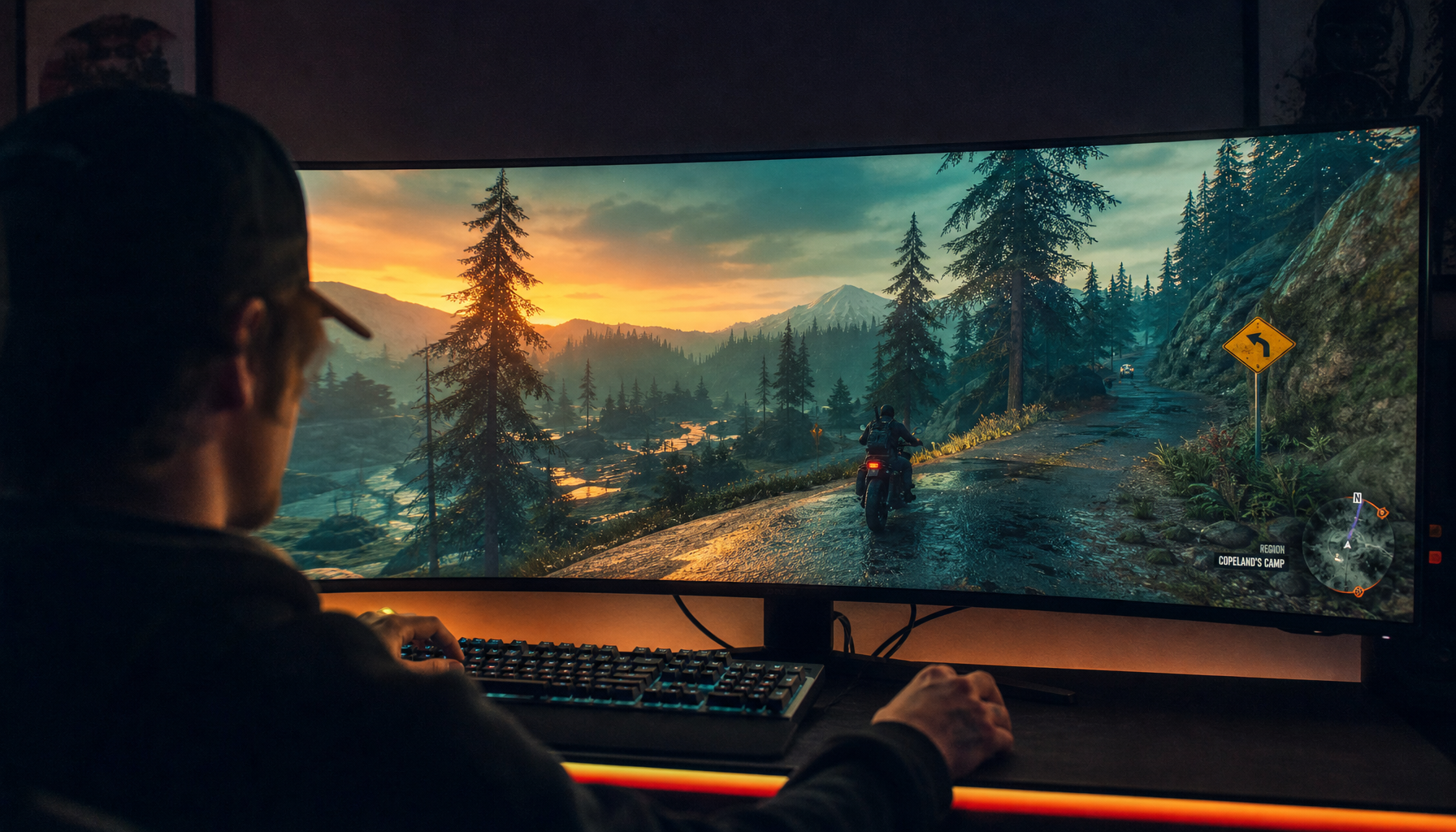
For HDR games and movies, the priorities shift. Bright sparks, torches, stars, and reflections are part of the image intent, so many monitors boost them harder. For office use, some manufacturers recommend turning local dimming off because desktop UI elements can expose cursor blooming and brightness instability; one Mini LED setup article points SDR office users toward Brightness Uniformity instead.

The Algorithm Is Protecting More Than Black Levels
Ignoring small bright objects is also a performance decision. Every zone change needs processing, timing, and smoothing so the backlight does not flicker or lag behind moving content.
That matters for gaming monitors, where low input latency is part of the product promise. A highly reactive local dimming mode may look more dynamic in slow HDR scenes, but it can introduce visible transitions in fast play or desktop motion.
There is also a power and heat angle. Higher brightness is useful, but perceived brightness does not scale linearly; going from 1,000 nits to 2,000 nits is not perceived as twice as bright, and sustained extreme brightness can increase power draw and heat. For portable smart screens, that tradeoff hits battery life directly, making selective highlight control more practical than maximum-zone boosting all the time.
A dim cursor is not always a flaw. On some monitors, it is a deliberate anti-blooming choice; on others, it can reflect weak firmware or too few zones.
What to Adjust on Your Monitor
For desktop work, start with local dimming off or low. You will usually get steadier whites, cleaner grays, and fewer halos around cursors, text carets, and window edges.

For HDR gaming or movies, enable local dimming and test medium before high. Higher settings can deepen blacks, but they may also make bright-dark boundaries harsher.
- SDR office: local dimming off, brightness uniformity on if available.
- HDR games: local dimming medium or high, then check dark menus and subtitles.
- Competitive play: prioritize Game Mode and low latency over maximum dimming.
- Dark room: lower brightness before blaming the dimming algorithm.
- Bright room: raise brightness moderately, but avoid maxing it for long sessions.
The best Mini LED monitors balance zones, panel contrast, and firmware behavior. Zone count helps, but precise processing is just as important; as display enthusiasts often note, zone count only creates the potential for precision.
The Bottom Line
Small bright objects expose the core compromise of LCD local dimming: one backlight zone must serve many pixels. When a dimming algorithm downplays a cursor, it is usually choosing stable blacks, lower haloing, and smoother desktop behavior over tiny-object brightness.
For immersive HDR, turn local dimming on and tune it by content. For productivity, reliability, and long sessions, a calmer backlight often feels better than one that chases every pixel.