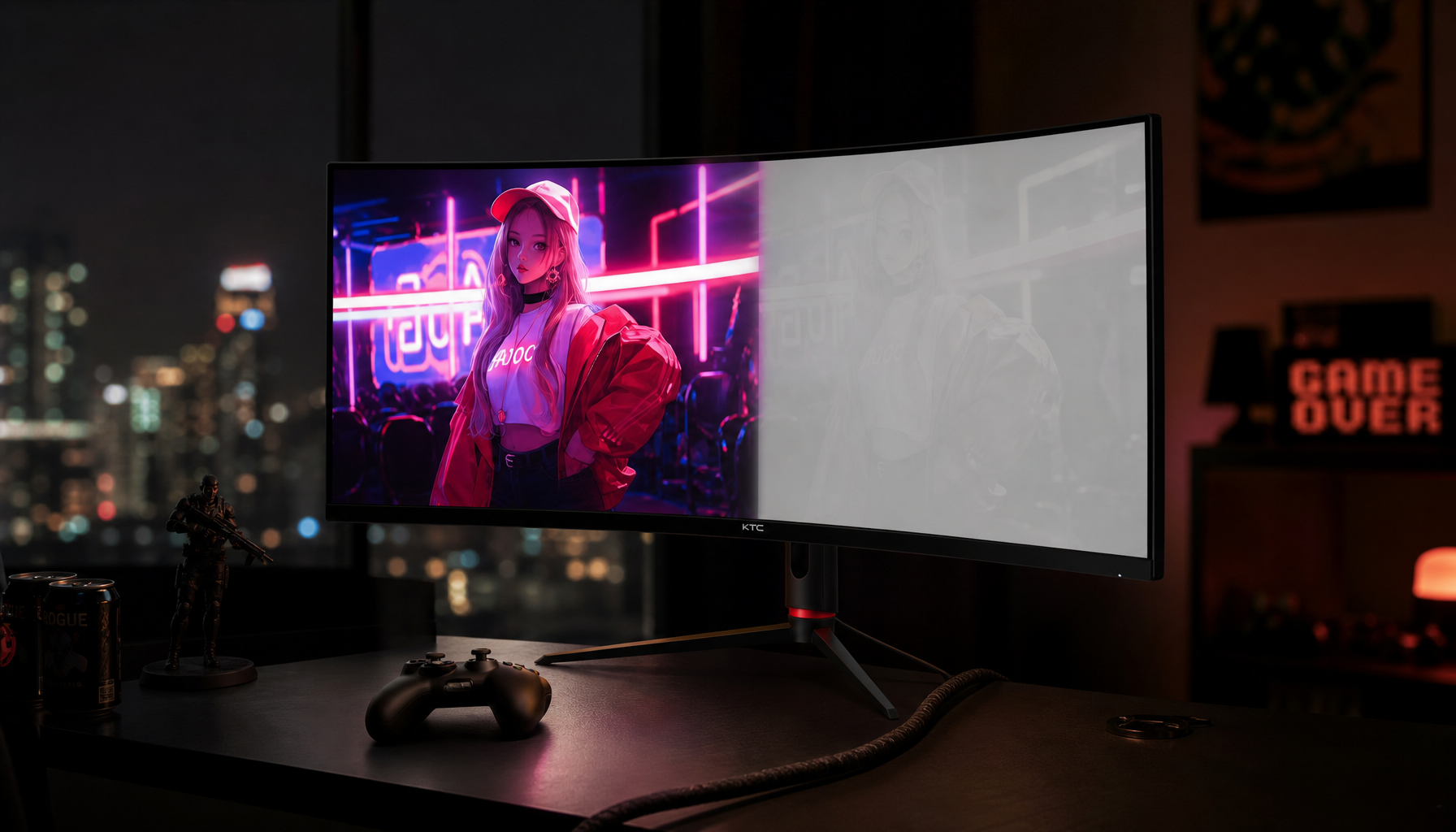
IPS glow looks worst when the room is dark, the monitor is bright, and the screen is showing black or low-light content. Add moderate ambient light, reduce brightness, and sit centered, and the same panel can look much cleaner without changing hardware.
Why Dark Rooms Make IPS Glow Look Worse
IPS glow is the soft gray or silver haze that often appears near the corners of an IPS monitor, especially during dark scenes. It is a normal behavior of IPS LCD technology, not automatically a defect, because extra backlight can become visible at wider viewing angles through the panel structure.
The key trigger is contrast between the screen and the room. In a pitch-black setup, your eyes adapt to the dark background, so any corner haze becomes more obvious. That is why dark rooms and high brightness are the classic worst-case pairing.
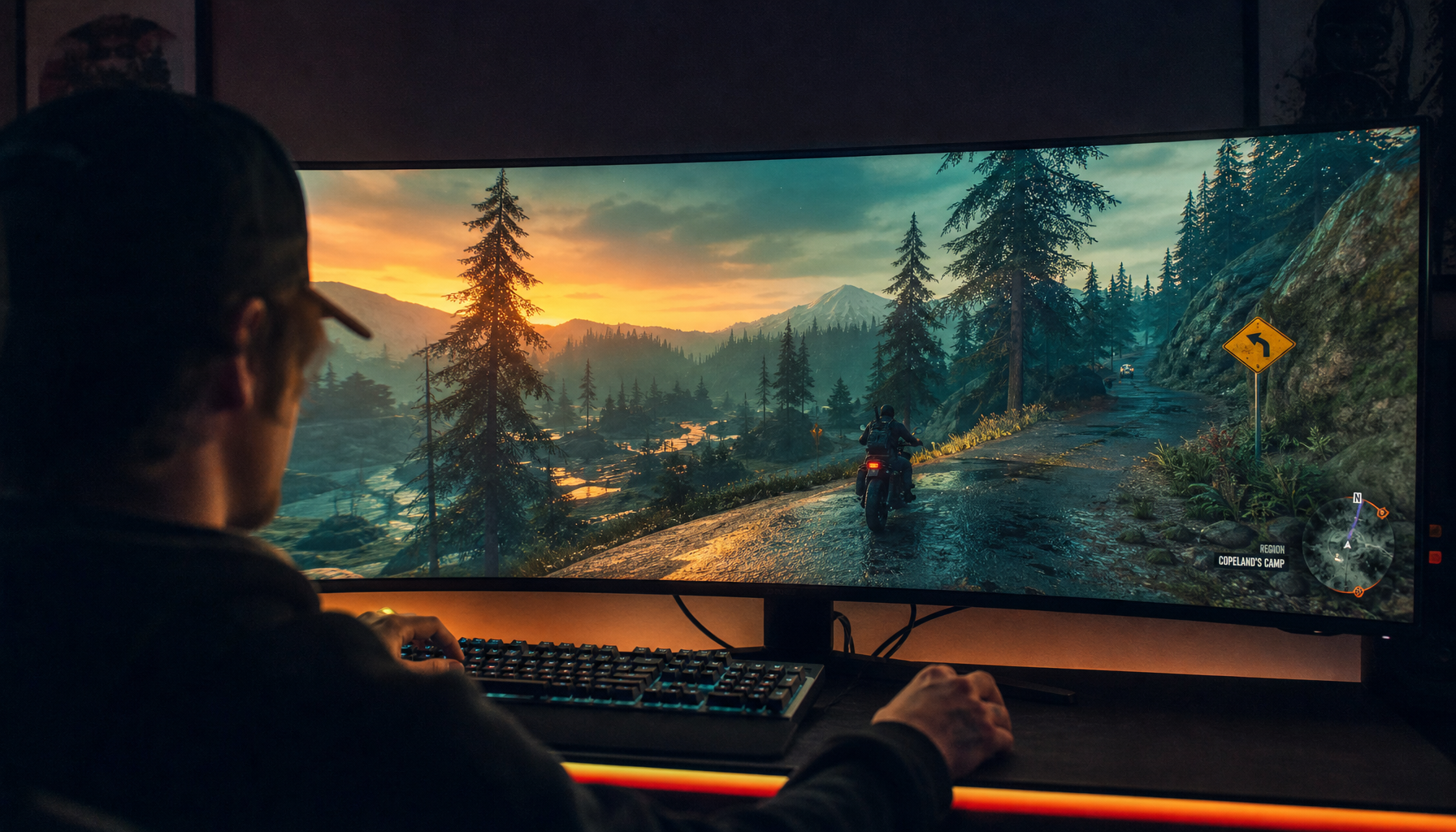
For gaming, this matters most in horror titles, space games, loading screens, and shadow-heavy cutscenes. For office work, you may barely notice it because documents, dashboards, spreadsheets, and browsers keep the screen bright enough to mask the glow.

Bright Rooms Can Hide Glow, But Not Always Improve Image Quality
A brighter room usually makes IPS glow less visible because the room raises your visual baseline. Your eyes are no longer comparing a bright monitor against a black wall, so corner haze has less visual punch.
That does not mean maximum room light is the answer. Too much direct light can create reflections, washed-out shadows, and glare. For productivity and content work, a softly lit office or indirect lamp is more reliable than sunlight shining across the panel.
Bias lighting behind the monitor is especially effective. Gentle background light reduces the brightness jump between screen and surroundings, which can improve comfort and perceived contrast during long sessions, according to guidance on bias lighting.

The Best Lighting Range for IPS Monitors
For most IPS users, the sweet spot is not a dark cave or a bright showroom. It is controlled ambient lighting with a monitor brightness that matches the room.
A practical setup:
- Dark room: lower brightness and use soft bias lighting.
- Dim office: keep brightness moderate and avoid pure black-wall viewing.
- Bright room: raise brightness only enough to fight ambient light.
- Night gaming: use a rear lamp instead of pushing the monitor to 100%.
- Color work: warm up and calibrate under consistent lighting.
Calibration guidance often targets controlled ambient lighting around a dim office level and warns that overly bright environments can wash out shadow detail; IPS calibration also depends on stable viewing position and brightness.
Photos of IPS glow online often exaggerate the issue because cameras, dark rooms, and 100% brightness can make the haze look harsher than it does in normal use.
Viewing Distance Changes the Lighting Effect
Room lighting is only half the story. IPS glow shifts with viewing angle, so the corners of a large screen look worse when you sit too close. A 32-inch IPS display at desk distance pushes the corners farther off-axis than a 24-inch monitor, making glow easier to see.
For a 27-inch gaming or productivity display, sitting roughly 2 ft away is a reasonable starting point. If the bottom corners look cloudy, move back a few inches, raise or lower the panel, and tilt it until your eyes line up closer to the screen center.

This is also where IPS differs from backlight bleed. IPS glow changes as your head position changes, while bleed tends to stay fixed. Black uniformity testing notes that screen corners can appear brighter from an angle, which is why judging from your real seating position matters more than a dramatic black-screen photo.
When Lighting Fixes It, And When It Does Not
If glow fades during normal use after lowering brightness, adding bias lighting, and adjusting posture, the monitor is probably behaving like a typical IPS panel. That is the value tradeoff: IPS still gives strong color consistency, fast gaming options, and wide viewing angles.
If the haze stays distracting in normal content, not just on a black screen in a dark room, consider an exchange. Panel variance is real, and two units of the same model can look different.
Choose IPS for bright-room esports, office productivity, creative work, and shared viewing. Choose VA if deep blacks in a dark room matter more than speed, since VA panels commonly offer higher contrast, while IPS and VA serve different strengths. For premium dark-room immersion, OLED removes LCD glow entirely, though cost and static desktop use still need consideration.