Colors can look clipped, neon, or inaccurate on wide-gamut displays when the file, app, operating system, and monitor are not using the same color rules. A repeatable color-managed setup helps standard images stay controlled while preserving the benefits of a wide-gamut panel.
Why Wide-Gamut Displays Expose Color Problems
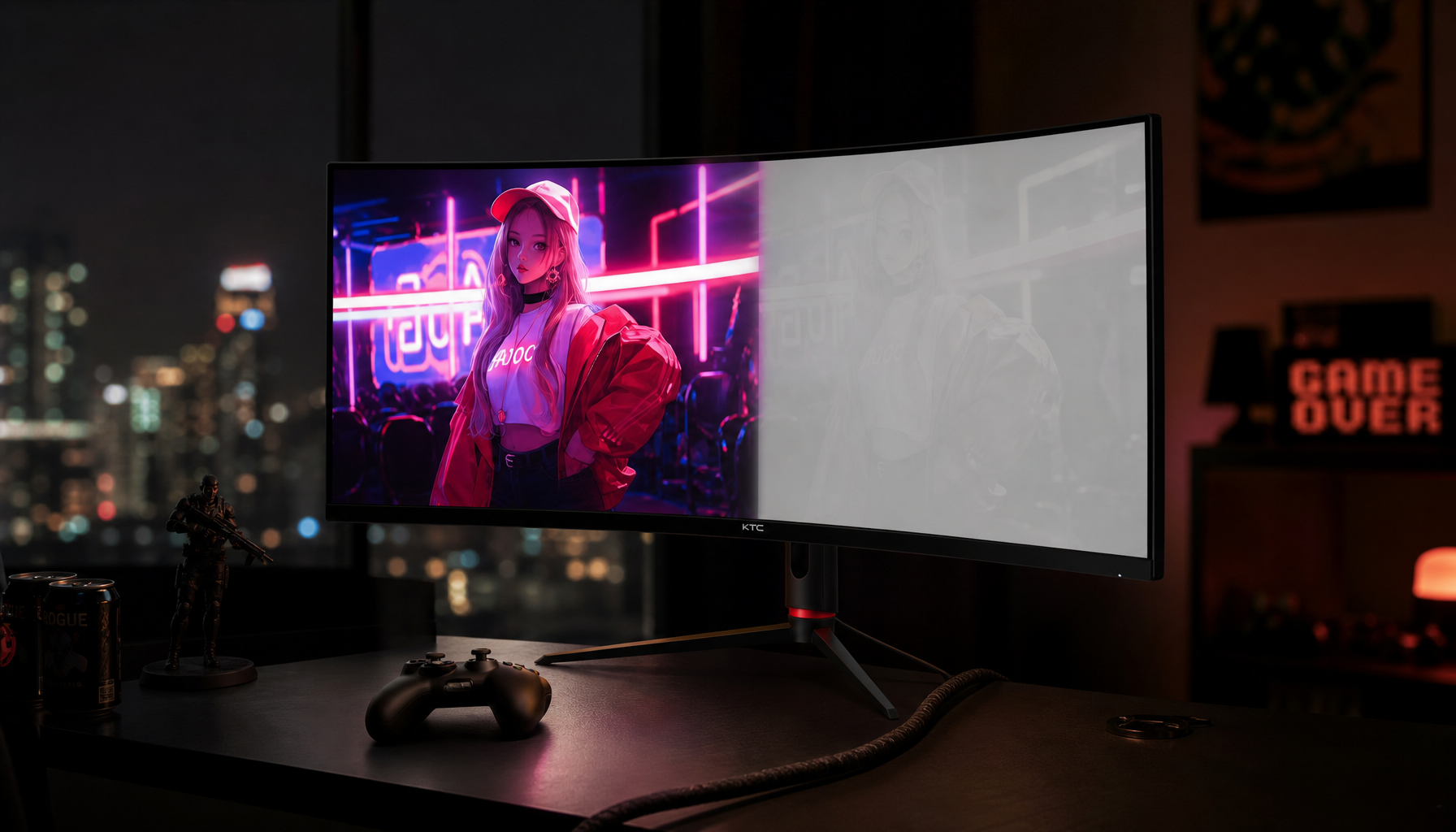
A wide-gamut display can reproduce a larger range of colors than a standard sRGB display. That is useful for HDR games, photography, print-prep, cinematic content, and premium media, but it also makes weak color management more obvious. When ordinary sRGB content is sent straight to a wide-gamut panel without conversion, maximum red, green, or blue values can land farther out than intended, so skin tones, grass, UI icons, and brand colors may look overly intense.
The core concept is simple: color gamut is the range of colors a display or color space can reproduce. sRGB is the baseline for most web, office, and general screen content. Wider RGB spaces expand especially into greens and cyans, while DCI-P3 expands into richer reds and greens and is common in cinema, HDR, OLED TVs, and high-end gaming monitors.
The problem is not that the monitor is too good. The problem is that a wide-gamut monitor needs clear instructions. If the image is tagged as sRGB, the app needs to read that profile, convert it through the monitor profile, and send corrected values to the display. If that chain breaks, the monitor may display sRGB numbers as though they were native wide-gamut numbers.
What “Clipped” and “Out of Gamut” Mean
A color is out of gamut when the target device or color space cannot reproduce it exactly. For example, a saturated green captured from a RAW file may fit inside a large working RGB space but not inside sRGB. When you convert that image to sRGB for the web, the color has to be moved to the nearest reproducible value or compressed into the smaller space.
Clipping happens when detail is lost because multiple colors get pushed to the same boundary value. Imagine a bright neon sign with three slightly different reds in a RAW file. If all three exceed what sRGB can hold and the conversion is too aggressive, they may collapse into one flat red. On screen, that looks like a hot patch with no texture, even though the original file had subtle separation.

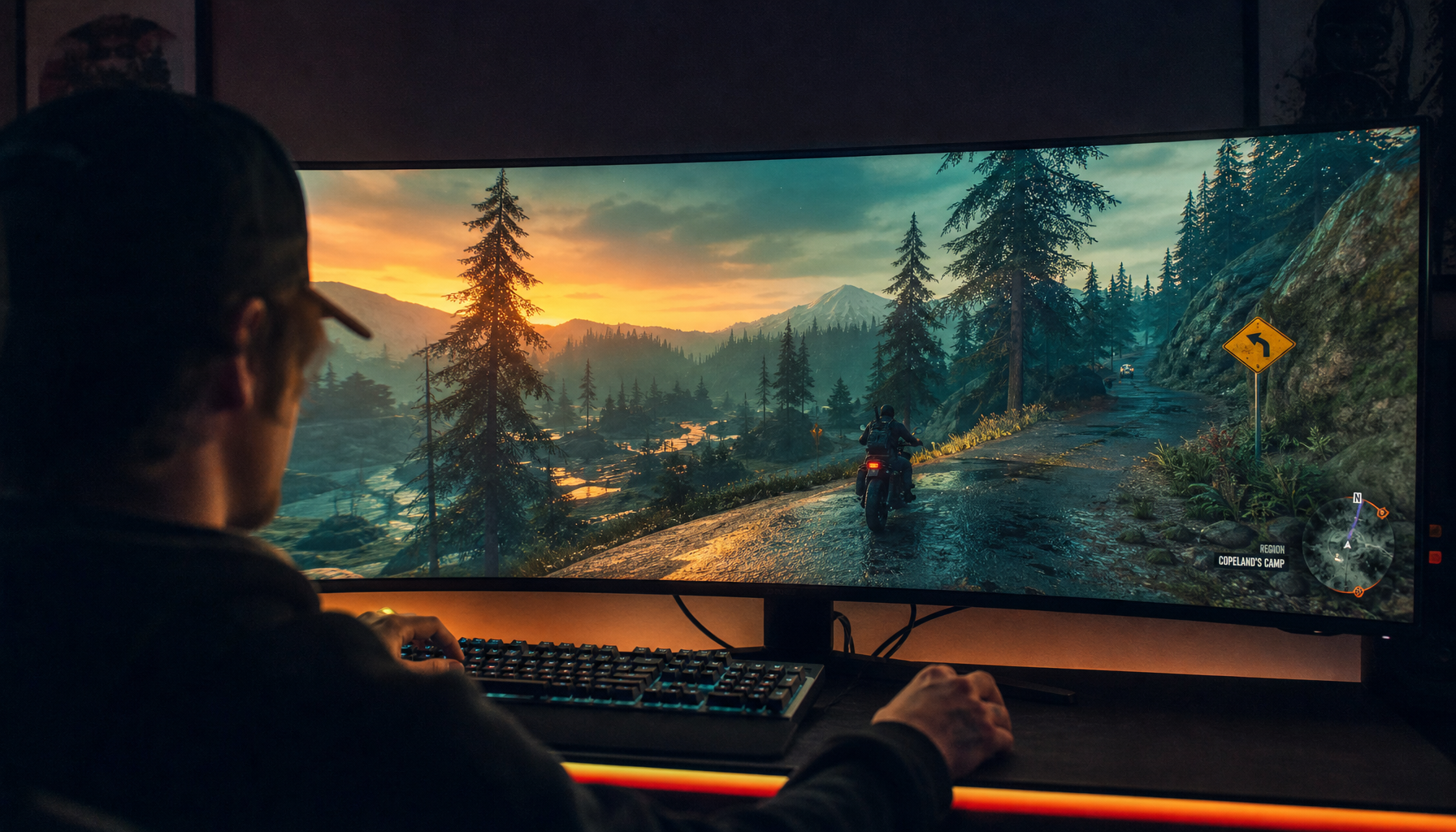
For pro display users, this matters in two directions. In a game, clipped HDR color can make fire, magic effects, or team-color UI look harsh instead of dimensional. In productivity and creative work, clipped colors can break product accuracy, social media previews, print expectations, and client approvals.
The Main Cause: Color Management Breaks Somewhere
The most common real-world cause is a mismatch between the file profile, application behavior, operating system color handling, and monitor profile. A photographer in a user forum described a classic case: a professional photo editor looked consistent after converting and embedding sRGB, but other viewers and browsers showed the same file as oversaturated or shifted on a 99% wide-gamut monitor. That symptom points directly to the difference between color-managed and unmanaged software, because the same sRGB output can look different depending on whether the viewer honors the embedded profile and the calibrated display profile.
Color-managed apps such as professional photo editors, many modern browsers, and professional video or imaging tools usually know how to translate from the file’s color space to the monitor’s actual behavior. Unmanaged or partially managed apps may assume the display is sRGB. On a wide-gamut screen, that assumption can stretch normal content into a larger color volume, making reds, greens, and blues look too strong.
A practical example: if a web image is encoded in sRGB and viewed in an unmanaged app on a wide-gamut RGB monitor, the RGB value for a saturated green may be sent directly to a display that can produce a much more saturated green than sRGB expected. The file did not change. The interpretation changed.
Why Calibration Alone Does Not Always Fix It
Calibration and profiling are essential, but they are not magic. Calibration adjusts the display’s behavior, while profiling describes that behavior to the operating system and color-managed apps. If an app ignores profiles, calibration cannot fully correct that app’s output.
This is why wide-gamut users often see a strange split: a professional editor looks right, while desktop icons, older image viewers, or some video players look exaggerated. The display profile is doing its job where software uses it. It is being bypassed where software does not.
A wide-gamut monitor is also not automatically accurate. One print-focused review notes that color gamut and color accuracy are different priorities from speed specs such as refresh rate and response time. A monitor can show many colors yet still fail to match prints or reference targets if its uniformity, white point, tone response, or calibration system is weak.
How Monitor Modes Create Oversaturation
Most wide-gamut monitors offer several modes: native gamut, sRGB, wide-gamut RGB, DCI-P3, HDR, gaming, movie, and custom calibration presets. Native gamut often exposes the full panel capability. That can be excellent for color-managed creative software, but risky for general desktop use.
For most web, office, and standard video work, sRGB mode is the safer baseline. It clamps or maps the monitor’s output closer to the smaller color space that most everyday content expects. For competitive gaming, sRGB mode can also make team colors, UI elements, and maps easier to trust, especially when the title itself is SDR and built around standard display assumptions.

For HDR games, cinematic content, and P3-aware workflows, a wider mode can be the right choice. The decision depends on whether the source content and software actually support the wider target. P3 can preserve more color than sRGB in a managed workflow, but wide-gamut editing discussions still treat sRGB compatibility as the safer choice for broad online sharing.
Use Case |
Best Starting Mode |
Why It Helps |
Web browsing and office work |
sRGB |
Prevents standard content from looking oversaturated |
Competitive SDR gaming |
sRGB or accurate game mode |
Keeps colors predictable and avoids exaggerated UI |
HDR gaming and movies |
HDR or DCI-P3 mode |
Preserves wider color and highlight intent when supported |
Photo editing for web |
Calibrated wide-gamut with soft proofing, export sRGB |
Lets you edit broadly, then preview the smaller output |
Wide-gamut RGB or calibrated hardware preset |
Better match for many camera and print workflows |
The Role of Gamma, Brightness, and Perceived Clipping
Not every color problem is a gamut problem. Gamma errors can make shadows look crushed, midtones look flat, or highlights appear blown out. A file may technically stay inside gamut while still looking wrong because the tone curve is being interpreted incorrectly.
Gamma describes how input values become screen luminance, and gamma 2.2 is widely used as a standard target for digital displays because it produces more perceptually even gray steps for typical screen viewing. If one app applies a transform twice, skips it, or uses a different assumption, colors can look washed out or overly contrasty before gamut clipping becomes the issue.
Brightness also changes your judgment. If a monitor is running in a vivid showroom-style preset while the room is dim, saturated colors may appear harsher and highlights may seem clipped sooner. For office lighting, many serious SDR editing setups use roughly 100 to 150 nits, even if the monitor can go much brighter.
Why Phones and Other Screens Disagree
A phone is useful as a consumer preview, but it is not a master reference. Phones may use OLED panels, vivid modes, auto brightness, ambient color adaptation, HDR processing, and aggressive contrast enhancement. A wide-gamut phone can make an image look punchy even when the file is correctly exported.
That does not mean you should ignore phones. If your work is destined for social media, ecommerce, or cell phone-first viewing, a phone check is practical. But the trusted reference should be a calibrated display with stable settings, then the phone becomes a reality check for how typical users may experience the image.
How to Diagnose the Problem Fast
Start by asking where the mismatch appears. If the image looks correct in a professional editing app but oversaturated in another viewer, suspect the viewer. If every app looks oversaturated, suspect the monitor mode, OS display profile, or GPU settings. If only exported files look wrong, inspect the export color space, embedded profile, and conversion settings.
A clean test is to use one known sRGB image and view it in a color-managed browser, a professional photo editor, and a basic image viewer. Then switch the monitor between native gamut and sRGB mode. If the image becomes much calmer in sRGB mode, the wide-gamut panel was showing unmanaged sRGB content too broadly.
For 3D renders and motion work, the pipeline gets longer. Viewport preview, renderer, tone mapping, export format, media player, compression, LUTs, and monitor settings can all shift color. The practical approach is to compare a short render in the editing app, a browser, and multiple media players, because color space mismatches often reveal themselves only after export and playback.
Practical Fixes for Wide-Gamut Users
Use sRGB mode for general desktop work unless you specifically need a wider workflow. This single move solves many “everything is too saturated” complaints because it makes unmanaged apps behave closer to a standard monitor.
For creative work, keep the calibrated monitor ICC profile assigned in the operating system, use color-managed applications, and avoid judging final color in unmanaged viewers. If your output is the web, convert to sRGB and embed the profile. If your output is P3, make sure the file, app, browser, and target screens support P3. If your output is print, follow the printer or lab ICC workflow rather than guessing between sRGB and P3.
Use soft proofing when reducing a wide working space to a smaller delivery space. RAW to a large working RGB space can protect editing flexibility, but the final conversion is where saturated colors may compress or clip. Soft proofing lets you see which colors are at risk before export.
Keep monitor presets purpose-built. A strong setup might use an sRGB preset for browsing and office work, a calibrated wide-gamut RGB preset for print photography, a P3 or HDR preset for supported media, and a fast gaming preset only when color accuracy is less important than response. On monitors with hardware calibration, store those targets in the display when possible, because hardware-level calibration can be more stable across systems.
Pros and Cons of Wide-Gamut Displays
The upside is clear. Wide-gamut displays can show richer color, preserve more of what modern cameras and HDR media capture, and support serious creative workflows. They also make premium games and cinematic content more immersive when the game engine, HDR mode, and OS are configured correctly.
The tradeoff is workflow discipline. Wide gamut increases the penalty for unmanaged apps, bad presets, incorrect profiles, and casual export settings. A budget wide-gamut panel may also have uniformity issues, where one side of the screen is warmer, dimmer, or greener than another. That can matter more for editing a product photo than for playing a fast shooter.
For buyers, the value question is not simply “wide gamut or not.” It is whether the monitor offers accurate sRGB emulation, reliable calibration controls, good uniformity, and the right connection features for your setup. Monitor buying guidance often separates gaming priorities such as low input lag and high refresh from professional display priorities such as resolution, panel quality, and color controls; professional visual work benefits from more than just a vivid panel.

FAQ
Should I Always Use sRGB Mode on a Wide-Gamut Monitor?
Use sRGB mode for general browsing, office apps, SDR video, and web-first work. Switch to wide-gamut RGB, DCI-P3, HDR, or a calibrated custom mode only when the content and software pipeline support that wider target.
Why Does My Editing App Look Right but My Browser Looks Wrong?
Professional editing apps are usually strongly color-managed, while browser behavior depends on settings, version, image profile, and OS handling. If the browser or viewer does not correctly convert from the file profile to the monitor profile, colors can shift or oversaturate.
Does Wide Gamut Cause Eye Strain?
Wide gamut itself is not the usual culprit. Brightness mismatch, glare, flicker, poor posture, and long sessions are more likely causes. Set brightness to match the room, avoid vivid presets for long work sessions, and use an ergonomic viewing position.
Final Word
Colors clip or go out of gamut when the display can show more color than the file, app, or target space can control. Treat the monitor like a performance tool: choose the right preset, calibrate it, use color-managed software, export for the real destination, and verify on the screens your audience actually uses.