




Don't trust marketing labels alone when shopping for a monitor promising 10-bit color in 2026. Many OEM spec sheets use ambiguous terms that blur the line between native 10-bit panels and 8-bit panels relying on frame rate control (FRC) to simulate extra shades. A repeatable audit process—checking explicit wording like "native," verifying port bandwidth for full 10-bit output at high refresh rates, and cross-referencing panel databases—helps technical buyers avoid paying a premium for capabilities that aren't physically present.

Native 10-bit panels deliver 1,024 discrete shades per RGB channel for over 1.07 billion total colors, reducing visible banding in gradients. In contrast, 8-bit+FRC uses rapid temporal dithering between two 8-bit shades to approximate the missing levels. High-quality FRC often looks indistinguishable for casual viewing or gaming, yet the distinction matters when paying extra for color-critical work such as photo editing or video grading.
Native 10-Bit vs. 8-Bit+FRC: What's the Physical Difference?
Native 10-bit hardware physically produces 1,024 shades per channel, enabling smoother tonal transitions without simulation. 8-bit+FRC achieves a similar visual result by alternating between adjacent shades at high speed, a process known as temporal dithering. This technique can introduce subtle flicker in fast-motion scenes or specific gradients, though most users never notice it in everyday content.
The difference becomes relevant for professionals who work in 10-bit color spaces or require absolute consistency across viewing angles. For general gaming and media consumption, a well-implemented 8-bit+FRC panel usually suffices. As this internal guide on bit depth explains, the choice depends on whether your workflow demands verifiable native depth or simply benefits from the marketing claim.
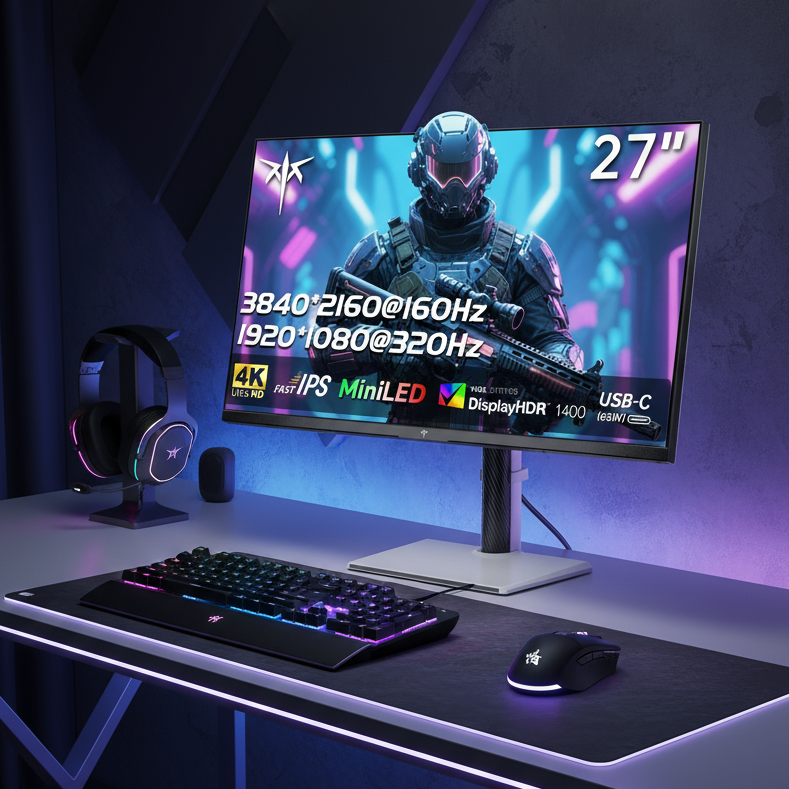
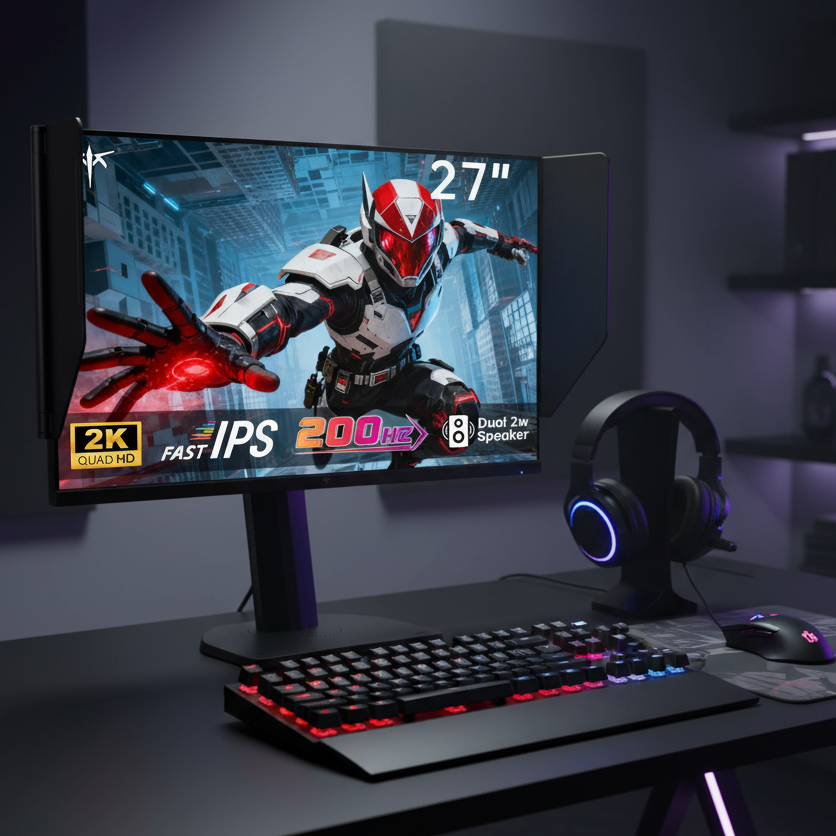
KTC's Mini-LED models, such as the M27P6, pair strong local dimming with wide color coverage that complements 10-bit output in supported modes. The IPS-based H27P6 offers similar versatility for users switching between 4K detail and high-refresh performance. These examples illustrate how panel technology and bit depth interact in real setups.

The 2026 Spec-Sheet Red Flags: Deciphering Marketing Speak
Spec sheets frequently list "1.07 billion colors" without the qualifier "native," which typically signals an 8-bit+FRC implementation. Similarly, "10-bit processing" usually refers to the internal lookup table or scaler rather than the physical panel output. HDR10 support indicates the monitor can accept a 10-bit signal and associated metadata, yet the actual displayed result may still rely on dithering if the panel itself is 8-bit.
These patterns appear across many OEM listings and can lead buyers to overestimate capabilities. The tech community discussion on identifying 10-bit monitors highlights that claims located under the connectivity section rather than panel specifications often describe input support instead of hardware depth. Always scan for the explicit word "native" or a panel part number that third-party databases confirm as 10-bit.
For creators evaluating displays, this distinction helps separate monitors suited to accurate color work from those optimized for general entertainment. KTC's All-Mini-LED Monitors collection includes options with high dynamic range performance that align better with native 10-bit expectations when the full specification set is verified.
The Bandwidth Bottleneck: Why Your Ports Matter More Than the Panel
Even a native 10-bit panel cannot deliver its full capability if the video interface lacks sufficient bandwidth. At 4K and 120 Hz or higher with full 4:4:4 chroma, 10-bit color requires roughly 32–48 Gbps. HDMI 2.0 tops out near 18 Gbps, often forcing a drop to 8-bit, reduced refresh rate, or chroma subsampling. True HDMI 2.1 with fixed-rate link (FRL) or DisplayPort 1.4 using display stream compression (DSC) becomes necessary for uncompressed performance.
Many products labeled "HDMI 2.1" actually implement the older TMDS signaling with no bandwidth gain. Checking the user manual for explicit FRL tier ratings (24 Gbps, 32 Gbps, or 48 Gbps) provides the clearest indicator. The Microsoft technical community thread on 10-bit options with FRC-limited monitors underscores that bandwidth limitations can render a 10-bit claim moot at the advertised maximum refresh rate.
The table below summarizes typical thresholds for common resolutions and refresh rates. These figures serve as planning guidelines derived from standard video timing calculations and should be verified against the specific monitor's documentation.
| Resolution & Refresh | Minimum Bandwidth (10-bit 4:4:4) | Recommended Interface | Bottleneck Risk if Missing |
|---|---|---|---|
| 4K 60 Hz | ~15 Gbps | HDMI 2.0 / DP 1.4 | Low |
| 4K 120 Hz | ~32 Gbps | HDMI 2.1 FRL / DP 1.4 DSC | High |
| 4K 160 Hz | ~37 Gbps | HDMI 2.1 48 Gbps FRL | Very High |
| 1440p 200 Hz | ~22 Gbps | DP 1.4 DSC | Medium |
KTC models such as the M27P6 and H27P6 list HDMI 2.1 ports capable of the higher bandwidth tiers needed for 4K high-refresh 10-bit output. The H27P3 5K office monitor uses DP 1.4 effectively at its native resolution, illustrating how port choice changes the usable color depth.
The 2026 Standard: Why 'HDR Ready' Isn't Enough Anymore
VESA updated its DisplayHDR specification to version 1.2 with stricter requirements for bit depth, color volume, and luminance consistency. This certification helps differentiate true high-performance HDR monitors from those that merely accept an HDR10 signal on an 8-bit+FRC panel. As the official VESA announcement details, the tighter criteria reduce consumer confusion by tying the label to measurable panel and processing capabilities.
Look for the DisplayHDR 1.2 or higher badge on product pages or in the manual. It serves as useful secondary confirmation after checking native bit depth and bandwidth. This article on native versus emulated HDR further clarifies how hardware-level features such as local dimming zones complement bit depth for genuine contrast improvements.
The Ultimate 10-Bit Audit Checklist
Apply these steps before purchase and again after setup to confirm real performance:
- Scan the spec sheet for the word "native" next to any 10-bit claim; absence usually indicates FRC simulation.
- Verify the port specifications list true HDMI 2.1 with FRL or DP 1.4 with confirmed DSC support for your target resolution and refresh rate.
- Cross-reference the panel model number on databases such as PanelLook to confirm the manufacturer's internal designation.
- In the operating system display settings, confirm that 10-bit output remains selectable at the maximum advertised refresh rate without automatic fallback.
- Run visual gradient tests using free tools such as the EIZO Monitor Test or Lagom LCD patterns; look for smooth transitions without noticeable banding or flicker.
- After calibration, use software reports to validate that the measured color depth and delta-E values match expectations for a 10-bit workflow.
This checklist, grounded in community-verified methods, helps rule out monitors that cannot sustain 10-bit output under real conditions. For ongoing accuracy checks, see how to verify your display calibration.
When evaluating KTC options, the Mini-LED M27P6 and versatile H27P6 meet many of these criteria for users needing both high color fidelity and bandwidth. The professional-oriented H27P3 excels in resolution and color volume for office or creative desks where 10-bit precision supports detailed work. Always match the specific model to your GPU, cables, and primary tasks to avoid hidden limitations.
FAQs
Does 10-Bit Input Guarantee a Native 10-Bit Panel?
No. A monitor can accept a 10-bit signal through its ports while still using an 8-bit panel with FRC for the final output. Check the panel specification section rather than the connectivity section, and confirm with the panel part number in a database like PanelLook.
Can High-Quality FRC Be Acceptable for Professional Color Work?
In many cases yes, especially when the dithering algorithm is well implemented and the content does not contain rapid motion or critical dark gradients. However, for paid client work or final mastering, native 10-bit removes any risk of temporal artifacts and provides a more consistent reference across different viewing conditions.
How Do I Know if My GPU and Cable Support Full 10-Bit at High Refresh Rates?
Confirm that both the graphics card and cable are rated for HDMI 2.1 or DP 1.4 with DSC. Test by selecting 10-bit in the driver control panel at your target resolution and refresh rate; if the option greys out or the monitor reports a lower bit depth, the bandwidth chain is insufficient.
What Should I Do if the Spec Sheet Lists Both "10-Bit" and "FRC"?
Treat the monitor as 8-bit with simulation unless the manufacturer explicitly states native 10-bit for the panel itself. Contact support for the exact panel model or run the gradient test after purchase; visible dithering patterns in dark areas usually confirm FRC usage.
Are VESA DisplayHDR Certifications Reliable for Verifying 10-Bit Performance?
They provide a useful secondary check because version 1.2 and higher include minimum bit-depth and color-volume requirements. Still, combine the certification with the native panel and bandwidth audit for complete confidence, especially on budget models that may meet the minimum but fall short in real-world gradients.


