Monitor preset modes speed up task switching by letting you jump between optimized screen behaviors for writing, spreadsheets, design, gaming, meetings, and media without rebuilding settings every time. Treat each preset as a visual work context that reduces friction and helps your brain recognize the task at hand.
Build Presets Around Real Work Modes
Start with the tasks you repeat every day, not every mode your monitor offers. Cognitive research separates stable task focus from switch readiness, and both rely on working memory, so your display should reduce setup decisions when you move between contexts.
For most users, three to four presets are enough. Use a Focus Work mode with neutral color, moderate brightness, sharp text, and no extra saturation. Add a Creative Review mode with sRGB or calibrated color when accuracy matters. Keep a Competitive Gaming mode for high refresh rate, low-lag settings, and tuned overdrive. If you read at night, create an Evening Reading mode with lower brightness, a warmer tone, and reduced glare.

The goal is not perfect color in every mode. The goal is reliable visual intent: each preset should make the next task feel instantly ready.
Set a Clean Productivity Preset First
Your productivity preset should protect clarity. Use native resolution, readable scaling, neutral sharpness, and a brightness level that matches the room.
For office work, a 27-inch 1440p display remains a strong balance because it gives useful workspace without the scaling complications that can come with smaller 4K screens; home-office guidance also points to 27 inches or larger for better desktop space.
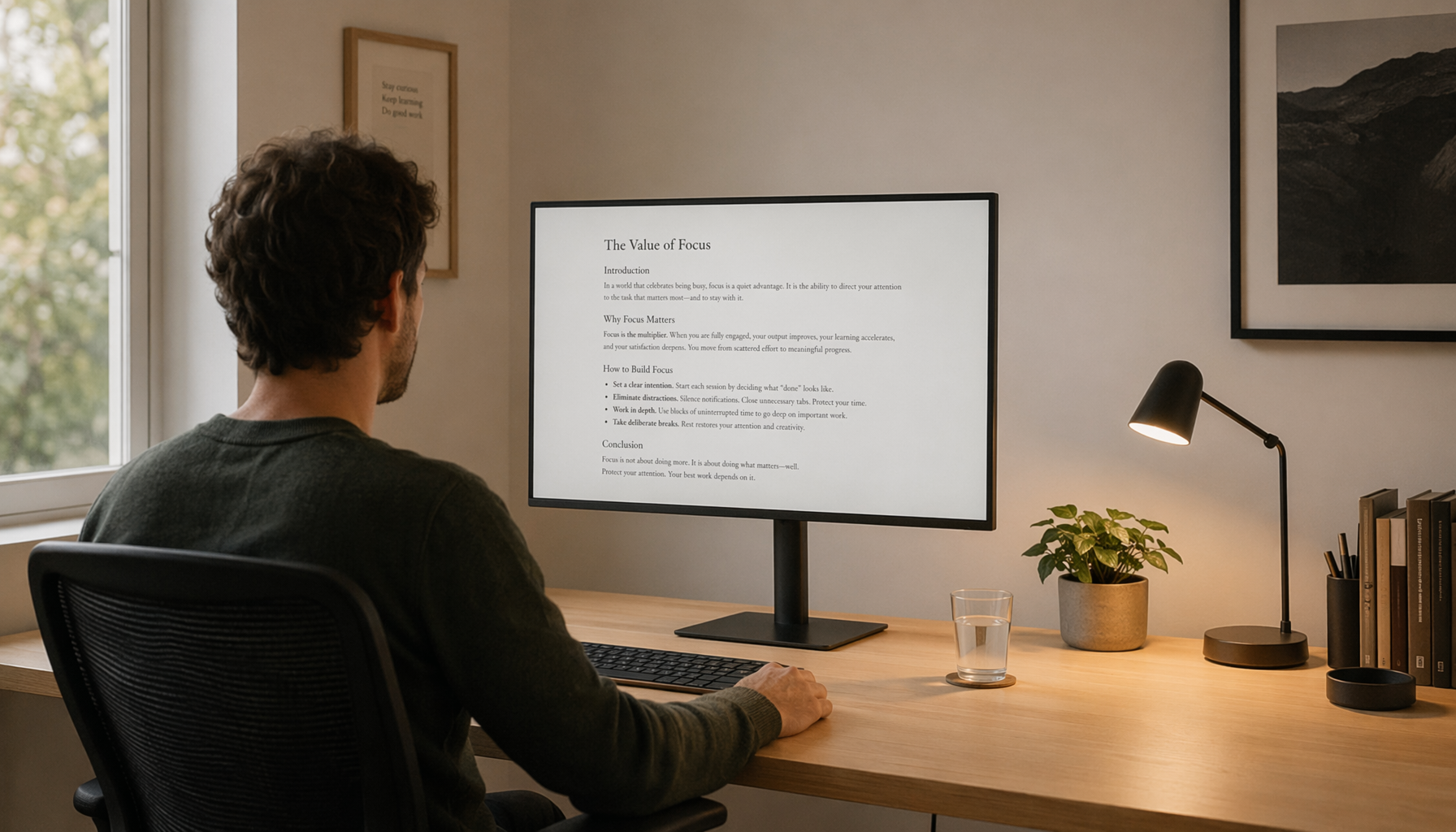
Use this preset for writing, email, documents, dashboards, and research. Keep contrast comfortable rather than dramatic. If your monitor has vivid, dynamic, or heavy sharpening modes, avoid them for text because they can exaggerate edges and make long sessions feel harsher.
A good baseline is native panel resolution, the operating system’s recommended scaling, default or middle sharpness, a neutral or slightly warm color temperature, and brightness that is lower at night and higher in daylight.

Create Separate Modes for Gaming and Color Work
Gaming and color work pull your monitor in different directions. Gaming wants responsiveness, motion clarity, and visibility. Creative review wants predictable color and restrained processing.
For gaming, use the monitor’s game, FPS, or custom low-latency preset, then confirm the refresh rate in both the monitor menu and your operating system. Gaming settings guidance consistently prioritizes the highest supported refresh rate, adaptive sync, and careful overdrive tuning for smoother motion.

For color-sensitive work, use sRGB when you need web, office, and common content to look controlled. An sRGB preset can reduce oversaturation on wide-gamut displays, but its accuracy depends on the manufacturer’s implementation.
If you do professional color work, presets are a starting point, not a substitute for measurement-based calibration.
Pair Preset Switching With a 30-Second Reset
A preset is fastest when tied to a repeatable action. Before changing tasks, switch the monitor mode, close or park the previous work, and move the next app into place.
A short transition matters because context switching can leave attention residue, where part of your focus stays attached to the previous task. Your screen can become the sensory cue that tells your brain it is time for a new mode.
Try this 30-second routine:

- Save or note the next step in the old task.
- Switch the monitor preset.
- Move the right window layout into view.
- Set one outcome for the next work block.
On ultrawide or portable secondary screens, this is especially useful. A dashboard preset can stay brighter and more glanceable, while your main display stays tuned for deep work.
Save, Name, and Test Your Presets
Once your modes feel right, save them to custom slots if your monitor supports it. If it does not, take quick photos of the on-screen display settings so you can rebuild them after a reset.
Test each preset in the real task it serves. Scroll a dense document. Review a spreadsheet. Play a fast game. Open a color-heavy webpage. If the mode makes you adjust your posture, squint, or second-guess color, tune it again.

The best preset system is boring in the right way: one button, one visual environment, one task state. That is how a monitor becomes more than a screen; it becomes a faster control surface for your day.