A durable screen break routine protects your eyes, posture, attention, and output when deadlines make breaks easy to skip. The goal is a simple pattern of visual resets, movement, and off-screen recovery that still works on high-pressure days.
Eyes burning at 9:40 PM while the spreadsheet, slide deck, code editor, and chat window all demand one more “quick” update? A break plan built around 20-second visual resets, hourly movement, and protected off-screen recovery can be tested in one workday without slowing delivery. You’ll get a practical routine that holds up during crunch time, not only on calm days.
Why Deadline Pressure Breaks Good Screen Habits
Deadline work usually compresses three things at once: longer display exposure, fewer posture changes, and more task switching. That is exactly when most people abandon breaks, even though visual fatigue and decision fatigue become more expensive. Digital well-being means keeping technology useful without letting it consume attention, stress capacity, or recovery time, and that balance matters because the average person now spends about 6 hours and 40 minutes per day on screens in everyday life digital well-being.
The trap is treating breaks as optional downtime. In a display-heavy workflow, breaks are maintenance. A high-refresh gaming monitor, a color-accurate productivity display, or a portable second screen can make work smoother, but no panel spec can replace blinking, distance shifts, shoulder movement, or sleep protection.
Define the Routine Before the Deadline Starts
A screen break routine is an intentional pattern of looking away, moving, and changing activity so your body is not locked into one distance, one posture, and one stream of visual input. It is different from switching from a monitor to a cell phone. That only changes the screen size while keeping your eyes and attention under load.
The most reliable routine has three layers. The first is a micro reset every 20 minutes, when you look roughly 20 ft away for about 20 seconds. The second is a short movement break every hour, usually 5 to 10 minutes. The third is a longer off-screen recovery block after a demanding session, especially after heavy video calls, editing, gaming, or spreadsheet work.

The UK Health and Safety Executive favors short, frequent breaks over longer, less frequent pauses, with 5 to 10 minutes every hour presented as preferable to saving one larger break for later short, frequent breaks. In practice, that means your routine should be light enough to use during pressure, not so elaborate that it collapses when the project gets serious.
The Deadline-Proof Routine
For a real crunch day, use the smallest routine that still works. Every 20 minutes, shift your gaze across the room and blink deliberately. Every hour, stand up, step away from the desk, refill water, stretch your calves and upper back, or walk to a window. After two hours of continuous screen-heavy work, take a longer off-screen pause before starting the next block.
In a four-hour sprint, four hourly 5-minute breaks cost 20 minutes. If those 20 minutes prevent a headache, reduce rereading, and keep your final hour usable, they are not lost time; they preserve performance.
What Counts as a Real Break
A real break reduces visual, cognitive, or physical load. Looking at a second screen, scrolling social media, reading messages, or watching a video does not give the same reset because your eyes remain fixed at close range and your attention stays reactive.
Good breaks are plain and physical. Stand, walk, breathe, stretch, change rooms, look outside, drink water, or handle a small non-screen task. For display professionals, designers, gamers, analysts, and office power users, the best break is often boring by design. It should not create another input stream.

MedlinePlus emphasizes screen-free spaces, offline activities, and modeling healthier device behavior because screen management is about how screens are used, not only how long they are used screen management. That principle transfers cleanly to adults under deadline pressure: the break must interrupt the pattern, not disguise more screen time as rest.
Pros and Cons of Common Break Styles
Break Style |
Best Use |
Advantage |
Limitation |
20-second eye reset |
Dense focus blocks |
Fast enough for calls, edits, and gaming queues |
Does not fix posture fatigue by itself |
5- to 10-minute hourly break |
Office work, design, coding, analysis |
Helps eyes, joints, and attention together |
Requires calendar protection |
Longer off-screen recovery |
After calls, late-night work, or long sessions |
Better mental reset and physical unloading |
Harder during urgent handoffs |
Screen-free zones |
Bedrooms, dining areas, break rooms |
Protects sleep and relationships |
Needs consistency from everyone nearby |
The best routine combines styles. A 20-second reset is useful, but it is not a substitute for getting out of the chair. A lunch break away from the laptop helps, but it does not cancel out four hours of uninterrupted close-focus work.
Tune Your Display Setup So Breaks Work Harder
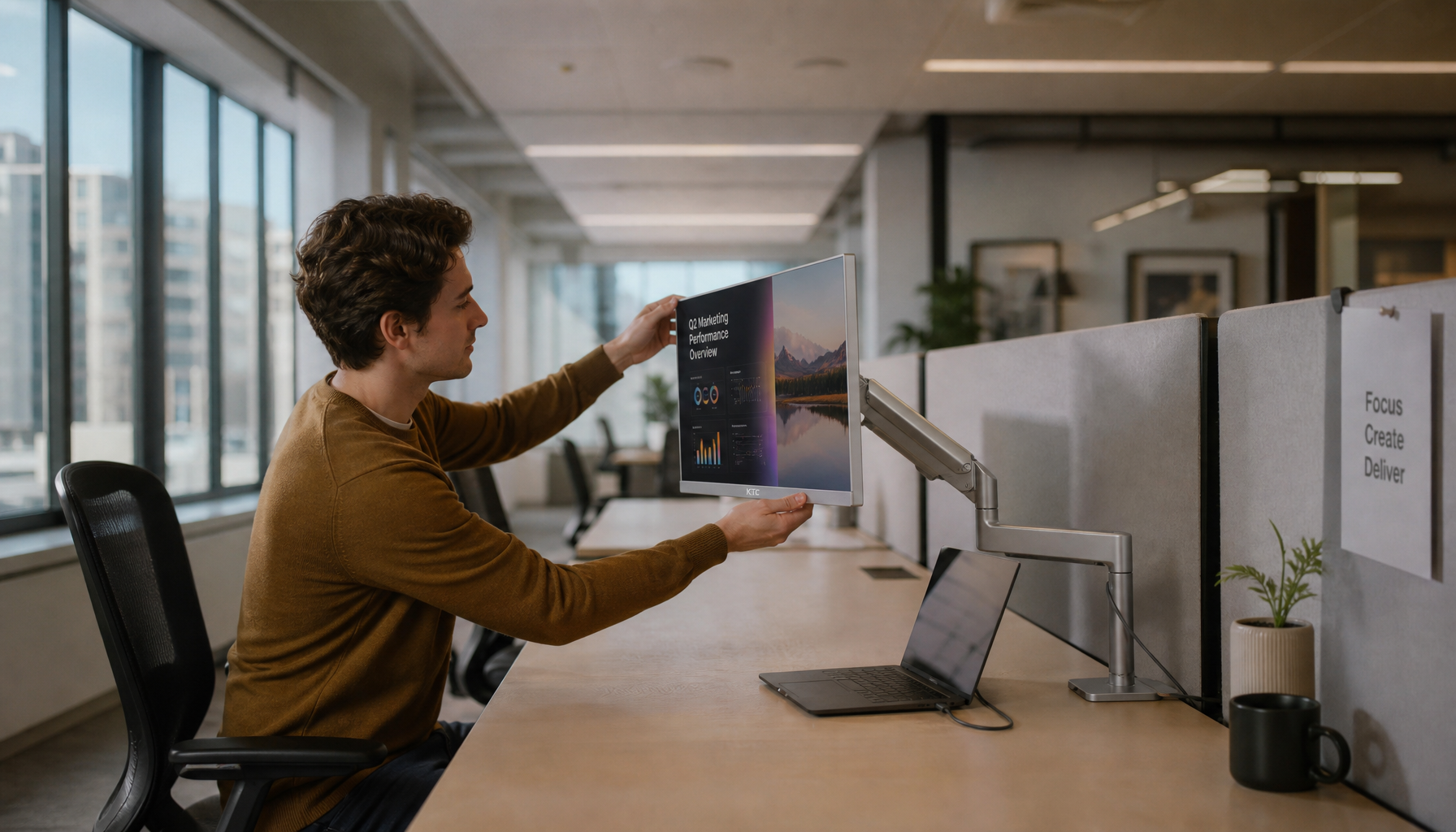
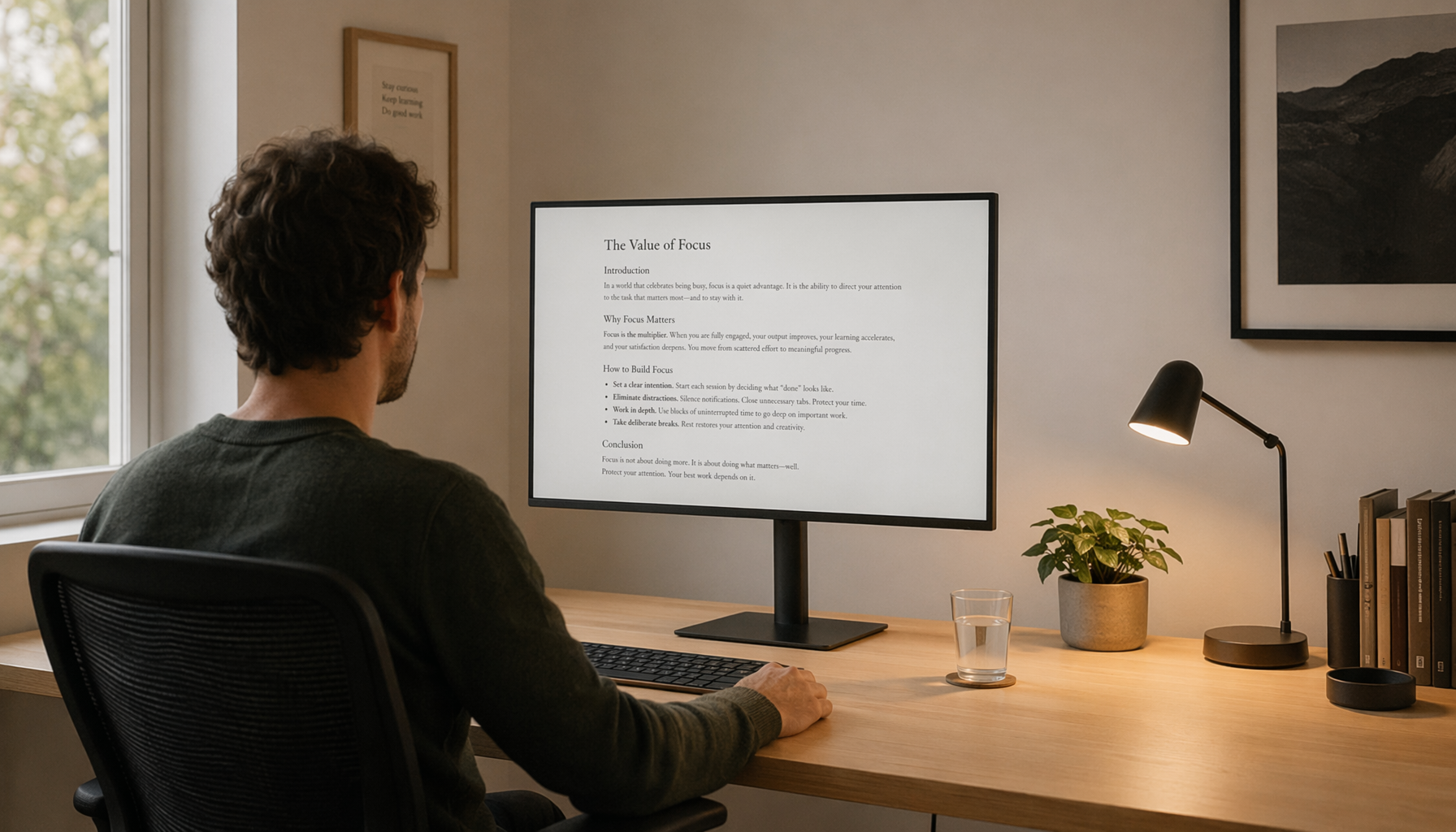
Screen breaks are more effective when the workstation is not fighting your body between breaks. Keep your primary display about an arm’s length away, with the top of the screen at or slightly below eye level. If you use a 32-inch or ultrawide monitor, avoid making every video call full screen; a huge face grid forces excessive eye travel and social attention.

For deadline work, choose a calm display preset. Standard or sRGB mode is usually better than vivid, cinema, or aggressive gaming modes for long productivity sessions. Keep brightness matched to the room rather than maxed out. If the display feels like a light source instead of a surface, your eyes are doing extra work.
The American Optometric Association’s digital eye strain material connects prolonged display use with symptoms such as dry eyes, headaches, blurred vision, and neck or shoulder discomfort digital eye strain. The practical takeaway is simple: break timing and display ergonomics should be treated as one system.
Build Breaks Into the Calendar, Not Your Willpower
Willpower fails first when deadlines tighten. Calendar structure survives longer. If you control meeting length, use 25-minute meetings instead of 30 and 50-minute meetings instead of 60. That small adjustment creates recovery space without asking anyone to “find time.”

Managers influence break behavior because teams copy visible norms. Shared break windows, no-email boundaries after work, and screen-free team activities can make pauses feel normal rather than indulgent. On solo projects, the same idea becomes self-management: block breaks on the calendar before the crunch begins, then treat them like technical checkpoints.
A useful rule is to attach breaks to things that already happen. Stand after sending a client update. Look 20 ft away before joining a call. Walk after exporting a file. Refill water after finishing a review pass. When breaks are tied to workflow events, they feel less like interruptions.
Protect Sleep, Because the Deadline Ends After the Screen Turns Off
The most expensive screen habit is dragging the work display into bedtime. Late screen use can make it harder to fall asleep, and poor sleep makes the next day’s deadline work slower, more emotional, and more error-prone. Bedrooms and the hour before bed are high-value boundaries because they protect recovery when pressure is highest.
MedlinePlus recommends turning off screens at least one hour before bedtime and charging devices outside bedrooms to support sleep routines. If that is impossible during a launch week, create a reduced-damage plan: finish the final work block on the main monitor, write tomorrow’s first action on paper, dim the room, and keep the cell phone away from the bed.
A Practical Routine for Your Next Deadline Day
Start the day by choosing the critical screen blocks, not by promising to “take more breaks.” For each block, decide where the eye reset happens, where the hourly movement break happens, and when the longer recovery break happens. If the task is high precision, such as color review, spreadsheet reconciliation, competitive practice analysis, or QA testing, schedule the break before accuracy drops.
During the work block, keep the routine frictionless. Look away every 20 minutes. Stand every hour. Leave the desk after the second hour. Keep the cell phone out of reach unless it is part of the job. Do not use the break to check another screen. Return with one clear next action so the restart does not become a drift back into notifications.
This is not anti-screen advice. Better displays, smarter presets, and efficient multi-monitor layouts are powerful tools. The point is to use them like performance equipment: intense use, planned recovery, repeatable output.
FAQ
Is the 20-20-20 rule enough by itself?
No. It is a strong visual reset, but it does not fully address posture, neck tension, hydration, or mental fatigue. Pair it with hourly movement and longer off-screen recovery during heavy sessions.
Should I use a break reminder app?
Yes, if reminders help you act. Break-monitoring software can support regular pauses, but the HSE notes that software does not replace proper work planning. The reminder is the cue; the real value comes from actually leaving the workstation or changing activity.
Do gaming monitors make screen strain better or worse?
They can help when motion clarity, refresh rate, and brightness control are well matched to the task. They can also make fatigue worse if vivid modes, excessive brightness, oversized full-screen windows, or marathon sessions keep your eyes locked in place. The display is an advantage only when your routine controls exposure.
Closing Thought
A screen break routine that survives pressure is short, scheduled, and physical. Build it like a performance setting for your workday: precise enough to protect focus, simple enough to repeat, and reliable enough to keep you sharp when the deadline refuses to move.