

Modern horror remakes built on dark engines frequently suffer from raised blacks in HDR mode, turning intended deep shadows into a flat gray haze that destroys atmosphere and contrast. The systematic fix begins with Windows HDR calibration to set the OS black floor correctly, followed by in-game black level adjustments before any monitor OSD changes, and RTX HDR as a reliable override when native implementations fall short. This workflow preserves shadow detail without introducing artifacts, provided you follow the hierarchy and respect panel-specific limits on Mini-LED versus OLED displays.

The 'Gray Haze' Symptom: Why Dark Engines Break HDR
Horror remakes using engines like RE Engine or UE5 often exhibit a characteristic gray haze in dark scenes when HDR is enabled. This occurs because the engine's internal gamma encoding, typically tuned for sRGB, clashes with the display's PQ EOTF curve required for proper HDR tone mapping. The result is raised blacks that flatten contrast and reduce the cinematic tension these titles rely on.
It is important to distinguish raised blacks from shadow crush. Raised blacks lift the black floor, making shadows appear milky or gray and washing out the intended mood (What Is HDR On A Monitor?). Shadow crush, on the other hand, hides fine detail in near-black areas, obscuring enemy silhouettes or environmental cues critical for gameplay and immersion. Both issues stem from mismatched tone mapping but require different corrections.
For players using high-contrast displays, the first self-check is simple: load a dark scene with subtle fog or distant lighting. If the blacks look gray rather than deep, the problem is almost always upstream gamma handling rather than the monitor itself. This diagnosis helps avoid ineffective OSD tweaks that can worsen the atmosphere.
Step 1: Establishing the System-Level Black Floor
The mandatory first step is to calibrate at the operating system level using the Windows HDR Calibration app. This tool sets the OS black floor correctly, preventing the system from lifting blacks before the game even launches.
Run the app with your monitor in HDR mode. For OLED panels, target the lowest possible black level (effectively 0 nits). For Mini-LED displays, set it to the lowest visible notch without introducing visible noise, typically corresponding to around 0.02–0.05 nits according to VESA DisplayHDR criteria (VESA Certified DisplayHDR Performance Criteria). This baseline ensures subsequent game adjustments address engine-specific problems rather than compensating for OS errors.
Skipping this step is the most common cause of persistent gray haze across multiple titles. After calibration, confirm the change by viewing a black-level test pattern in a utility like the Windows HDR showcase. The difference is immediate: blacks appear deeper and more neutral, providing a stable foundation for the rest of the workflow.
The Shadow Fix Hierarchy: Tuning In-Game Sliders vs. OSD
Once the system black floor is established, follow this hierarchy to address remaining issues without creating new artifacts. Prioritize in-game black level or brightness sliders first, as they correct engine gamma mismatches directly without affecting peak brightness or introducing monitor-level side effects.
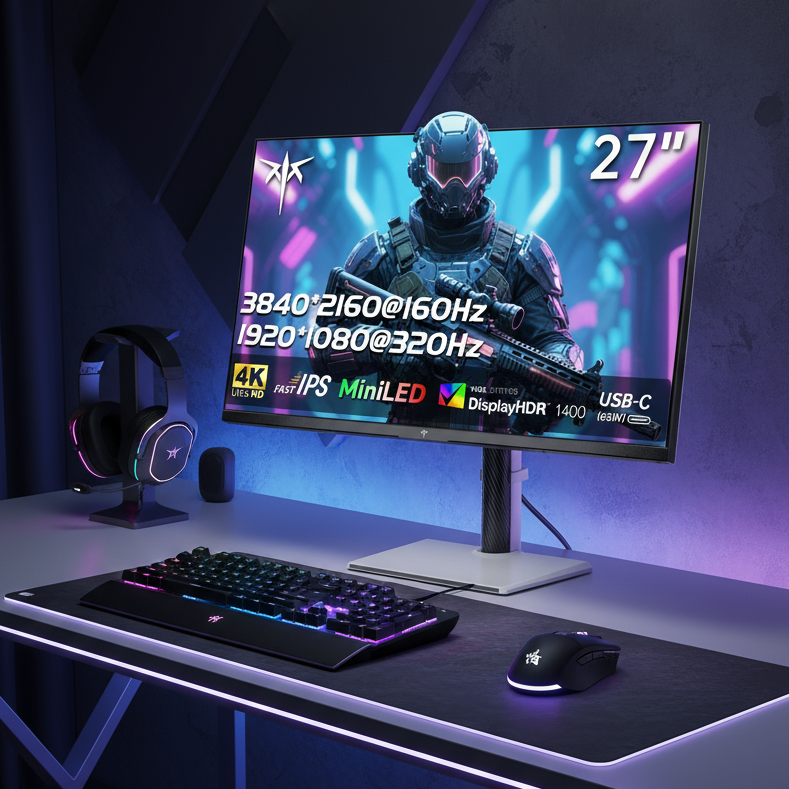
For KTC Mini-LED monitors such as the M27P6, set local dimming to Medium. This balances contrast stability against pulsing artifacts common in horror games with frequent lighting changes. Avoid aggressive Black Equalizer settings entirely for cinematic play; these tools are designed for competitive visibility and often destroy the intended dark atmosphere by exposing compression artifacts (Ambient Black Level Raise and HDR Quality Tests).
The chart below visualizes the recommended priority for common artifacts observed in dark engines. It helps you decide which control to adjust first based on the dominant visual problem, using safe bounded tiers that prevent over-correction.
Shadow Fix Hierarchy
Decision guide showing which adjustment to try first for each observed artifact in horror remakes. Darker zones indicate higher priority. Start at the top of each column and move down only if needed.
Show Priority Table
| Adjustment | Gray Haze (Raised Blacks) | Lost Detail (Shadow Crush) | Flickering/Pulsing | Washed Atmosphere |
|---|---|---|---|---|
| In-Game Black Level | 4 | 1 | 2 | 3 |
| Windows HDR Calibration | 2 | 4 | 1 | 2 |
| RTX HDR Override | 3 | 2 | 4 | 2 |
| Monitor Local Dimming (Medium) | 1 | 3 | 3 | 4 |
This visualization clarifies that in-game adjustments should come before monitor OSD changes in nearly all cases. Medium local dimming on Mini-LED panels provides the best stability for horror titles without the pulsing that can break immersion.
Advanced Fixes: RTX HDR and Engine-Specific Overrides
When native HDR implementations remain broken after system and in-game tuning, NVIDIA RTX HDR often delivers a more stable black floor through AI-assisted tone mapping. Enable it via the NVIDIA App for titles like Resident Evil 4 Remake that lack robust in-game HDR options. It frequently outperforms Windows Auto HDR for dark engines by better preserving both deep blacks and subtle shadow detail.
Use RTX HDR conservatively: start with the default SDR-to-HDR multiplier around 1.5x and adjust downward if highlights bloom or blacks lift. This tool is particularly valuable for older remakes where the engine was not originally designed for modern HDR displays. It acts as an override rather than a universal solution, so test it only after completing the earlier hierarchy steps.
Note that performance impact varies by GPU; on lower-end cards the additional processing may reduce frame rates in demanding scenes, though the visual improvement in atmosphere usually outweighs this for single-player horror experiences.
Validation Checklist: Ensuring Contrast Accuracy without Artifacts
After applying the workflow, verify results with this targeted checklist rather than subjective impression alone. Load a consistent dark scene across several titles and check the following:
- Can you distinguish enemy silhouettes against near-black backgrounds without the image looking crushed or noisy? (Silhouette test)
- Do shadows remain stable when the camera moves near light sources, or do they pulse noticeably? (Pulsing test)
- Are neutral grays in the 5–20% luminance range free of color tint while retaining 1% shadow detail? (Neutrality test)
- Does the overall atmosphere match developer intent without gray haze or overly bright blacks? (Mood test)
For Mini-LED users, confirm local dimming at Medium does not introduce visible zone boundaries in static dark rooms. OLED users should ensure no unintended detail loss at the absolute black floor. Re-run Windows HDR Calibration if results vary between titles.
If any test fails, return to the appropriate step in the hierarchy rather than adding further adjustments. This disciplined approach prevents cumulative errors that commonly lead to regret after extended play sessions.
For deeper verification techniques, review our guide on How to Verify Your Display Calibration Is Actually Working. Players seeking the best contrast for these titles may consider displays optimized for HDR, such as the KTC Mini LED 27" 4K 160Hz HDR1400 Gaming Monitor | M27P6 or the KTC OLED 27" 2K 240Hz Gaming Monitor | G27P6. The All-Mini-LED Monitors and All-OLED Monitor collections offer further options matched to different budgets and preferences.
Additional supporting resources include our articles on MiniLED vs. OLED: Which Display Technology Wins for Gaming in 2025?, What Is the Real Difference Between Native and Emulated HDR on Gaming Monitors?, and How HDR Content Mastering Inconsistency Should Shape Your Display Calibration Decisions.