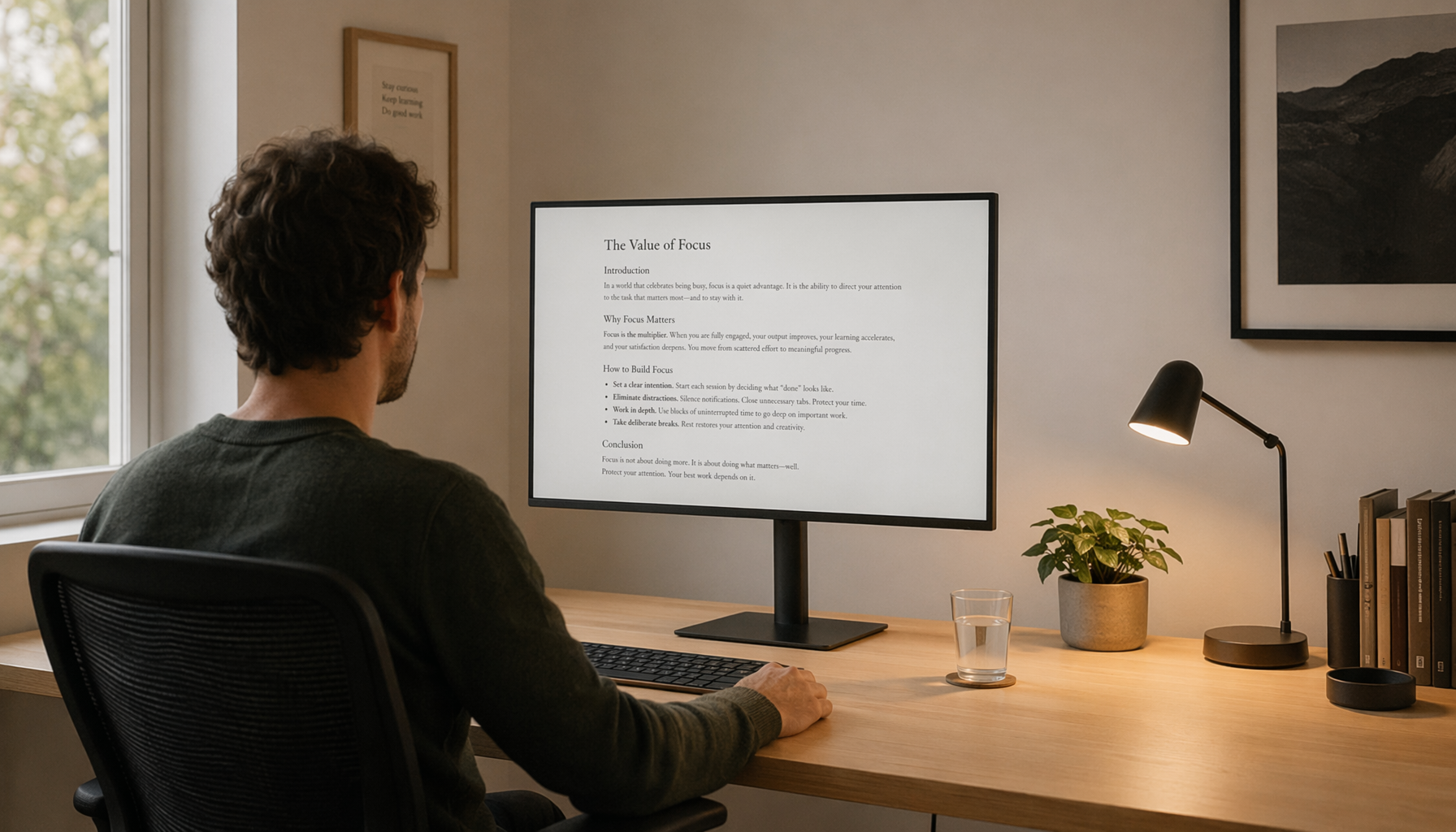
Yes, reducing unnecessary maximum brightness can help extend a display’s useful life by lowering heat, stress, and long-term brightness fade. The best approach is to match brightness to the room and task rather than leaving the panel at full output all day.
Does your monitor feel like a spotlight at night, or does your portable screen stay blazing even when you are just answering email? That habit rarely improves visibility for long, and the same adjustment that makes daily viewing more comfortable also reduces needless wear on the panel and backlight. You can set brightness sensibly for gaming, office work, and portable use without sacrificing the impact you paid for.
The short answer
Running a display at full brightness all the time is usually harder on it than matching brightness to the room. Multiple display maintenance sources state that prolonged maximum-brightness operation accelerates component degradation, while maintenance guidance also recommends lowering brightness during normal indoor use rather than leaving the panel at its highest output.
That does not mean every monitor will fail early if you like a bright image. It means display life is a wear curve, not a light switch. A good panel can still last tens of thousands of hours, but the same sources that put LED display life around 30,000 to 100,000 hours also note that brightness, heat, operating hours, dust, and power quality all shape where your unit lands in that range. If you use a monitor 8 hours a day, 30,000 hours is a little over 10 years, while 50,000 hours is roughly 17 years. Small daily habits matter over that span.
Why brightness affects lifespan
What “lifespan” really means for a display
For most LED and LCD monitors, lifespan usually means the point where brightness and image quality have dropped enough to be noticeable or commercially unacceptable, not the moment the screen goes black forever. The brightness-fade definition of lifespan matters because many users judge a monitor as “aging” long before total failure, especially if they care about crisp office text, consistent color, or HDR highlights.

That distinction is important on gaming and productivity displays. A panel can still power on, yet feel worse because whites look duller, uniformity slips, or the image needs more output to look the same. Lowering brightness during ordinary indoor use slows that process because you are asking less from the backlight or light-emitting elements hour after hour.
Heat, drive level, and cumulative wear
The reason is straightforward: more brightness usually means more electrical drive and more heat. Several maintenance sources tie higher brightness to more energy use, glare, and hardware stress, and they pair that with advice to keep displays ventilated and out of direct sun. That relationship is especially relevant on Mini-LED models, where sustained full-brightness HDR can raise heat load, and on portable smart screens that already operate in tighter thermal spaces.

In real setups, brightness is often the easiest wear factor to control because it is immediate and reversible. You may not be able to redesign the panel’s internal power stage, but you can stop running a 27-inch office monitor at showroom intensity in a dim apartment. That lowers thermal stress without changing your workflow.
Where reducing brightness helps the most
The biggest wins come from indoor desk use, not from rare moments when you actually need maximum punch. A bright office, late-night spreadsheet session, and competitive gaming setup do not need the same output. Guidance on screen brightness as emitted light intensity and automatic adjustment both support the same principle: brightness should follow ambient light, not stay fixed at a maximum.

Use case |
Best habit |
Lifespan effect |
Office work, web, documents |
Set brightness only as high as needed for comfort |
Reduces unnecessary daily wear |
SDR gaming in a controlled room |
Use moderate brightness and raise it only if visibility suffers |
Preserves output while maintaining immersion |
HDR gaming or media |
Use higher brightness when the content benefits from it, then switch back |
Limits long high-output sessions |
Portable smart screens |
Lower brightness indoors and use auto-brightness if it works well |
Helps battery life and reduces heat |
Static productivity on OLED or Mini-LED |
Avoid bright static UI for hours |
Helps reduce uneven wear and heat stress |
A simple example makes the tradeoff clear. If your monitor is on for 10 hours a day and most of that time is email, browser tabs, dashboards, and text documents, there is little value in running at full brightness for all 10 hours. If you reserve maximum or near-maximum output for the one hour you watch HDR video or game in a bright room, you cut a large block of high-stress time without giving up the display’s performance when it actually matters.
When lowering brightness is not enough by itself
Brightness matters, but it is not the only serious factor. Multiple sources on LED and LCD care also stress stable power, ventilation, and regular cleaning because heat, dust buildup, and voltage instability can age components just as surely as aggressive output settings.
That is why some users lower brightness and still see poor longevity. A monitor placed in direct sun, pressed against a wall with no airflow, or connected to unstable power can still run hot and age poorly. Outdoor and commercial LED guidance consistently warns that humidity, dust, temperature extremes, and surges all shorten life. On a home desk, the equivalent problems are simpler but real: blocked vents, warm enclosures, unstable outlets, and screens that never sleep.
Condition-based maintenance thinking is useful here. The broader maintenance literature describes condition monitoring as tracking heat and fault patterns before failure. You do not need factory sensors to apply that mindset at home. If a monitor suddenly feels hotter than usual, shows flicker, develops color inconsistency, or needs more brightness than before to look normal, check ventilation, cables, power protection, and runtime habits.
The tradeoffs: what you gain and what you give up
The main benefit of lowering brightness is a better balance. You reduce glare, cut power draw, lower heat, and likely slow brightness loss over time. For office productivity, that often improves comfort immediately because overbright white backgrounds are a common source of fatigue during long reading sessions.
The downside is obvious: too little brightness can hurt visibility and make a premium display feel flat. That is why the goal is not “as dim as possible.” The goal is “no brighter than necessary.” If a room has strong daylight, or if you are playing a dark competitive title where shadow detail matters, a moderate increase is sensible. The wrong move is keeping the panel pinned near maximum after the need has passed.
There is also one nuance for OLED and some smart monitors with panel-care routines. KTC’s maintenance guidance notes that OLED mitigation tools often rely on standby rather than full power cuts. If you are trying to extend OLED life, lower brightness helps, but you should also allow the display to enter its normal standby and refresh behavior instead of disconnecting it from power constantly.
How to set brightness during normal use
The most reliable approach is to tune the screen to the room, then let habits do the rest. If your monitor or portable screen has auto-brightness and it behaves well, that is usually a smart default because automatic brightness lowers output in darker environments. If it is too aggressive or too slow, manual control is fine; just avoid the lazy habit of leaving the slider maxed out 24/7.
For a home office or gaming desk, a good rule is that white backgrounds should look clean, not glowing. You should be able to read comfortably at night without feeling blasted by the panel. During the day, raise brightness only enough to overcome room light. If sunlight hits the panel directly, fix the room first with repositioning or shade before you force the screen brighter and hotter.
Sleep settings matter nearly as much as brightness. Several maintenance sources recommend standby or power-down during idle periods because operating hours are a direct wear factor. If you step away often, letting the display sleep after a short idle window is usually better than leaving a bright static desktop on all afternoon.
So, should you reduce maximum brightness?
Yes, if “reduce” means matching output to real use instead of treating maximum brightness as a default. That habit will not override poor build quality or bad thermal conditions, but it is one of the simplest, most reliable ways to slow avoidable wear on gaming monitors, office displays, and portable smart screens.
A strong display setup is not about chasing the brightest image all day. It is about using brightness as performance on demand, then backing off when the room, task, and panel no longer need it.