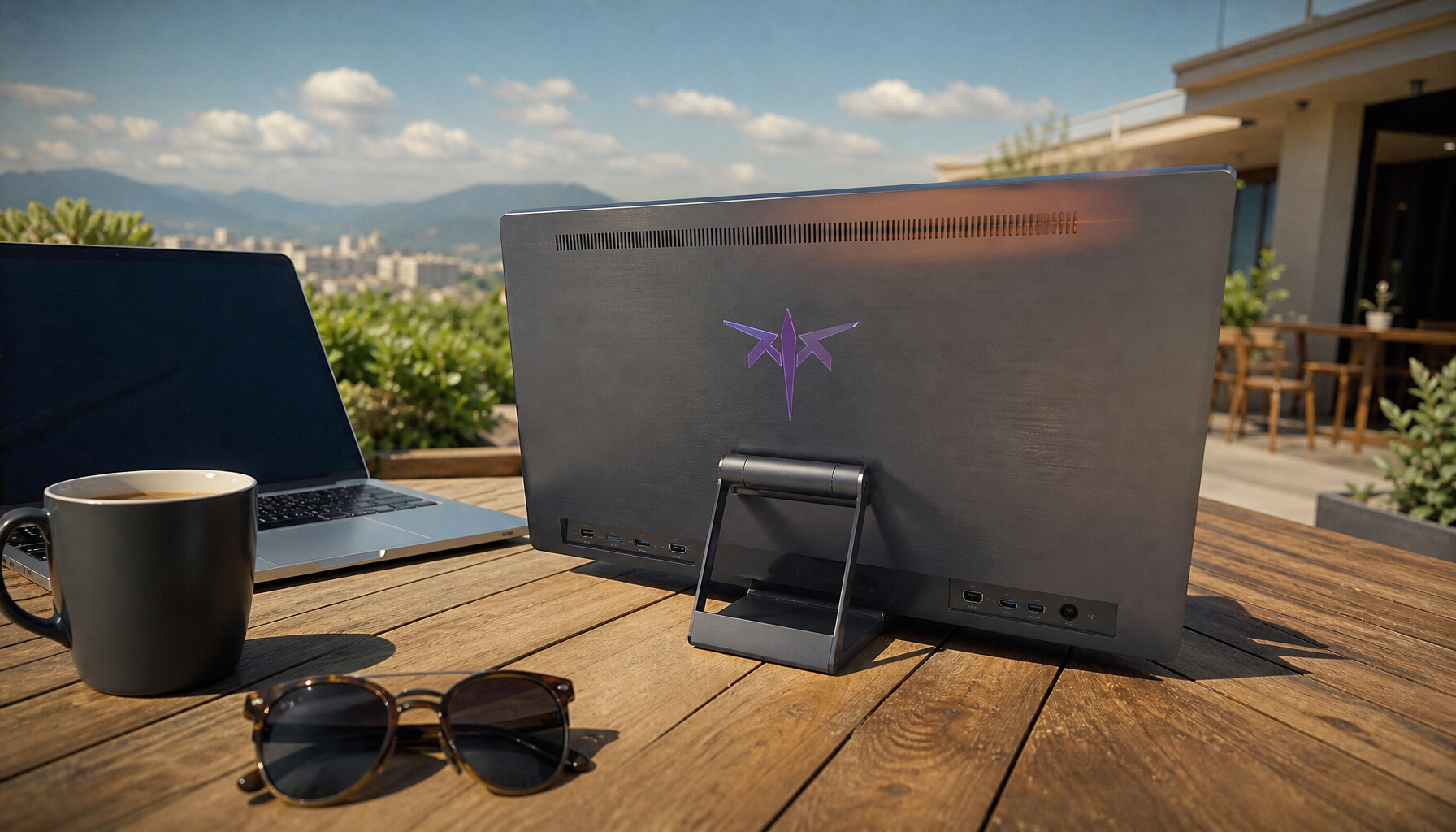
A dual-HDMI 2.1 monitor lets you keep two consoles connected and switch between them without losing 4K at 120Hz support. In most cases, it does not let you view both consoles on the screen at the same time.
Yes, if your monitor has two full-bandwidth HDMI 2.1 inputs, you can keep two consoles connected and run each one at 4K at 120Hz when selected. What you usually cannot do is view both consoles at the same time on one standard monitor panel; in most real setups, you switch between them.
If your desk setup falls apart every time you move from one console to another, the practical benefit of dual HDMI 2.1 is simple: no cable swapping, 4K at 120Hz-ready connections on both systems, and a cleaner, faster setup. The key is understanding what works, what does not, and what to verify before you spend money.
The Short Answer That Matters
A monitor with two HDMI 2.1 ports is mainly a convenience and compatibility feature, not a way to combine two console feeds into one live image. Notes on how multiple gaming consoles can be connected explain the same core idea used by monitors and switchers: several sources can feed one display path, but only one source is selected at a time. In practice, dual HDMI 2.1 lets you connect two consoles at once and switch inputs without reaching behind the monitor.
That distinction matters because many buyers read “two HDMI 2.1 ports” as “two 4K at 120Hz streams at once.” On a normal monitor, it means each port can accept a 4K at 120Hz-capable signal. It does not usually mean the panel can render two full 4K game feeds side by side at 120Hz at the same moment.
What Dual HDMI 2.1 Actually Gives You

The main advantage is bandwidth-ready convenience. HDMI 2.1 supports 4K at 120Hz, along with gaming features such as VRR and ALLM on compatible gear, so two HDMI 2.1 inputs give both of your consoles a proper path for modern high-refresh gaming. If you own two current-generation consoles, you can leave both connected, select the active input in the monitor menu, and keep each system ready for its best mode.
That is a much better experience than using one HDMI 2.1 port and constantly swapping cables. It also reduces wear on the monitor ports and cable ends, which becomes noticeable over months of regular use.
What “Simultaneously” Usually Means in the Real World

This is where expectations need to stay precise. A single monitor panel normally shows one input at a time, even if two consoles are physically connected. Research notes on HDMI switching describe a switcher as routing one selected source to one display output, not blending or showing both sources at once. That same one-source-active logic is how most monitor input selection works.
If your goal is “both consoles connected and instantly available,” then yes, dual HDMI 2.1 solves it well. If your goal is “one console on the left and another on the right, both at 4K at 120Hz at the same time,” that is a different feature set and usually requires a monitor with explicit multi-view support. Even then, you should expect compromises unless the manufacturer clearly states otherwise.
Why 4K120Hz Is Worth Protecting

Refresh rate is simply how often the display updates each second, and refresh rate is not the same as frames per second. For console players, 120Hz support matters because motion feels cleaner, aiming feels more immediate, and fast camera movement looks less blurred when the game supports higher frame rates.
Just as important, input lag and response time both affect gaming feel. A clean 4K at 120Hz path is only part of the equation; the monitor still needs low lag and fast pixel response to feel truly sharp in action. That is why some premium gaming displays feel dramatically better than office-oriented 4K panels, even when both accept the same resolution.
The Cables and Port Checks That Prevent Headaches

A dual-HDMI 2.1 monitor only performs as promised if the rest of the chain is equally capable. An Ultra High Speed HDMI cable is the safe baseline for both major current-generation consoles. If one console is using an older cable, the monitor may fall back to a lower mode, and the problem can look like a monitor flaw when it is really a cable limitation.
A simple desk example makes this clear. If Console A is set to 4K at 120Hz with VRR and Console B only reaches 4K at 60Hz, first check whether both HDMI ports on the monitor are full HDMI 2.1, then confirm both cables are Ultra High Speed, then verify the console video settings. Many monitor spec sheets hide the difference between “two HDMI ports” and “two HDMI 2.1 ports.”
When an HDMI 2.1 Switcher Makes Sense
If your monitor has only one HDMI 2.1 port, an external switch can be the clean fix. Notes from an HDMI 2.1 switcher recommendation are practical: if you want 4K at 120Hz, VRR, and ALLM, choose a switcher built for HDMI 2.1 rather than older switching hardware. That helps you avoid buying a cheap box that silently caps you at lower bandwidth.
This can be smarter than replacing a good monitor. If you already own a strong 4K at 120Hz panel with one high-bandwidth port, a proper switcher may cost far less than a whole new display and preserve the same gaming experience.
How to Judge Whether the Monitor Itself Is Good Enough
Do not let dual HDMI 2.1 distract you from the bigger question: is the panel actually good for console gaming? Current gaming monitor recommendations and today’s top monitor picks reinforce the same buying reality: panel quality, response behavior, brightness, and overall tuning matter as much as headline refresh numbers.
OLED and QD-OLED panels tend to feel especially immersive because of deep blacks and extremely fast pixel response, though they cost more and can raise long-term concerns about static images. IPS remains a dependable value choice for many players because it balances speed, clarity, and price. If your setup also doubles as a workspace, another monitor roundup is a useful reminder that connectivity, ergonomics, and desk fit still matter after the gaming session ends.
Pros, Limits, and the Best Buying Mindset
The upside of a dual-HDMI 2.1 monitor is real. You keep two consoles wired, preserve 4K at 120Hz capability on both inputs, and eliminate the friction of manual cable swapping. For a shared desk with two current-generation consoles, that is a meaningful quality-of-life upgrade.
The limit is just as real. You are usually buying fast switching between two premium console connections, not true dual-console live viewing. The value here is reliability, not magic.
A strong setup feels invisible when it works. If your goal is one screen, two consoles, and no compromise on 4K at 120Hz when you switch inputs, a dual-HDMI 2.1 monitor is the right tool. If your goal is two active console images on one panel at full 4K at 120Hz, read spec sheets very carefully and assume nothing unless the monitor states that feature plainly.