Turn off sound modes that advertise auto volume, volume leveling, loudness normalization, night mode, dialog boost, or audio enhancements, then test with one quiet scene and one loud scene before changing anything else.
Does your smart display make whispered dialog jump forward, then flatten explosions, music, or game effects into the same loudness? On a practical setup, the fastest fix is usually disabling one processing layer at a time instead of chasing the master volume all night. You’ll learn where the setting hides, what names it may use, and how to keep voices clear without letting quiet scenes become artificially loud.
Why Quiet Scenes Suddenly Sound Too Loud
Auto volume leveling is a dynamic audio feature that tries to keep perceived loudness consistent. In theory, it saves you from adjusting the remote when an ad, app, channel, or input gets louder than the content before it. In practice, it can raise soft dialog, room tone, background music, and low-level effects until a quiet movie scene feels unnaturally exposed.
This matters more on smart displays than on full-size theater systems because many smart displays are compact, voice-first devices. Reviews repeatedly note that they combine a screen, assistant, speakers, video, and smart-home control in one small chassis, but audio quality varies by model; smart displays are convenience devices first, not always precision audio systems. When aggressive leveling meets small speakers, the result can be vocal harshness, pumped ambience, or a “too close” soundstage.
The core distinction is simple: volume changes how loud everything is, while leveling changes the relationship between quiet and loud moments. If a horror scene’s silence, a tactical game’s footsteps, or a late-night drama’s whisper becomes louder than intended, the issue is usually processing, not your volume button.
The Settings Names to Look For
Manufacturers rarely use one universal label. The same behavior may appear as Auto Volume, Advanced Auto Volume, Volume Leveling, Loudness Normalization, Dynamic Range Control, Night Mode, Dialog Enhancement, Amplify, Adaptive Sound, TruVolume, or Audio Enhancements. Some settings raise quiet sounds, some lower loud sounds, and some do both.

Start with the device closest to the speakers. If you use the built-in speakers on a smart display, check the display’s own sound settings first. If you cast from a phone, stream from an app, or route sound through a TV, receiver, Bluetooth speaker, or soundbar, each layer may have its own processing. Support guidance warns that changing sound modes without checking compatibility can cause no audio on some setups, so change them deliberately and test after each adjustment.
Setting label |
What it usually does |
Disable it when |
Auto Volume or Volume Leveling |
Evens out loud and quiet moments |
Quiet scenes sound boosted or artificial |
Night Mode or Dynamic Range Control |
Reduces loud peaks and raises softer detail |
Movies lose impact or ambience pumps |
Dialog Boost, Voice Clarity, Amplify |
Pushes speech frequencies forward |
Voices sound sharp, nasal, or too close |
Audio Enhancements |
Applies driver or DSP processing |
Volume changes without app-level settings |
Volume Offset |
Adjusts one input or device separately |
One app, HDMI device, or channel is too loud |
Start With the Smart Display, Then Move Outward
Open the smart display’s audio or sound menu and switch to the most neutral preset available. On many devices, that means Standard, Balanced, or Normal. Avoid Optimized, Amplify, Movie Night, Adaptive, or Voice modes while diagnosing the issue. Those modes may be useful, but they are not neutral baselines.

The smart-display category is broad, from compact 5-inch bedside screens to 15-inch and larger wall-style hubs. Buying guides emphasize that screen size, ecosystem, and audio capability vary widely; smart displays and smart screens can handle reminders, streaming, smart-home control, video calling, and photo-frame duties, but their speakers are not tuned like dedicated monitors or studio setups. That is why a neutral reset is the cleanest starting point.
After switching to a neutral mode, replay a scene you know well. Use a scene with quiet speech followed by a loud moment. Keep the master volume fixed. If the whisper no longer swells unnaturally, the preset was the cause. If the issue remains, continue down the chain.
Check the App, Device, and Operating System
Some streaming apps, casting devices, and computers add their own normalization. On a computer connected to a smart monitor or portable smart screen, automatic gain behavior can come from the sound card driver rather than the media player. Operating system support communities often point to speaker enhancement settings as a likely place to disable driver-level effects when the media player’s own volume leveling is not enabled.
Computers may also have a communications behavior that lowers other audio when a call is active. That is the opposite symptom from quiet scenes getting too loud, but it belongs in the same diagnostic family because the system is changing levels without your direct command. If your display doubles as an office productivity screen for meetings, set communications behavior to do nothing, then disable speaker enhancements and retest.
Community threads show another practical nuance: users often search for “auto volume,” “automatic gain,” or “normalization” because the visible symptom is obvious but the exact setting name is unclear. The automatic volume leveling wording reflects how common that phrasing is across platforms. Treat the name as a clue, not a guarantee.
Don’t Confuse On-Screen Volume Display With Volume Leveling
One easily missed trap is the term “Auto Display.” A receiver help page uses Auto Display to describe whether receiver information appears on the TV screen when settings such as volume level or sound field change. That Auto Display control affects visual pop-ups, not whether quiet sounds are boosted.
If your complaint is that a volume banner interrupts the screen, turn off the display notification. If your complaint is that quiet scenes become loud, look for audio processing instead. The names are similar enough to waste time, especially in AV receiver menus where sound field, volume level, and display behavior sit close together.
Use a Two-Minute Listening Test
A good test uses one familiar scene, one fixed volume, and one changed setting at a time. Set the display at your normal viewing distance, roughly where you sit for work breaks, game guides, video calls, or late-night streaming. Pick a scene with quiet dialogue, room ambience, and a sudden loud transition. Play 30 seconds, change one sound setting, then play the same 30 seconds again.

Listen for three things: whether background ambience rises between spoken lines, whether loud moments lose punch, and whether voices become cleaner or merely louder. If only the words are clearer and the ambience stays natural, dialog enhancement may be helping. If everything quiet rises together, leveling is still active somewhere.
For gaming, this test matters because spatial cues depend on contrast. A display used beside a console or PC should not make distant footsteps, interface pings, and cinematic effects fight at the same level. For productivity, it matters because meeting audio can become fatiguing when the system constantly raises soft room noise.
Picture Settings Can Make Audio Troubleshooting Feel Worse
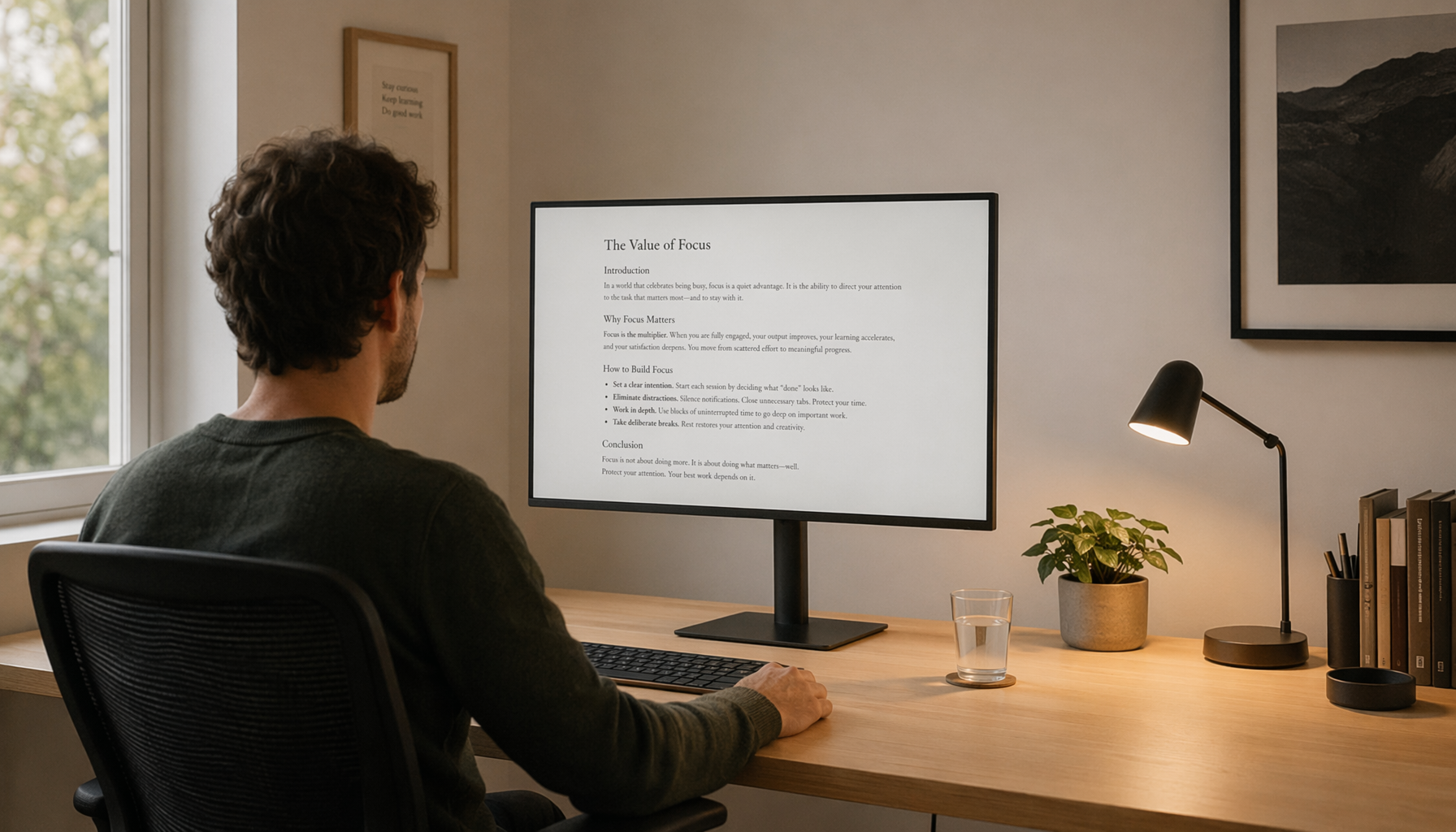
It sounds unrelated, but display tuning affects how you perceive the whole experience. A screen that is too bright in a dark room can make boosted quiet audio feel even more fatiguing. Consumer guidance recommends starting with a preset picture mode, then fine-tuning settings such as brightness, contrast, color temperature, and sharpness; picture quality settings should avoid excessive processing when accuracy matters.
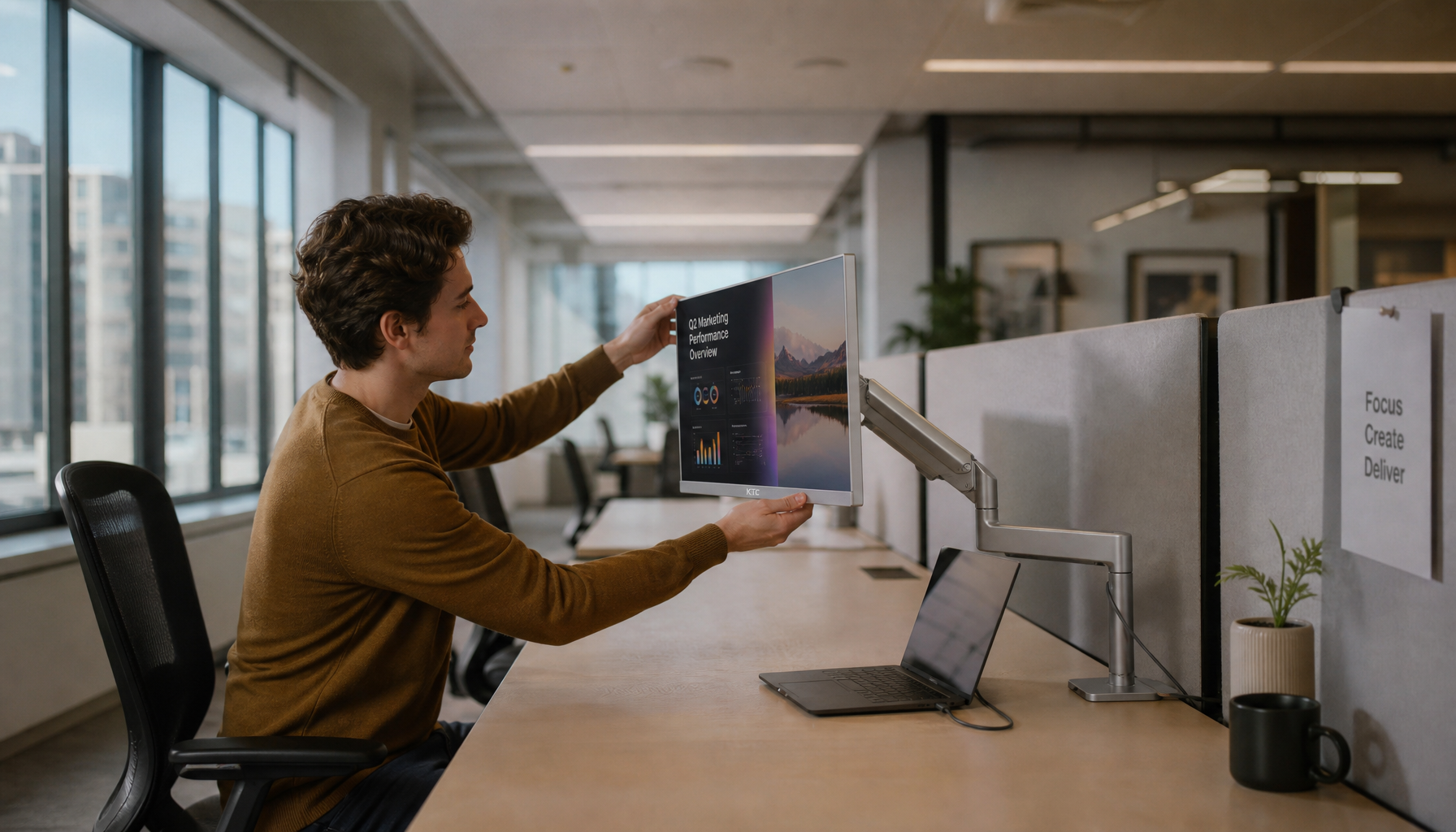
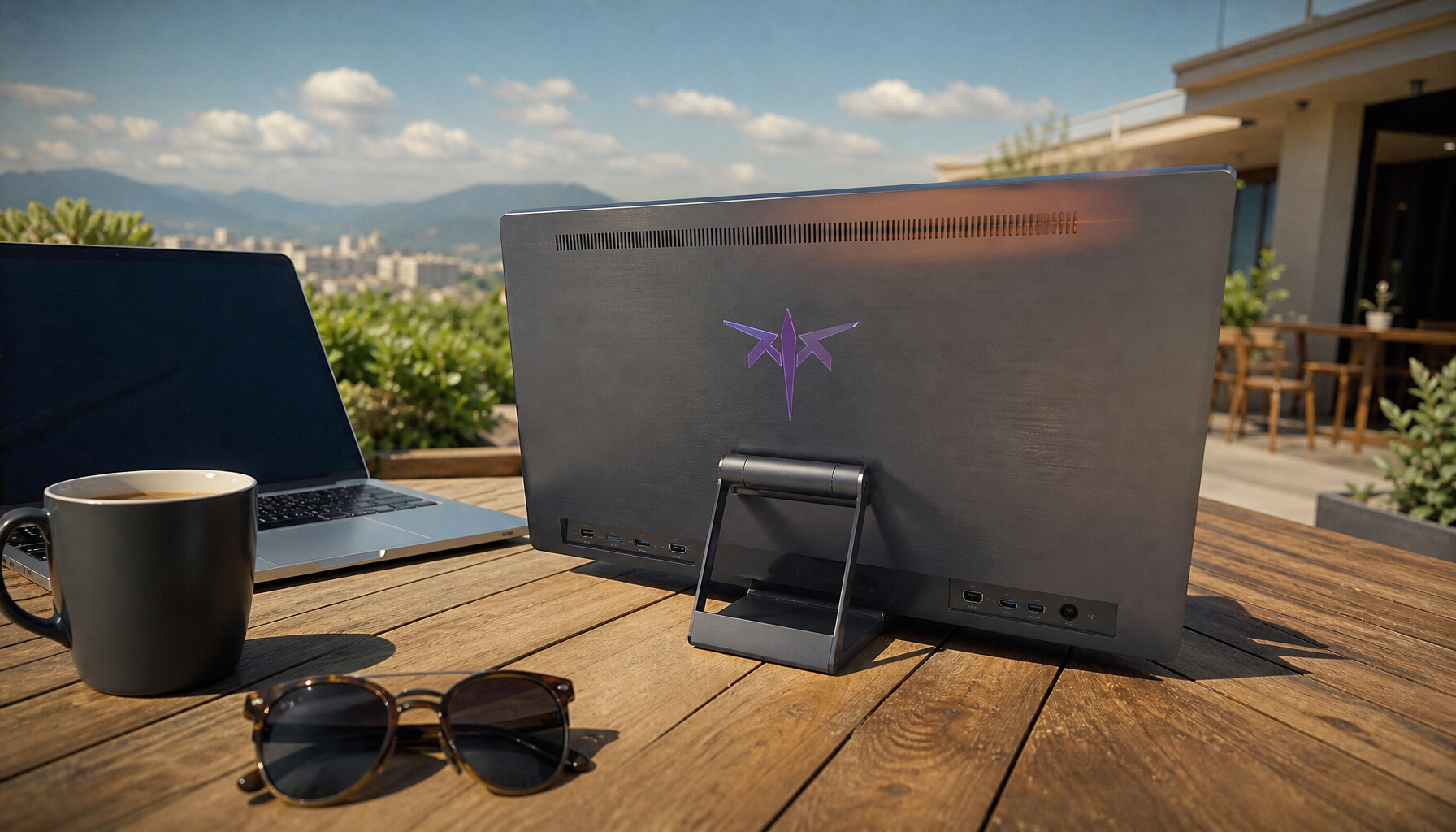
For a smart display used as a portable screen, dashboard, or office monitor, match brightness to the room instead of leaving it maxed out. Eye-comfort research notes that there is no universal best screen setting; ambient light, task type, and sensitivity all matter. A balanced screen and neutral audio mode together make it easier to judge whether the sound is actually fixed.
When Auto Volume Is Worth Keeping
Auto leveling is not always bad. It can help in a kitchen where a dishwasher masks quiet speech, in an apartment where late-night peaks would disturb neighbors, or on a small bedside display where you want podcasts and casual video to stay consistent. It can also reduce the volume jumps that happen when moving between apps, channels, or external inputs.

The tradeoff is immersion. A high-performance display setup should preserve contrast, not just in brightness and color, but in sound. Quiet scenes are supposed to create distance, suspense, and focus. Loud scenes are supposed to land with energy. When leveling erases that range, the display feels less cinematic and less precise.
Keep auto leveling on |
Turn auto leveling off |
Background viewing while cooking or cleaning |
Movies, sports, and story-driven shows |
Low-volume late-night listening |
Competitive gaming and cinematic gaming |
Inconsistent app or channel loudness |
Music, trailers, and high-impact video |
Shared spaces with noise limits |
Desk setups where clarity and realism matter |
If the Setting Keeps Coming Back
If auto volume seems to re-enable itself, check whether you changed the right profile. Some devices store separate settings for internal speakers, Bluetooth output, HDMI input, casting, and app playback. A smart display used as a home dashboard in the morning and a streaming screen at night may behave differently depending on input or playback method.
Also check for firmware or app updates. Smart displays are increasingly tied to assistant platforms, smart-home frameworks, and streaming apps. As these systems become more conversational and automated, menus, routines, and device behavior can change over time. When a menu moves after an update, search within settings for “volume,” “sound,” “audio,” “enhancement,” and “night.”
If you use an external speaker, soundbar, or AV receiver, disable processing there too. One neutral smart display feeding an aggressive soundbar will still sound processed. The cleanest setup has only one device responsible for shaping the sound, and for accuracy-first viewing, that device should usually be doing as little as possible.
FAQ
Is volume leveling the same as volume normalization?
They are closely related in everyday use. Volume normalization usually aims to make content play at a consistent perceived loudness, while volume leveling often describes real-time adjustment that raises quiet parts and lowers loud parts. On consumer displays, the practical fix is the same: find the feature that changes loudness automatically and turn it off.
Why do voices get louder but not clearer?
Small speakers and dialog modes often boost midrange frequencies where speech lives. That can make voices more forward without improving detail. If voices sound sharper, thinner, or more tiring, use a neutral mode and raise the master volume slightly instead.
Should I reset all sound settings?
Reset only if you have lost track of changes. A full reset is useful when multiple modes, app settings, and external devices have been adjusted, but it may also erase useful input-specific tweaks. For a cleaner result, change one setting at a time and write down the previous value if the device does not show a reset option.
Final Calibration
Disable automatic loudness processing first, then rebuild only the features you genuinely need. A smart display should make quiet scenes intentional, voices intelligible, and loud moments controlled without flattening the experience. The best setting is not the most processed one; it is the one that lets the screen and speakers get out of the way.