For most screen breaks, focus on something about 20 ft away; close your eyes when dryness, glare fatigue, or a short reset is the main problem. The strongest routine uses both: distance viewing to relax focusing effort, followed by brief eye closure or slow blinking to refresh the tear film.
Are your eyes sharp at 9:00 AM but gritty, blurry, or heavy by midafternoon after spreadsheets, matches, edits, or back-to-back calls? A practical 20-second distance break every 20 minutes can reduce near-focus load, while a 30- to 60-second closed-eye pause can calm dryness without derailing your workflow. Here is how to choose the right reset for the way you actually use screens.
The Core Difference: Distance Focus Relaxes, Eye Closure Rehydrates
Focusing on distance is the better default when your eyes feel locked into monitor range. Eye-health guidance notes that screen discomfort is usually temporary digital eye strain, not permanent screen damage, and recommends looking away from the screen at a distant object during visual breaks to reduce strain from prolonged close work.
Closing your eyes solves a different problem. When you shut your eyes for 30 to 60 seconds, you remove glare, stop visual input, and give your tear film a chance to stabilize. That matters because screen users blink less often. Normal blinking is about 15 times per minute, but computer use can drop that to about 5 to 7 times per minute. In practical terms, a 90-minute ranked session or deep work block can leave your eyes exposed and dry even if your monitor settings are excellent.
Think of it like tuning a display. Distance focus is the reset for your focus plane. Eye closure is the recovery tool for surface comfort and glare. You do not need to pick one forever; you need to match the break to the symptom.
When Distance Focus Is the Better Screen Break
Choose distance focus when your main issue is blurry refocusing, forehead tension, difficulty shifting from monitor to room, or that tight feeling behind the eyes after sustained close work. Clinical guidance describes digital eye strain as fatigue from prolonged close-up focus, and its recommended 20-20-20 pattern is simple: every 20 minutes, look at something 20 ft away for 20 seconds.

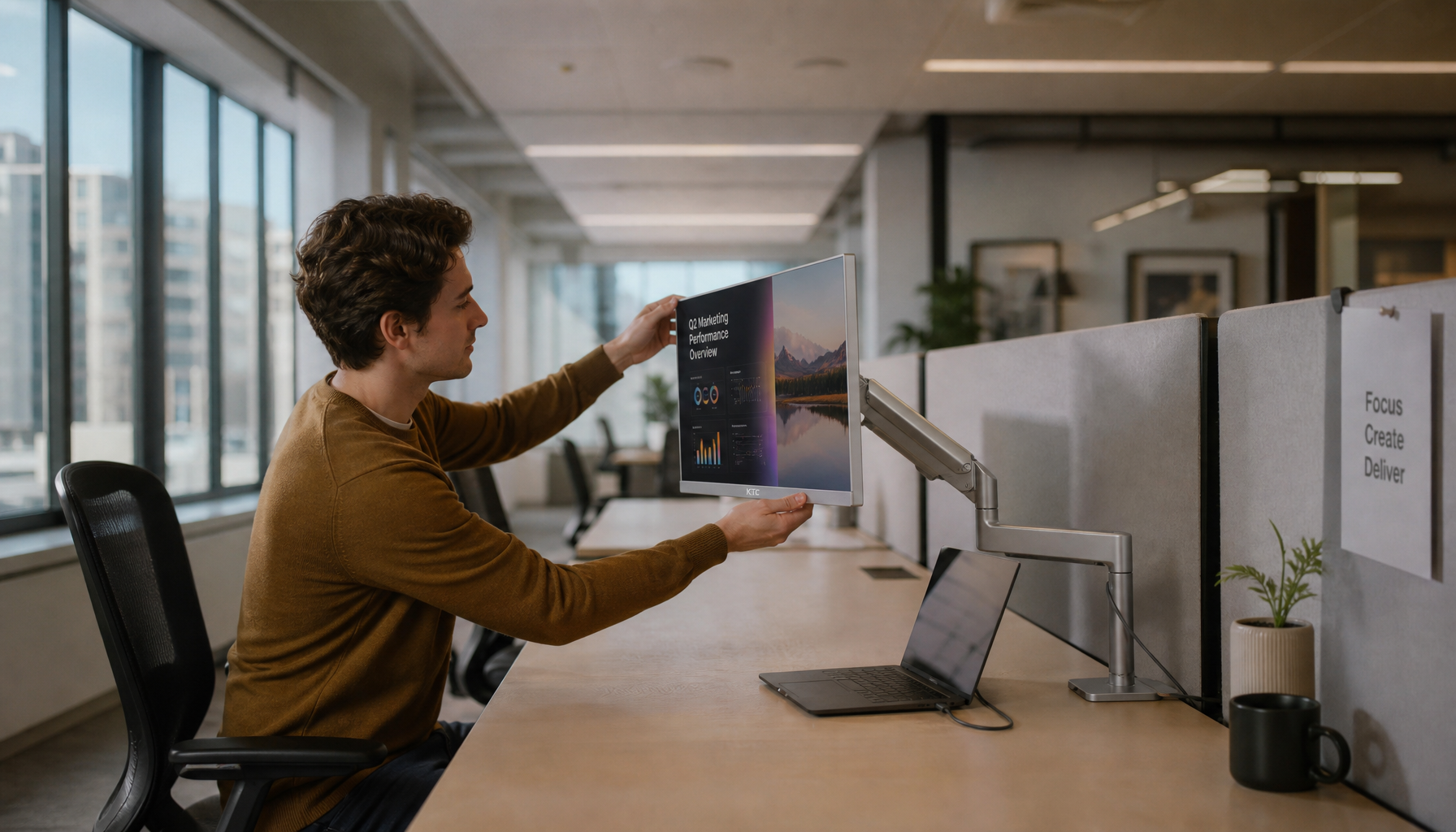
For a productivity display, this can be as simple as looking past the top bezel toward a window, hallway sign, bookshelf, or far wall. For a gaming monitor, use match downtime: death cam, queue time, map load, replay screen, or the moment after a round ends. If your setup includes a 27-inch 1440p panel at arm’s length or a 49-inch ultrawide wrapping your field of view, distance focus is especially useful because your visual system has been doing precise near-to-intermediate work for a long stretch.
The benefit is practical. Your focusing system has been holding a near target. Looking farther away changes the workload. An eye care resource explains that the ciliary muscle, which controls focus, can fatigue during extended near work, making it harder to refocus at distance. A 20-second distance look gives that system a quick change of demand before symptoms stack up.
When Closing Your Eyes Is the Better Screen Break
Close your eyes when the problem feels like dryness, burning, glare sensitivity, watery eyes, or visual overload. This is common in dry offices, heated rooms, air-conditioned spaces, contact lens wear, or long sessions on bright HDR displays. Eye-health guidance recommends blinking more often and using artificial tears when eyes feel dry, because reduced blinking during screen use can leave the eye surface less comfortable.

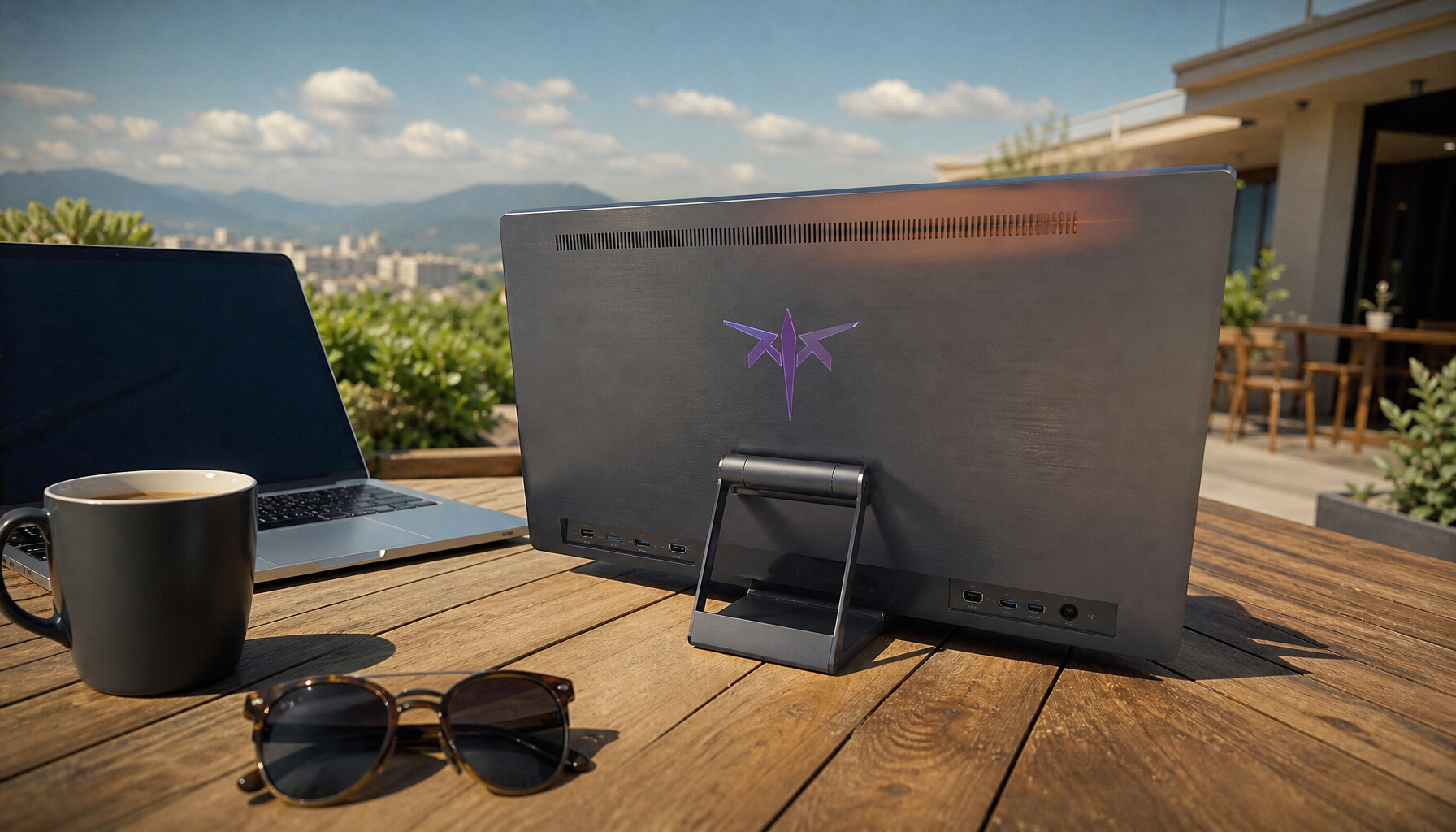
A good closed-eye break is short and intentional. Close your eyes gently for 30 seconds, relax your forehead and jaw, then open and do several slow full blinks. Do not squeeze your eyelids shut. If you use a portable smart screen in a coffee shop, airplane seat, hotel room, or bright coworking space, this kind of break can be more effective than staring across the room while harsh reflections keep hitting your eyes.
Closed-eye breaks are also useful after high-contrast work. If you just finished color grading, scanning dense code, tracking enemies in a dark FPS map, or reading small text on a compact portable display, your visual system may need a true input pause. Closing your eyes briefly reduces stimulation in a way distance viewing does not.
The Best Routine Uses Both
The most reliable routine is not “eyes closed versus far focus.” It is sequence and timing. Use distance focus as your baseline, then add eye closure when dryness or glare shows up. For example, after 20 minutes of screen work, look 20 ft away for 20 seconds. After an hour, step away for 5 minutes, close your eyes for 30 seconds, blink slowly, then walk or stretch.
Short, frequent breaks tend to work better than waiting until your eyes already feel wrecked. Workplace guidance notes that display screen work should be planned with breaks or changes of activity, and that short, frequent breaks are generally more effective than occasional long ones. Additional workplace guidance points to the 20-20-20 rule and frames breaks as a way to protect focus, energy, and screen comfort during long workdays.
Here is the practical comparison.
Break Method |
Best For |
Typical Duration |
Main Advantage |
Limitation |
Distance focus |
Refocusing trouble, eye fatigue, long near-work sessions |
20 seconds |
Relaxes near-focus demand |
May not fix dryness by itself |
Eye closure |
Dryness, burning, glare, sensory overload |
30 to 60 seconds |
Restores comfort and reduces stimulation |
Does not train near-to-far refocusing |
Full off-screen break |
Mental fatigue, posture stiffness, long sessions |
5 to 15 minutes |
Resets eyes, body, and attention |
Requires leaving the task flow |
Monitor Setup Still Matters

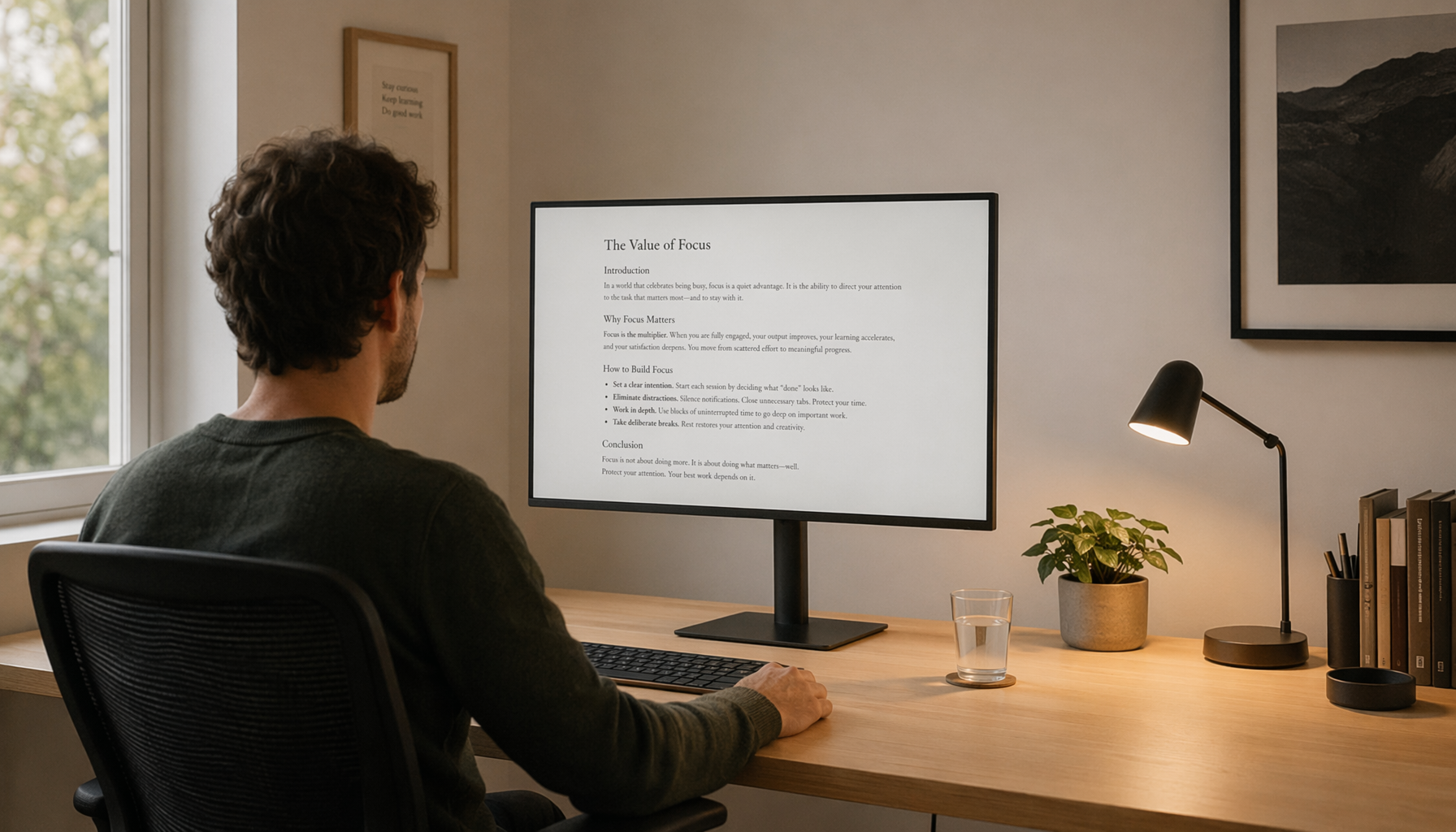
Breaks work better when your display is not fighting you. Place the monitor about arm’s length away, with the top of the screen at or slightly below eye level. Eye-health guidance recommends positioning the computer about 25 inches from the face, roughly arm’s length, with the gaze slightly downward, while also matching brightness to surrounding light and reducing glare.
For a pro gaming display, do not run brightness like a showroom demo in a dim room. High brightness can make highlights pop, but it can also turn every white menu, document, and loading screen into a fatigue source. For office productivity, enlarge text before you lean forward. For portable screens, raise the panel on a stand when possible instead of hunching over it next to a laptop.
A simple test helps: sit in your normal position, relax your shoulders, and look at the center of the display. If you squint, lean forward, crane your neck, or feel reflections pulling your attention, your break routine is compensating for a setup problem.
Pros and Cons for Real Workflows
Distance focus is fast, discreet, and ideal for people who cannot fully stop, such as traders, support teams, editors, and competitive players between rounds. Its weakness is that it does not fully address a dry eye surface. If your eyes sting or water, distance viewing alone may feel incomplete.
Eye closure is powerful for comfort, especially in dry air or after intense visual scanning. Its weakness is timing. Close your eyes during a live match, active design review, or customer call and you may miss information. Use it during natural pauses rather than during moments that require visual awareness.
A longer off-screen break gives the best overall reset because it changes focus distance, posture, lighting exposure, and mental state. The U.S. Department of Labor distinguishes short rest breaks, often about 5 to 20 minutes, from meal periods, which are typically at least 30 minutes. For personal eye comfort, the useful point is not the legal detail; it is that short breaks are a normal, workable unit of recovery during a screen-heavy day.
A Practical Break Plan for Heavy Screen Users
If you work or play on screens for hours, use a three-layer rhythm. Every 20 minutes, look at a distant object for 20 seconds. Every hour, stand up for a few minutes, close your eyes briefly, blink slowly, and move your shoulders. Every few hours, take a longer off-screen break where you avoid replacing the monitor with your cell phone.
For an office setup, place a small visual target across the room so your distance break is automatic. For a gaming setup, tie breaks to match structure rather than clock anxiety. For a portable smart screen, use environmental breaks: look down the terminal, across the cafe, out the hotel window, or toward the far end of the room before returning to work.
If symptoms happen most days, do not keep solving everything with willpower and monitor tweaks. Eye care guidance recommends an eye exam when symptoms do not improve with short breaks, because dry eye, binocular vision issues, or prescription changes can contribute to persistent strain. Seek prompt professional care for pain, sudden vision changes, new flashes or floaters, or severe light sensitivity.
FAQ
Is closing your eyes better than the 20-20-20 rule?
Not usually. The 20-20-20 rule is the better default for relaxing near-focus strain, while closing your eyes is better for dryness, glare, and overload. Use distance focus first, then add eye closure when comfort symptoms show up.
Can I just look away without standing up?
Yes, for a quick visual reset. However, standing up adds posture recovery, circulation, and a real mental break. If you have been locked into a monitor for an hour, a 5-minute off-screen movement break beats a seated glance across the room.
Do blue-light glasses replace screen breaks?
No. Clinical guidance notes that blue-light glasses are not strongly supported as a way to prevent digital eye strain, though some people may find them comfortable. Breaks, blinking, glare control, screen position, and appropriate vision correction matter more.
The performance answer is simple: focus far to reset your visual system, close your eyes to restore comfort, and step away before fatigue starts controlling your session. A premium display should make work and play feel sharper, not leave you negotiating with tired eyes by dinner.