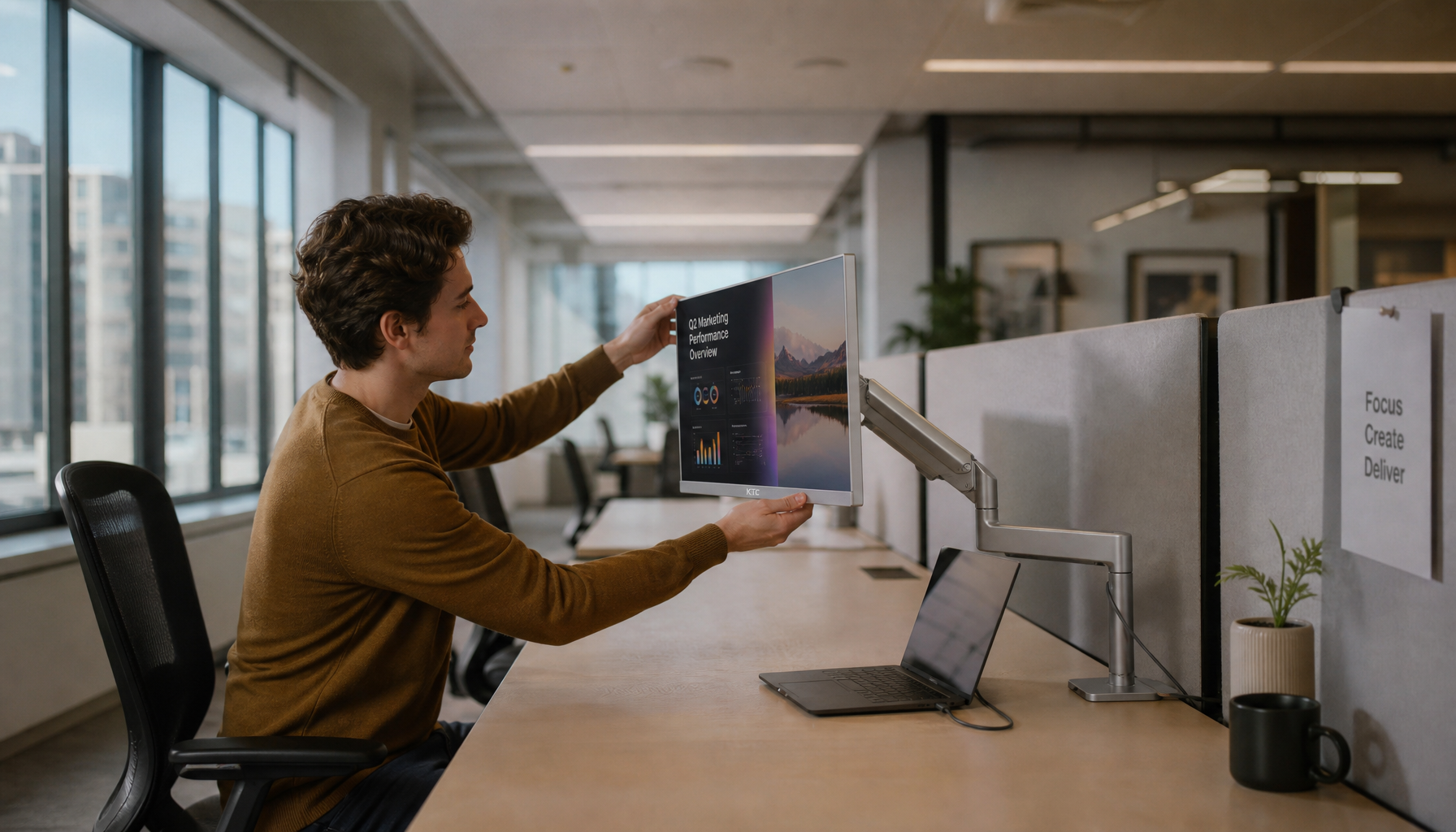
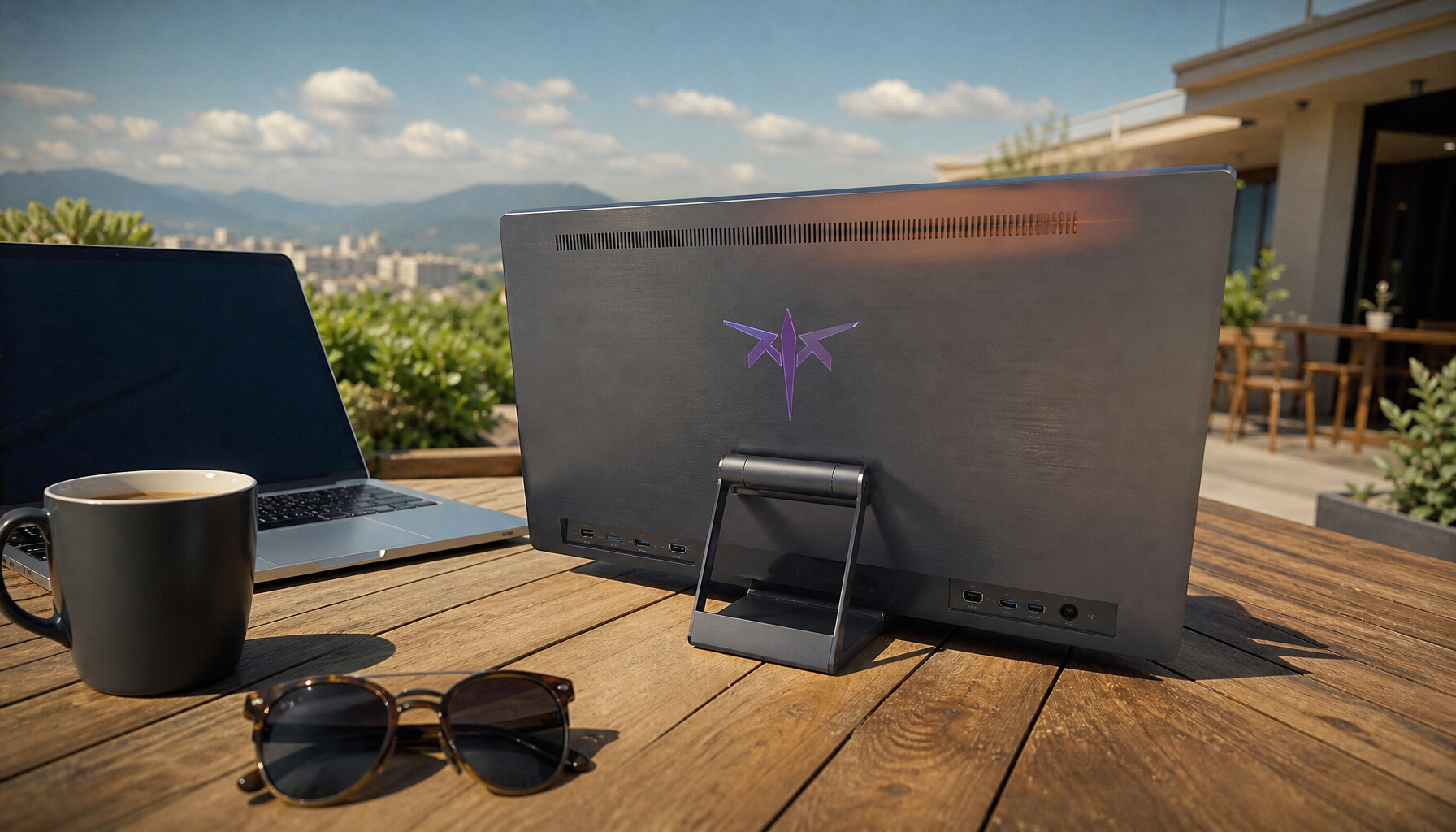
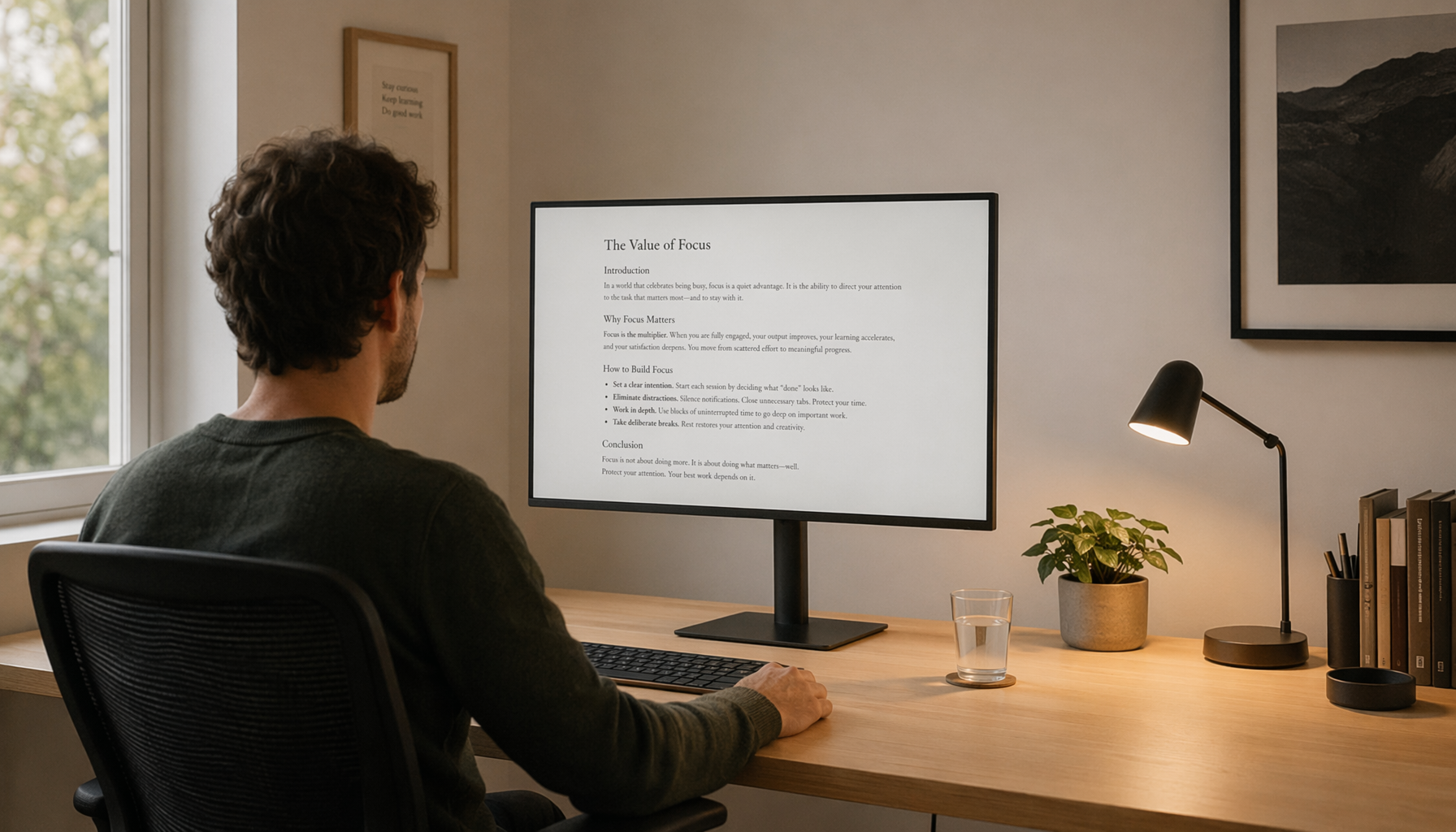
Yes, a smart monitor can work without a computer when it has its own operating system, Wi-Fi, apps, speakers, and remote or onboard controls. It can stream, browse, mirror devices, run cloud tools, and act as a compact entertainment or productivity screen, though it will not replace a full PC for every task.
Is your desk screen sitting idle because your laptop is elsewhere, your gaming PC is off, or you want streaming, cloud documents, or a presentation screen without booting a computer? A well-equipped smart monitor can give you a working screen in minutes with fewer cables and fewer separate devices. Here is how to know what it can do alone, where it still needs external hardware, and how to choose the right setup.
What “Without a Computer” Really Means
A traditional monitor is mainly a display endpoint. It waits for a video signal from a PC, laptop, console, streaming stick, camera system, or other source. A smart monitor adds built-in computing features, so the screen can connect to Wi-Fi, run apps, play media, and sometimes handle video calls without needing a separate computer tower or laptop.
The key distinction is the video source. If the monitor has native smart apps, it can create the experience itself. If it is a standard LCD or LED monitor, it still needs something to send video into its HDMI, DisplayPort, or USB-C input. The old workaround of using an LCD monitor as a TV generally depends on an external tuner, set-top box, or converter, which is different from using a true smart monitor.
In practical terms, “without a computer” does not always mean “without any device.” A smart monitor may work fully standalone for streaming and web apps, while a regular monitor can still work computer-free if you attach a streaming stick, game console, cable box, single-board computer, or digital signage player.
What a Smart Monitor Can Do Standalone
A smart monitor’s strongest no-PC use case is entertainment. If it has Wi-Fi and built-in streaming apps, you can use it like a compact smart TV for a bedroom, dorm, apartment desk, studio, or home office. In setup testing, the most reliable arrangement is simple: connect power, join Wi-Fi, sign in to the apps you actually use, and keep the remote nearby instead of treating the monitor like a passive PC panel.

The second strong use case is light productivity. Smart monitors that support web browsing, cloud documents, remote desktop, or cloud office apps can handle email review, dashboards, calendar checks, presentations, and document edits. For heavier spreadsheet modeling, design tools, software development, or multitasking across many windows, a computer still delivers more power and precision.
A third useful role is shared-screen work. Digital signage platforms show the broader principle clearly: supported screen platforms can run a player app directly on compatible smart display systems, while unsupported screens can be upgraded with HDMI add-on hardware. That same logic applies at home or in an office. If the screen has the right native platform, it can operate alone; if it does not, a small HDMI device can make it useful without a PC.
Smart Monitor vs. Regular Monitor vs. Smart TV
The buying mistake is assuming every “monitor” behaves the same once the computer is removed. The hardware category matters.

Screen Type |
Works Without Computer? |
Best Standalone Use |
Main Limitation |
Smart monitor |
Yes, if apps and Wi-Fi are built in |
Streaming, light work, casting, presentations |
App support and processing power vary |
Regular monitor |
Not by itself |
Works with HDMI stick, console, tuner, or media player |
Needs an external source |
Smart TV |
Yes |
Living room viewing, streaming, live TV features |
Desk ergonomics and text clarity may be weaker |
Portable smart screen |
Sometimes |
Travel streaming, phone mirroring, quick second screen |
Battery, brightness, and app support vary |
For office users, display quality still matters even when the monitor is “smart.” Productivity-focused testing emphasizes text clarity, usable screen space, ergonomics, and connectivity; 4K UHD resolution means 3,840 x 2,160 pixels, while QHD means 2,560 x 1,440 pixels. On a desk, those pixels decide whether a web dashboard looks crisp or cramped.
When You Still Need a Computer
You still need a computer when your work depends on desktop-class software, local files, advanced peripherals, high-performance multitasking, or professional color workflows. A smart monitor may open a browser-based app, but it will not become a workstation with a dedicated GPU, full operating system flexibility, local development environment, or complete enterprise software stack.
Gaming is another boundary. A smart monitor can stream games through cloud services if supported, and it can run media apps smoothly, but competitive gaming still favors a direct PC or console connection. Refresh rate, input lag, adaptive sync, and response time become performance variables, not just convenience features.
Professional office setups often benefit from full monitor features rather than standalone apps alone. A 2026 business monitor roundup highlights workflow-first features such as high-speed docking, USB-C power delivery, webcams, microphones, Ethernet, USB hubs, daisy-chaining, and KVM-style control; the strongest business monitor is often valuable because it simplifies the computer connection, not because it eliminates the computer entirely.
How to Set Up a Smart Monitor Without a Computer
Start with the remote or onboard controls, not a cable. Plug in the monitor, complete the initial setup, connect it to Wi-Fi, update the firmware if the settings menu offers an update, and sign in to only the apps you plan to use. This keeps the interface clean and reduces background clutter.
Next, check audio. Many smart monitors include speakers, but small built-in drivers may sound thin across a room. For a desk, they are usually fine for calls, news, training videos, or background streaming. For movies or console use, Bluetooth speakers, a soundbar, or headphones may be the better match.
Then check input switching. A good smart monitor should move cleanly between standalone apps, HDMI devices, USB-C laptops, and casting sources. This is where the category earns its value: you can work from a laptop during the day, stream at night, and plug in a console without rebuilding the desk.

Finally, tune the picture. For reading, reduce excessive sharpness, pick a neutral color mode, and set brightness to match the room instead of running the backlight at full power. For movies, a warmer picture mode is often more comfortable. For games, use the monitor’s game mode if available.
Using a Regular Monitor Without a PC
If your monitor is not smart, it can still be useful without a computer, but it needs an external brain. The simplest path is an HDMI streaming stick. Plug the stick into HDMI, power it from USB or its wall adapter, connect it to Wi-Fi, and use the stick’s remote.

For signage, dashboards, menus, or kiosk-style content, a compact player can be cleaner than a full PC. One common model is reusing compatible screens where possible and adding an HDMI streaming stick or similar hardware when the display itself is not supported.
For live TV, the missing feature is usually a tuner. Many smart monitors do not include the same live-broadcast tuner behavior people expect from a TV. If you need antenna channels or cable-box viewing, confirm the input and tuner path before buying.
Pros and Cons of Using a Smart Monitor Standalone
The upside is speed and simplicity. You reduce cable clutter, free up your laptop, and turn one desk display into a multi-role screen. In a small apartment or office, that can replace a secondary TV, basic streaming box, and occasional presentation display.
The productivity upside is more situational. A 27-inch or 32-inch smart monitor can be excellent for cloud dashboards, reference material, video training, or quick document edits. But if your day is built around deep multitasking, a monitor with strong USB-C docking and a connected laptop may be more productive than a standalone app interface.
The downsides are app limits, update dependency, and weaker upgradeability. A PC can install almost anything compatible with its operating system. A smart monitor is tied to its built-in platform, app store, processor, memory, and manufacturer support. If a key app disappears or runs slowly, there is less you can fix.
There is also a terminology trap. A “smart monitor” in the display world is not the same as a smart energy monitor. A smart energy monitor is a small in-home screen for viewing household gas and electricity usage, not a productivity or entertainment display. If you are shopping online, make sure the product category matches what you actually want.
What to Look For Before You Buy
Prioritize the standalone features first. Confirm that the monitor has Wi-Fi, the apps you use, a remote, speakers, Bluetooth if you need wireless audio, and screen mirroring for your phone or tablet. If video calls matter, look for a built-in webcam and microphone rather than assuming every smart monitor includes them.
Then judge it as a real monitor. Resolution, panel type, brightness, refresh rate, ports, stand adjustment, and eye-comfort settings still shape the daily experience. Desktop real estate, text clarity, image clarity, viewing comfort, ergonomic flexibility, and connectivity remain core productivity priorities, even when the screen can run apps by itself.
For a desk-first setup, 27 inches with QHD or 4K is often the practical sweet spot. For a living-room-like desk setup, 32 inches can feel immersive without overwhelming most work surfaces. For spreadsheets, coding, and timelines, ultrawide formats can reduce window switching, but they need more desk width and careful seating distance.
FAQ
Can I watch streaming apps on a smart monitor without a PC?
Yes, if the monitor includes those apps or a supported app store. If it does not, an HDMI streaming stick can usually add that capability.
Can I use a smart monitor for work without a laptop?
You can handle light work through web apps, cloud documents, email, calendars, and dashboards if the monitor supports them. For full desktop software, complex multitasking, coding, creative production, or enterprise tools, you will still want a laptop or desktop.
Can a smart monitor replace a TV?
It can replace a small TV for streaming and casual viewing, especially in a bedroom, dorm, or home office. It may not replace a living-room TV if you need a larger screen, built-in live TV tuner features, stronger speakers, or couch-distance viewing.
Can a normal monitor turn on without a computer?
Yes, it can power on, but it will usually show a “no signal” message until something sends video to it. A streaming stick, console, tuner, camera system, or media player can provide that signal.
Final Word
A smart monitor is worth it when you want one screen that can work, stream, mirror, and switch roles without always waking a computer. Buy it for the standalone apps you will actually use, then judge it by the same performance standards that matter on any serious display: sharp text, useful ports, stable ergonomics, and a screen size that fits your workflow.