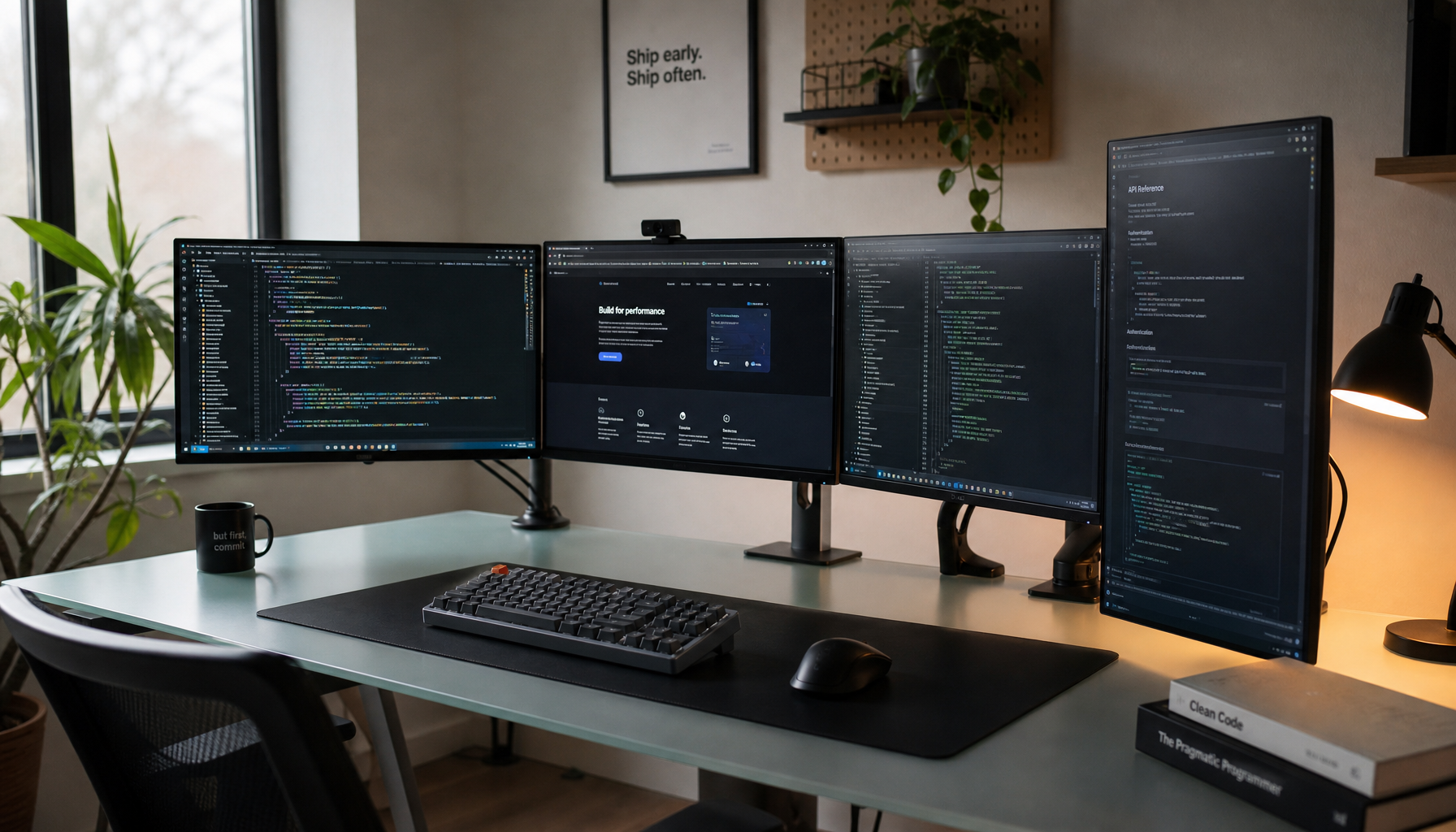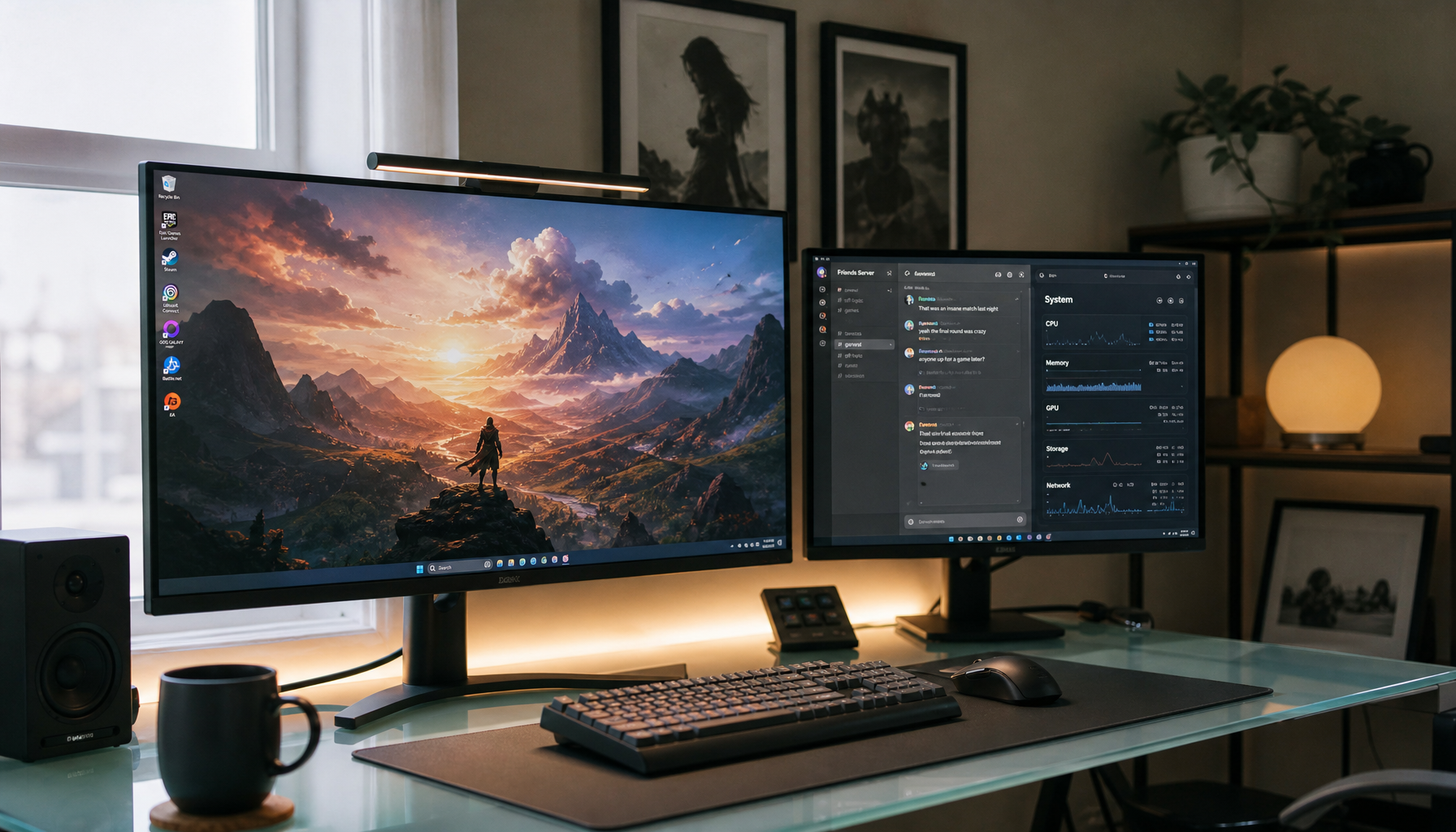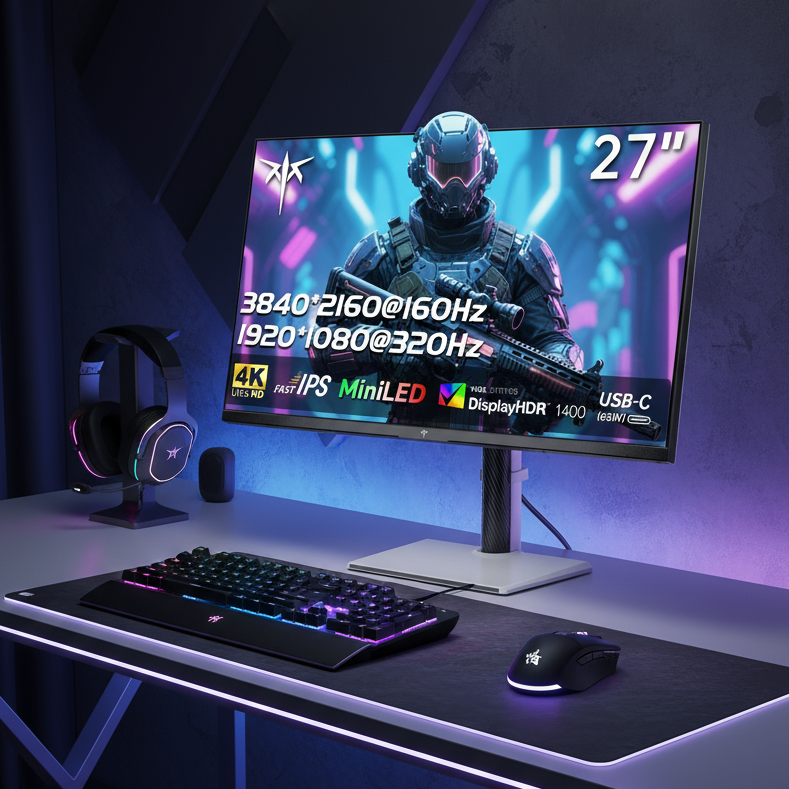
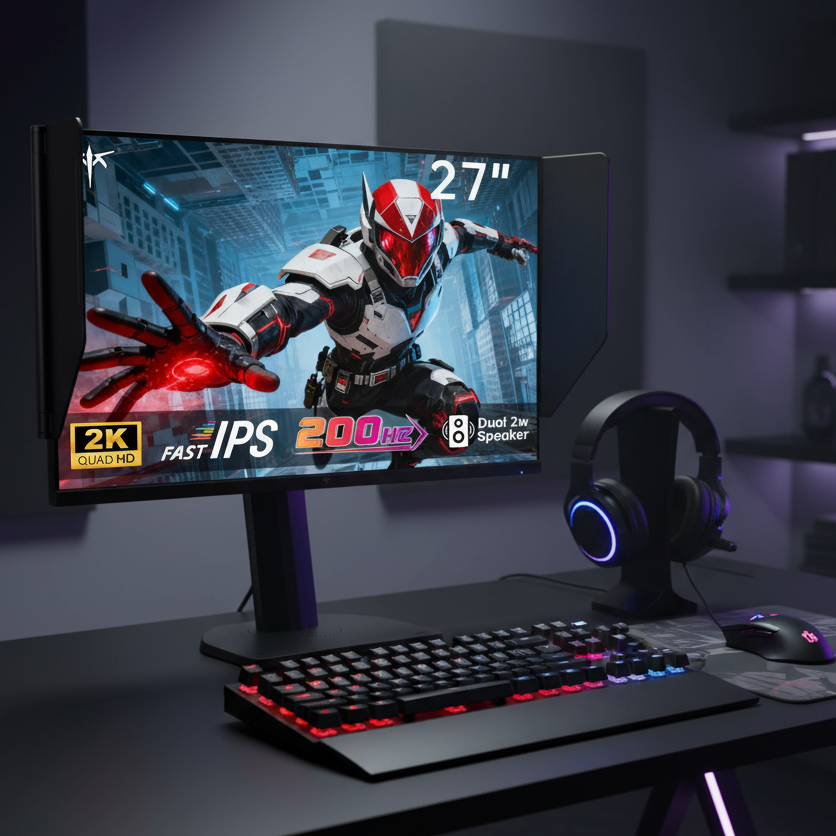
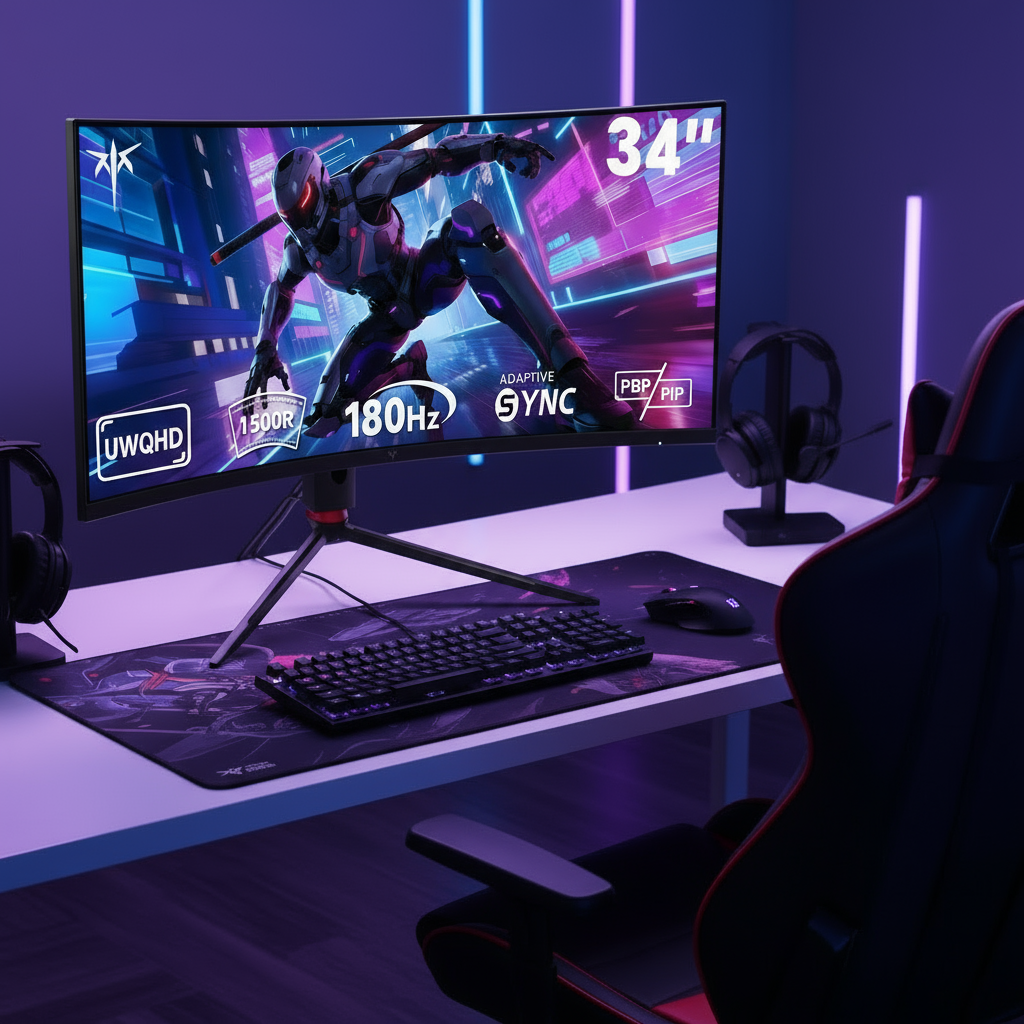


A single 49-inch 32:9 super ultrawide monitor can replace two 27-inch 1440p monitors with identical total pixels while removing the central bezel that forces constant head turns. For many productivity users and simulation gamers, this creates a cleaner desk, simpler cable management, and more ergonomic centering of your primary work. The transition works best when your GPU supports high resolutions at your target refresh rate, your desk has enough depth for the aggressive curve, and you adopt window-management tools like Microsoft PowerToys FancyZones.

The Decision: Why One Super Ultrawide Beats Dual Monitors
The core appeal is mathematical parity combined with physical simplicity. A 49-inch 32:9 panel at 5120x1440 resolution delivers the same total screen real estate as two 27-inch 1440p monitors placed side-by-side, according to productivity comparisons. Yet it eliminates the physical bezel gap that splits your workspace and often pushes your main application off-center, leading to asymmetrical neck strain over long sessions.
Beyond pixels, the upgrade reduces hardware footprint. You typically drop from four cables and two stands or arms to one or two cables and a single mount. This minimalist shift appeals strongly to remote workers and gamers who want a focused, uncluttered desk without sacrificing multitasking capability.
Mastering the 32:9 Workspace: Beyond Standard Window Snapping
Standard Windows Snap Assist defaults to inefficient 50/50 splits on an ultra-wide canvas, preserving the mental model of a central divider that no longer exists. Microsoft PowerToys FancyZones solves this by letting you create custom layouts. A practical “Triple-Zone” approach places a 2560-pixel-wide primary zone in the exact center, flanked by two 1280-pixel utility zones on the sides.
This layout keeps your main task directly in front of you within the natural field of view of a curved panel. Secondary windows remain visible in peripheral vision, so you shift your eyes rather than your neck. As ergonomic positioning guidance from Ergotron explains, keeping content within a comfortable viewing arc reduces strain compared with turning toward the outer edges of flat side monitors.
The chart below clarifies these ergonomic and setup differences in typical use.
Dual 27-inch Monitors vs 49-inch Super Ultrawide: Ergonomics and Setup Trade-offs
Tiered comparison of the main setup trade-offs. The super ultrawide tends to win on centered focus and cable simplicity, while dual monitors stay safer when desk depth, mounting strength, or older GPU compatibility are limiting factors.
View chart data
| Category | Dual 27-inch monitors | Single 49-inch super ultrawide |
|---|---|---|
| Primary focus position | 2.0 | 3.0 |
| Neck rotation demand | 2.0 | 3.0 |
| Cable/setup complexity | 3.0 | 1.0 |
| Mounting requirement | 2.0 | 3.0 |
| Sims immersion | 2.0 | 3.0 |

For Mac users or those needing even more advanced snapping, third-party utilities can achieve similar zoned layouts, though the Windows-native PowerToys solution remains the most cited standard.
Gaming Immersion: The 1000R Geometry Advantage
Simulation titles such as racing or flight simulators benefit most from the seamless 32:9 canvas. The 1000R curvature closely matches natural human field of view, keeping edge pixels at a consistent distance from your eyes and reducing the constant refocusing required on flatter panels or dual-monitor edges. This creates a more immersive “windshield” effect without bezels interrupting your view.
Not every game supports 32:9 natively. Picture-by-Picture (PBP) mode lets the monitor function as two independent 2560x1440 panels from separate inputs, providing a practical fallback for incompatible titles or multi-PC workflows. Keep in mind that some users report minor HUD stretching in unsupported games; test your library before fully committing.
Technical Pre-Flight: GPU, Bandwidth, and Mounting Requirements
Driving 5120x1440 at 180Hz demands significant bandwidth. According to VESA DisplayPort standards, you need a modern GPU (generally RTX 20-series or newer) and DisplayPort 1.4 with Display Stream Compression (DSC) enabled for 10-bit color at high refresh rates. Older cards may cap out at lower refresh rates or require reduced color depth.
Desk depth also matters. A standard 24-inch desk can feel cramped with a 1000R curve because the screen edges wrap noticeably closer to you. Aim for at least 30 inches of depth for comfortable viewing distances.
The panel’s weight and wide span create leverage that causes standard monitor arms to sag. VESA mounting guidance recommends a heavy-duty arm rated well above the monitor’s weight with reinforced torque handling. Verify your chosen mount meets these specs to avoid gradual tilt over time.
Who Should Switch to a Super Ultrawide?
The minimalist who values a single-cable, single-stand desk and uses primarily horizontal workflows benefits most. Simulation gamers gain meaningful immersion from the wrap-around geometry. Power multitaskers who adopt FancyZones or equivalent tools can arrange three or more windows without losing focus on the center task.
Stay with dual monitors if you rely on vertical stacking for code or long documents, need absolute visual separation between unrelated workflows, or have an older GPU and shallow desk that cannot meet the technical thresholds above. In those cases, the physical gap between monitors may still serve your needs better than a single expansive panel.
Check your current GPU output capabilities, measure your desk depth, and test window-management software before purchasing. When the conditions align, replacing dual monitors with one high-performance super ultrawide often delivers the cleaner, more centered workspace many users seek.
Frequently Asked Questions
Can I use a super ultrawide monitor with a Mac?
Yes, but native window snapping is more limited than on Windows. You will likely need third-party apps such as Magnet or Rectangle to approximate the zoned layouts possible with FancyZones. USB-C models that deliver power, video, and data over one cable further simplify the transition for Mac users.
How much desk depth do I need for a 1000R curved super ultrawide?
Most users find 30 inches or more comfortable so the screen curvature does not feel overly aggressive at normal sitting distances. Shallower desks (24 inches) often require you to sit farther back, which can reduce the immersive benefit and increase eye strain.
Does every game support 32:9 resolution?
No. Many competitive or older titles do not. Picture-by-Picture mode lets you treat the panel as two separate 2560x1440 displays, preserving dual-monitor functionality for unsupported games or when connecting two different computers.
Will a standard monitor arm work with a 49-inch super ultrawide?
Usually not. The combination of weight and leverage exceeds the capacity of most consumer arms. Choose a heavy-duty VESA mount explicitly rated for wide panels and verify the torque specifications to prevent sagging.
Is a super ultrawide better for productivity or gaming?
It depends on your dominant activity. Productivity users gain from centered primary windows and reduced neck movement when using proper zoning software. Simulation gamers see the largest immersion uplift. Users who split time evenly between vertical documents and fast-paced competitive games may still prefer a dual-monitor or standard ultrawide configuration.